
1926- Architecture on 9.5 mm: Designing, filming, and exploring the Eternal City in the film Road to Rome
By AYLIN ATACAN
In 1926, a group of architecture students from the University of Liverpool set out on a journey to Rome, recording their experience in an amateur film entitled Road to Rome. Shot on 9.5 mm film—a format popular among amateur filmmakers in the interwar period for its portability and affordability—the project reflects both the technical possibilities and informal character of student filmmaking at the time. At first glance, the film appears as a light-hearted travelogue, combining scenes of student life, playful performances, and visits to ancient monuments. Yet when examined alongside contemporary debates in architectural education, Road to Rome reveals a more complex significance. Produced at a moment when British architectural training was undergoing profound transformation, the film captures the tensions between classical authority and emerging modernist ideas that shaped the interwar architectural milieu.[1]
The journey to Rome held deep symbolic and pedagogical weight within British architectural culture. Since the establishment of the Rome scholarship in Architecture in 1912 at the British School at Rome (BSR), the most prestigious of several travel awards that also included the Henry Jarvis Studentship and the Bernard Webb Studentship, the city had been positioned as the ultimate site of professional formation, where rigorous study of classical monuments and measured restoration were intended to cultivate discipline, historical knowledge, and aesthetic judgement.[2]This model, influenced by the French Beaux-Arts system, sought to correct what reformers perceived as the individualism and inconsistency of traditional articled training. However, by the 1920s, this classical framework was increasingly challenged by modernist critiques that questioned both the relevance of antiquity and the methods by which architecture was taught.
By reading Road to Rome alongside archival material from the British School at Rome where the students were required to reside (including reports, correspondence, and assessments of Rome Scholars), this essay examines how the Rome Prize functioned not only as an educational opportunity but also as a disciplinary mechanism that regulated acceptable forms of architectural knowledge and creativity. Through the contrasting experiences of George Albert Butling and Charles Anthony Minoprio who both appear in the film, this essay explores how ‘success’ at Rome was defined, negotiated, and contested. Ultimately, the film serves as a valuable archival counterpoint, revealing how interwar architectural students engaged with, questioned, and subtly or playfully reinterpreted the classical tradition at a pivotal moment in the history of architectural education.
Amateur Student Film as Architectural Evidence
Three students began their own pilgrimage to Rome (fig. 1) in 1926, despite Le Corbusier’s warning three years earlier in Towards a New Architecture (1923) that ‘Rome is the damnation of the half-educated. To send architecture students to Rome is to cripple them for life’. The Road to Rome is an amateur film made in 1926 by university students from the University of Liverpool, which humorously blends initial scenes of campus life with a travelogue of their journey to Rome. It was filmed by student Lawrence Wright who entered the School of Architecture in 1924 and accompanied them to Rome but was not himself a recipient of a travel scholarship. After graduation Lawrence pursued a career as an architectural perspectivist, painter and etcher (fig. 2). In the 1930s and 1940s, Lawrence made a number of animated films, including a satire about Hitler called Adolf's Busy Day (1940) under the pseudonym Lance White, and a cartoon about a train robber called The Mail Goes Through (1947).[3] He also became he author of several books on architectural or domestic accessories as well as a book about perspective.[4]
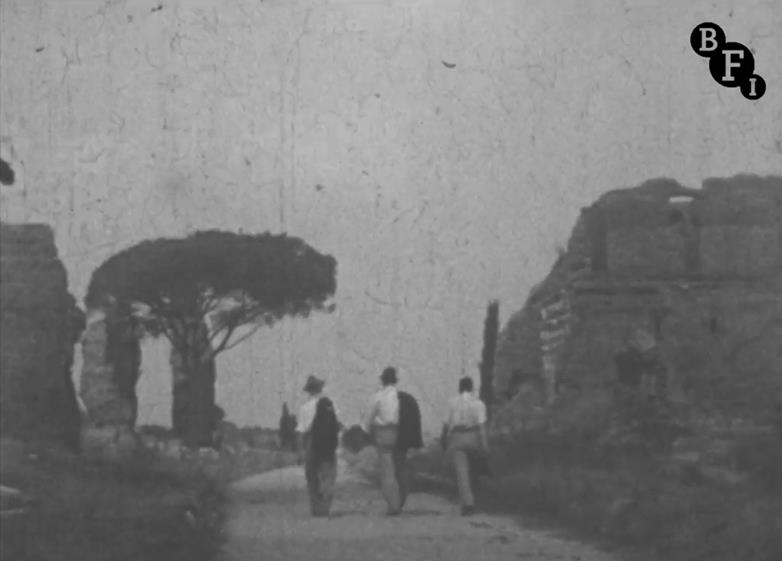
Figure 1. Screenshot showing three architecture students walking among the ruins in Rome, BFI print, (England, 1926, directed by Lawrence Wright)
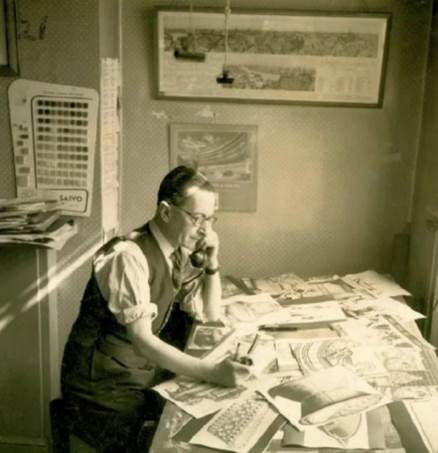
Figure 2. Lawrence Wright at work in his studio, 16 Carlisle Street, Soho, central London, circa 1959 (Image: Mariateresa Wright, Source: https://www.manchestereveningnews.co.uk/news)
Wright began his career as an architectural painter and went on to design several significant buildings during the 1950s, 1960s, and 1970s, with the New Coventry Cathedral being his most notable work (fig. 3). In addition to architecture, he created numerous paintings of existing structures and occasionally other subjects. He devoted considerable effort to documenting post-war London, including through the creation of a large city panorama in the early 1950s.[5]
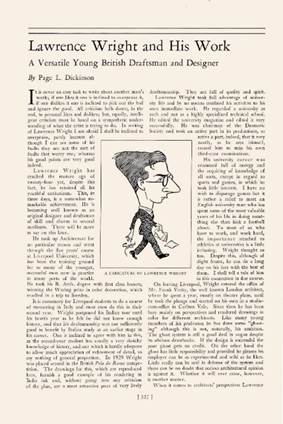
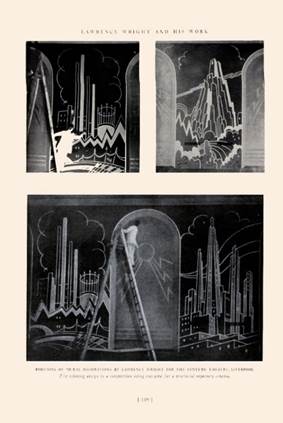
Figure 3. A caricature of Lawrence Wright along with portions of his mural decorations for the Century Theatre, Liverpool (Source: Dickinson, P.L. (1931) Lawrence Wright and his work: A versatile young British draftsman and designer. Pencil Points, May, pp. 327–42)
Although Road to Rome is an amateur creation compared to several other films produced by Wright at the earliest stages of his career, it marked a strong and imaginative beginning for an architecture student exploring interdisciplinary tools. The film begins through the door of the University of Liverpool’s Architecture studio in Ashton Street (fig. 4).[6] Opening with mock-serious titles parodying grand cinema, it captures students joking around on campus, throwing objects at unseen targets, engaging in an ‘Inter-Faculty Tug-of-War’, and pretending to ‘work hard’ while breaking the 1926 General Strike by unloading sacks on the Liverpool docks[7], where it is possible to glimpse the Royal Liver Building (fig. 5) and Harbour Board Office (fig. 6) in the background. The Royal Liver Building in Liverpool, completed in 1911 and designed by Walter Aubrey Thomas, is an architecturally significant landmark noted for its pioneering use of reinforced concrete, making it one of the earliest large-scale buildings in the world to employ this technique. Its monumental form, twin clock towers, and restrained Edwardian Baroque style reflect early 20th-century commercial architecture, while the prominent Liver Bird sculptures crowning the towers contribute to its distinctive silhouette on Liverpool’s waterfront. The Harbour Board Office or Port of Liverpool Building, completed in 1907 and designed by Sir Arnold Thornely and F. B. Hobbs, is a prominent example of Edwardian Baroque architecture. Characterised by its grand stone façade, central dome, and classical detailing, the building was designed to convey the power and prestige of Liverpool’s port at the height of its global influence, forming a key part of the city’s historic waterfront at Pier Head.
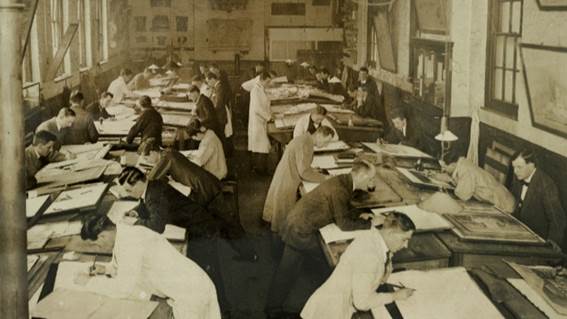
Figure 4. The University of Liverpool’s School of Architecture in its previous home on Ashton Street, c.1920 (RIBA Collections) (Source: https://www.riba.org/explore/riba-collections/inside-our-collections/liverpool-school-of-architecture/)
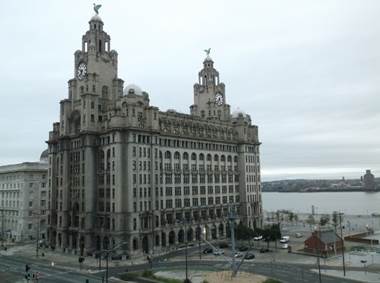
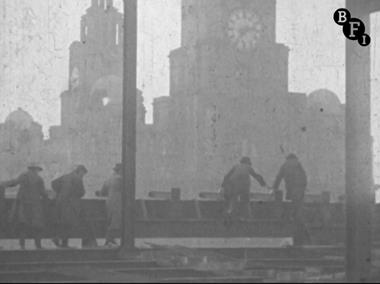
Figure 5. Royal Liver Building, Walter Aubrey Thomas, 1911
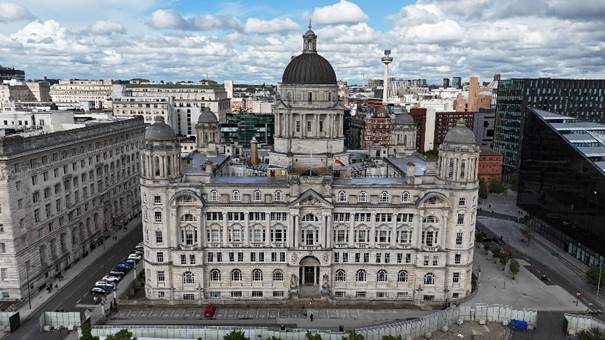
Figure 6. Port of Liverpool Building, 2024 (also known as the Mersey Docks and Harbour Board) (Source: https://en.wikipedia.org/wiki/Port_of_Liverpool_Building)
The film then follows students as they prepare architectural drawings and celebrate their exam results. George Albert Butling was awarded the British School at Rome’s Rome Scholarship, established in 1912 to modernize British architectural education by replacing informal apprenticeship with a rigorous classical training model inspired by the French Beaux-Arts system. Minoprio, the other Liverpool winner, received the Henry Jarvis Scholarship, another BSR award recognizing promising architectural students. The two award winners are then captured on camera setting off by car to Rome as their friends’ wave goodbye (fig. 7 a-b).
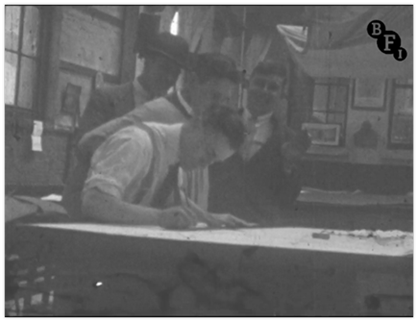
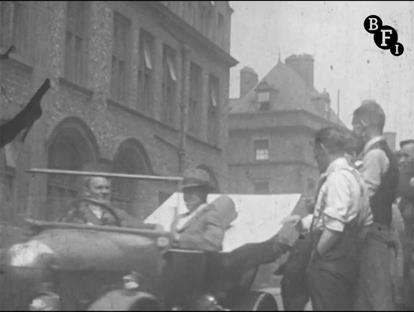
Figure 7a-b. Screenshots showing students preparing architectural drawings, the drawings of the winner are placed in the car and the students wave farewell, BFI print, (England, 1926, directed by Lawrence Wright)
Once in Rome, Butling and Minoprio- possibly joined by Hope Bagenal, another contemporary recipient of a British School at Rome award- are shown visiting major landmarks such as Castel Sant’Angelo, the Appian Way, the Colosseum, the Forum, and St. Peter’s Square. They are accompanied by Wright, who appears to have filmed their activities. Together, they are seen playfully enacting mock archaeological digs and delivering impromptu “lectures” among the ruins (fig. 8).As Maria Wyke noted during the Museum of Dreamworlds London focus group meeting in April 2024, it is interesting to observe that ‘the road to Rome’ traditionally referred in the UK to the pilgrimage route established during the Middle Ages from Canterbury to Rome.The title card shows the cupola of St Peter’s and the film closes on a shot of the celebrated fountain in its grand piazza, as if the film constitutes an architectural pilgrimage (fig. 9-10).
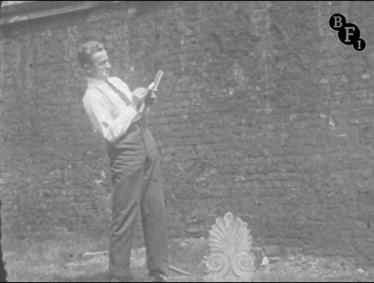
Figure 8. Screenshot showing one of the award-winning students enacting mock archaeological digs in Rome (England, 1926, directed by Lawrence Wright)
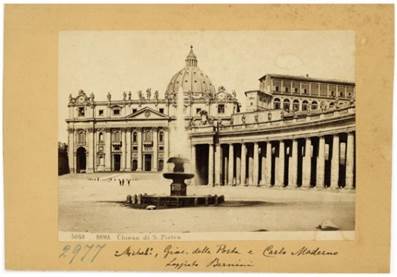
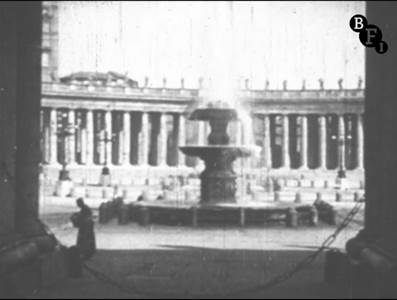
Figure 9. The fountain in the piazza of St Peter’s, photographed by Giorgio Sommer c. 1873 (Source: https://creativecommons.org/licenses/by-nc-nd/4.0/)
Figure 10. The fountain in the piazza of St Peter’s, captured in the film Road to Rome (England, 1926, directed by Lawrence Wright)
Finishing with a card on which a hand writes ‘The End,’ the film stands as a witty, self-aware record of interwar student life, mixing humour, friendship, and the spirit of exploration with a tribute to both education and early cinema.
While the film presents itself as a playful and informal student production, its narrative is inseparable from the institutional structures and educational ideologies that shaped British architectural training in the early twentieth century. Beneath its humour and self-awareness lies a serious engagement with travel, classical study, and professional formation, values embedded in the culture of architectural education at the time. The film’s framing of Rome as both destination and rite of passage reflects a wider pedagogical belief in the formative power of classical immersion, a belief most clearly institutionalised through the awards made by the British School at Rome to UK students of architecture. To understand the significance of this amateur film as architectural evidence, it is therefore necessary to situate it within the broader reform of British architectural education and the origins of the Rome Prize in particular.
Along with the BSR’s other awards, the Rome Scholarship for Architecture, established in 1912, formed a key part of the reform of British architectural education in the early twentieth century. It emerged from dissatisfaction with the informal articled-pupillage system and reflected a desire to introduce structured, intellectually rigorous training modelled partly on the École des Beaux-Arts. Advocates such as Richard Phene Spiers promoted classical study, measured drawing, and disciplined design processes as the foundation of professional architectural competence (Harwood, 2015).
Administered through the British School at Rome by a faculty of leading educators and practitioners, the Prize aimed to reinforce classical values by immersing students in the study of ancient monuments and archaeological reconstruction. However, debates soon developed over its relevance to contemporary practice. While some educators called for greater engagement with modern construction and materials, the faculty largely preserved a traditional syllabus centred on proposals for the restoration of classical monuments (Campbell, 1989).
By the late 1920s and early 1930s, the emergence of modernist work by former Rome scholars exposed tensions between classical training and modern architectural expression. Figures such as Reginald Blomfield defended classical architecture as essential to maintaining the discipline’s status as a learned art, while critics argued that modernism reinterpreted, rather than rejected, classical principles (Blomfield, 1934). A decline in applications for the scholarship in the late 1930s suggests growing student dissatisfaction with Beaux-Arts pedagogy and its resistance to collaboration and innovation. In retrospect, the Rome Prize functioned less as an enduring affirmation of classicism than as a conservative mechanism intended to regulate architectural practice during a period of rapid change.
Butling, Minoprio, and the BSR
Road to Rome differs by its cinematic genre of amateur documentary and travelogue from the other silent antiquity films in the BFI National Archive. This BFI film not only provides us with the opportunity to discuss an example of a silent documentary on ancient sites but also the politics of architectural education in the interwar years. Delving into the BSR archive alongside examination of the film, however, enables us to explore the lives of the architectural students who feature in it and, simultaneously, to see from a fresh perspective 1920s debates around modern versus classical architecture.
As indicated in the film, George Albert Butling was a student at the University of Liverpool’s School of Architecture and was selected as the Rome Scholar in Architecture for the period 1925 to 1927. The other scholars included Charles Anthony Minoprio, who graduated with a Bachelor of Architecture in 1925 and, in the same year, was awarded the Henry Jarvis (HJ) Scholarship to attend the British School at Rome for two years. Minoprio had studied at the Liverpool School of Architecture from 1920 to 1925. A third scholar was Hope Bagenal, who completed an Engineering Diploma at Leeds University between 1906 and 1909, was awarded the British School at Rome’s Bernard Webb Studentship for 1925 to 1927, and was later appointed Librarian of the Architectural Association.
The film shows three men departing for Rome. One of them can be confidently identified as Butling, both because he is named in the film and because surviving correspondence in the British School at Rome archive confirms that Butling and Minoprio travelled together from Liverpool. While the third individual is not explicitly identified on screen, it is plausible that he is Bagenal. As a recipient of a British School at Rome architectural award for the same period, Bagenal would have had the same reason to travel to Rome at that time. Although this identification cannot be confirmed with certainty, the convergence of dates, awards, and circumstances suggests that the third man may well be him.
BSR archival material, such as letters and reports, gives us intriguing information on these scholars during their time in Rome. From scholarship reports provided by Butling, we know that he followed Sir Reginald Blofield’s guidance,[8] devoting himself to three main areas of activity: learning Italian, studying Rome and its history, and reading about ancient and Renaissance architecture. Alongside his language work, he made systematic visits to the ancient sites of Rome, the Campagna, and Ostia, and thoroughly studied the main art collections and Renaissance buildings. In his architectural work, he focused on surveying and restoration projects. He carried out detailed studies of the Roman Forum, the Palatine Hill, and Ostia, showing particular interest in the Palace of Septimius Severus, though he concluded it would be difficult to reconstruct without expert archaeological help. As alternatives for his restoration project, he planned to work on a phase in the Forum’s development or a section of the Ostia excavations. Meanwhile, he was engaged in a proposal for restoring the Temple of Neptune in Rome, having completed most of his surveys except for the Forum and surrounding colonnade. He also surveyed and drew the Piazza Sant’Ignazio, noting that Dr. Thomas Ashby was reportedly writing its history.[9] Finally, in early 1926, he toured the principal towns along Italy’s west coast as far as Cannes, returning via Florence and Siena, in order to broaden his architectural and cultural study of Italy.
After one year of his Rome Scholarship at the BSR, in 1926, Butling submitted his end of year report, including surveys of the Piazza S. Ignazio, the Temple of Neptune, and several drawings and photographs. Charles Reilly, his Professor back in Liverpool, found the work satisfactory.[10] However, of the BSR Sub-Committee members, Harold Chalton Bradshaw considered it disappointing and almost inadequate, Howard Robertson was unenthusiastic about the choice of subjects, and Curtis Green deemed Butling’s work of little value and poorly guided. As his second year’s report in 1927, Butling submitted a completed survey of the Palazzo Farnese, a study of the Porta Pila in Genoa, a study of the large ambone and candelabra in the Duomo at Salerno and mentioned as work in progress a project to restore the Hadrianeum, along with elevation plans and sections of the Piazza di Pietra. He also made an application for an extension of his Rome Scholarship into a third year (fig. 11)[11].
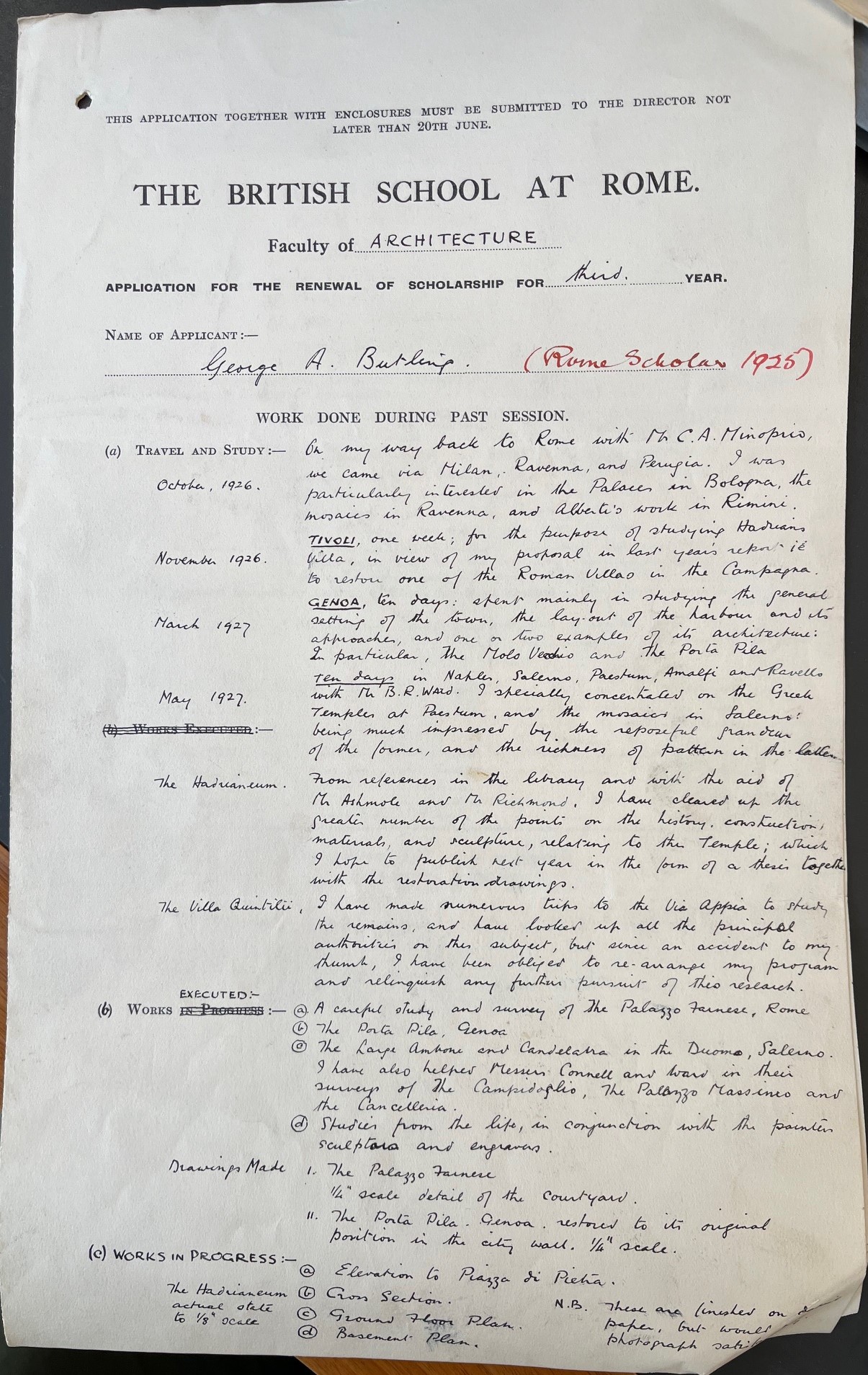
Figure 11. Butling’s application for the renewal of his Rome Scholarship for a third year, Courtesy of the British School at Rome Institutional Archive, AR-01.03.02/8
As we see from the Sub-Committee's comments, Professor Reilly considered Butling’s work satisfactory, while Mr Bradshaw found it disappointing and of doubtful value, noting a lack of evidence of detailed study and disagreeing with Professor Reilly’s assessment. Bradshaw described Butling’s work as almost inadequate. Howard Robertson was not enthusiastic about the choice of subjects, suggesting that while the measured sketches of the Piazza di S. Ignazio had some value, the topic could have been better chosen; he noted the drawings were sketchy and lacked essential dimensions, and recommended clearer guidance and discussion on the purpose and presentation of such work. Curtis Green similarly felt the subjects were poorly chosen, the work of little value, and urged that all drawings include a scale. Due to these negative observations on Butling’s progress, his application for a renewal of his Rome Scholarship was rejected by the Sub-Committee.
Thanks to Butling’s yearly reports, his application for renewal and the comments of the BSR Sub-Committee, we start to see what educators in architecture found dissatisfying about his activities, especially in contrast to those of Minoprio. Minoprio’s works, according to his reports and evaluations of them, included measured drawings of Pallazzo Venezia in Rome, the brick gateway of a villa near the Palazzo dei Diavoli in Siena, an interior doorway of the Museum inside Palazzo Venezia, and drawings of the current state of the Basilica of Constantine in Forum Romanum (fig. 12). At this time, scholars were encouraged to enlist the help of mural painters and sculptors in their restoration projects. Emile Jacot helped Minoprio in developing his materials concerning a restoration of the Basilica of Constantine by drawing for him the statue of Constantine (based on a colossal fragment in the Palazzo dei Conservatori). Minoprio’s work was found by the Sub-Committee to be more satisfactory than Butling’s, as we see from a report by the BSR director Bernard Ashmole dated June 1927, which mentions that: ‘He has, I think, done admirably. His Restoration still needs a good deal of work putting into it, and for that he is staying on into the vacation. He feels, and I think rightly, that he has gained a great deal from his time out here. he has made the fullest use of his opportunities’. As proof of the value placed on Minoprio’s work, a version of it entitled ‘A restoration of the Basilica of Constantine, Rome’ was published in the twelfth Volume of Papers of the British School at Rome dated 1932 (fig. 13).
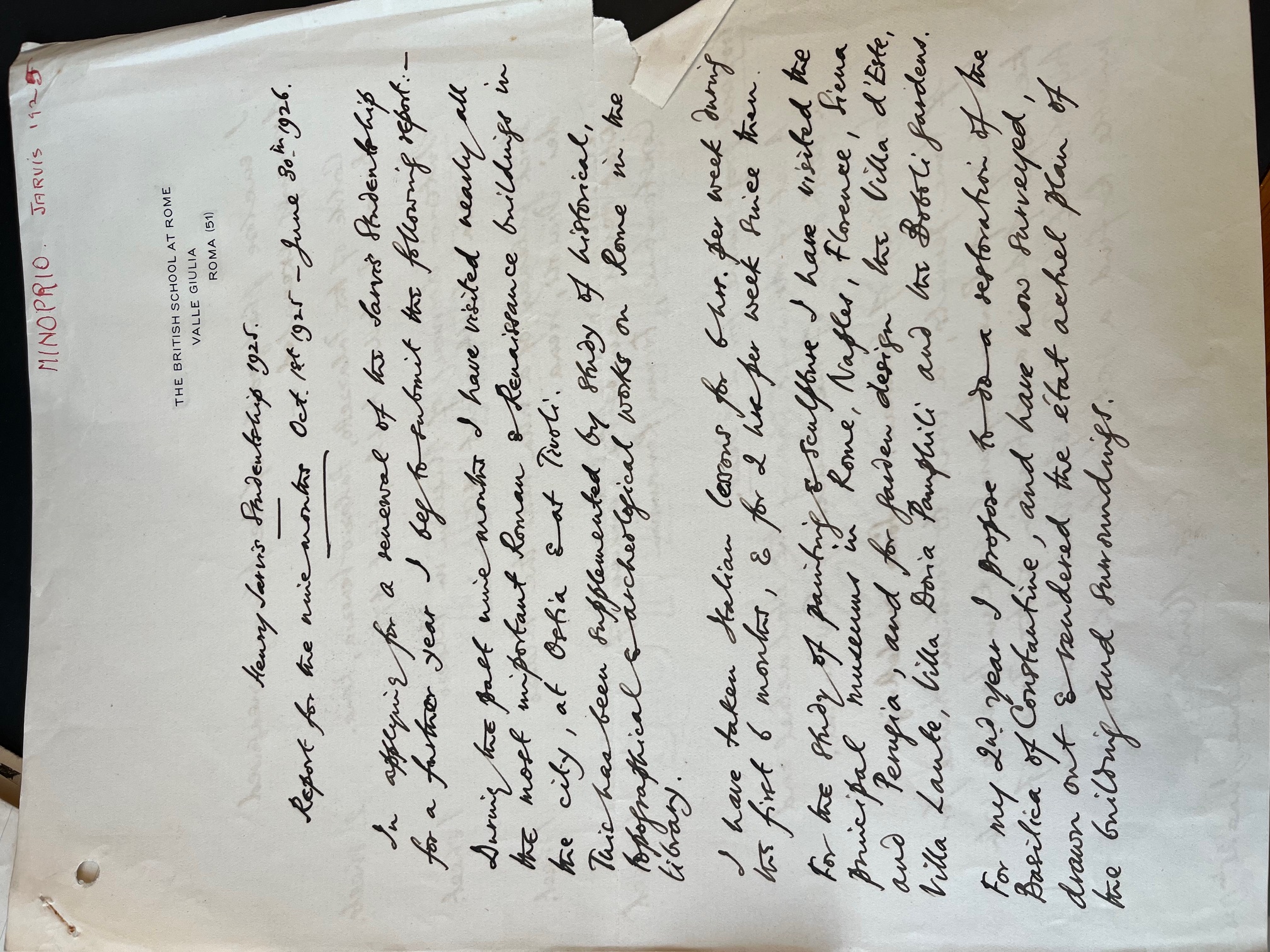
Figure 12. Part of Minoprio’s report for the period of nine months he spent in Rome, Courtesy of the British School at Rome Institutional Archive.
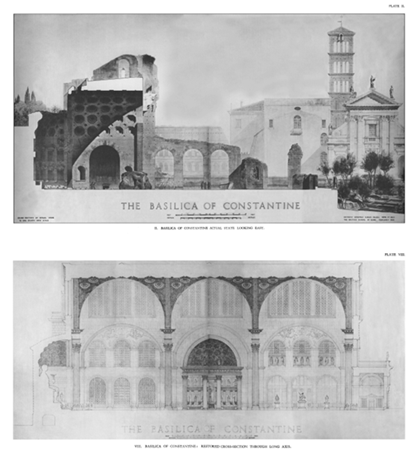
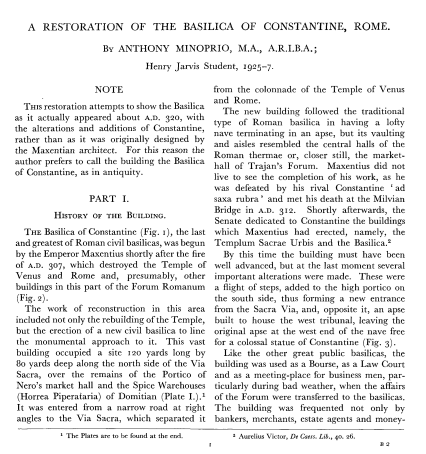
Figure 13. Pages from Minoprio’s article showing drawings from the proposed restoration of the Basilica of Constantine, Rome. Source: Minoprio, 1932
As we see from the architectural studies of these two students, Butling and Minoprio, one seems to be a success story while the other is a failure. But what makes their stories different, given that these two students seem to have followed almost the same path? What were the criteria for success in those days? Was it just dependent on the style of architectural education set up by star figures in academia? Minoprio’s letters might help us answer some of these questions as they provide us with an idea of what were the aspirations of students even when the rules they were supposed to follow were already set?
In November 1925, Minoprio wrote from Rome back to his Professor in Liverpool, Charles Reilly, describing his early experiences with Butling and raising an important academic question (fig. 14). In his letter to Reilly, while expressing enthusiasm for his life and its opportunities for study in Italy, Minoprio confided that he found it difficult to choose a suitable subject for his restoration project. Rather than a traditional reconstruction of ancient ruins, he wondered about designing a modern building in the Roman manner. Recognizing the originality of this idea, Reilly forwarded the letter to Evelyn Shaw- Secretary of the Royal Commission for the Exhibition of 1851 and Honorary General Secretary of the British School at Rome- suggesting that the BSR Faculty might consider allowing one such exercise and even proposing a “Roman railway station” as an imaginative example. Shaw, however, replied cautiously, doubting that the Faculty would approve any deviation from the established purpose of the Rome Scholarship, namely, the intensive study and measured restoration of ancient Roman architecture. She argued that Minoprio would have ample time later in his career to design modern buildings, but that his time in Rome should remain devoted to historical studies. Reilly responded again, acknowledging Shaw’s concerns, but noting that the true value of the restorations required by BSR prize-winners lay in the exercise of imagination they could inspire, and suggesting that guidance from Bernard Ashmole might help the students find subjects combining both scholarship and creative vision.
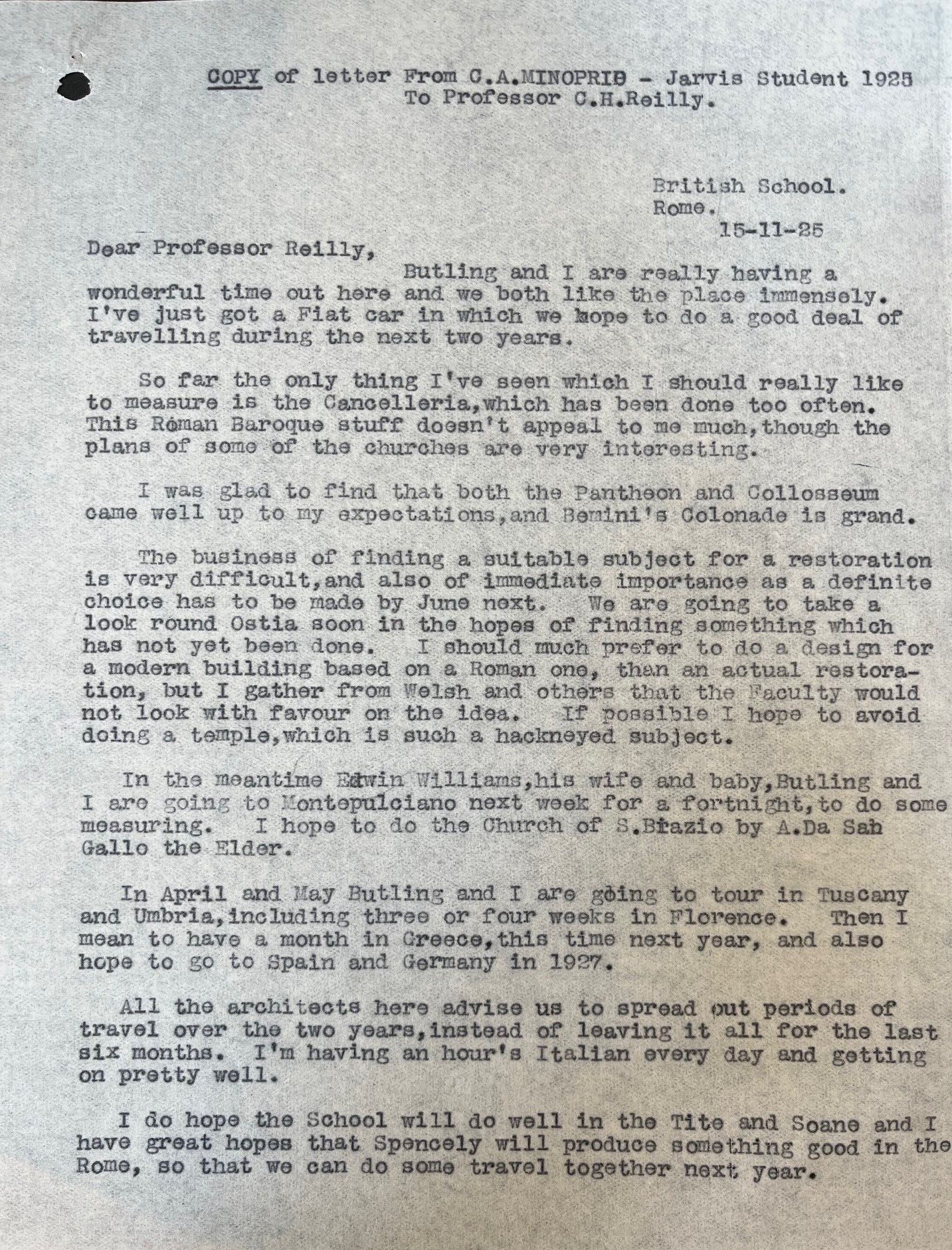
Figure 14. Minoprio’s letter to Charles Reilly, Courtesy of the British School at Rome Institutional Archive.
These letters and reports suggest that ‘success’ for a UK student of architecture in that period depended not merely on technical accomplishment or productivity, but on how well one navigated the tension between tradition and innovation, between the academic expectation of precise, historical restoration and the emerging ideal of creative interpretation. Minoprio’s correspondence demonstrates an early grasp of that balance: he respected the rules yet questioned them; he worked within the system yet gestured beyond it. Butling, though diligent, remained within the prescribed framework, focusing on documentation rather than exploration.
Reilly’s response to Minoprio’s plea for help reveals openness to innovation; he recognizes that the educational value of the Rome Scholarship could evolve beyond strict antiquarian restoration. His suggestion of a ‘Roman railway station’ reflects the tension between tradition and modern application within British architectural education of the era. Shaw’s reply, as mouthpiece for the BSR, highlights the conservatism of academic expectations: the Rome Scholarship was still viewed as a rigorous, almost archaeological study of ancient architecture, without space for creative reinterpretation. Its value lay in discipline and documentation, not innovation. While the official purpose was the study of antiquity, Reilly acknowledges the importance of imagination and personal interpretation, suggesting a shift toward modern educational ideals even within the BSR’s traditional framework.
Conclusion: Rome Revisited
Road to Rome offers more than a charming record of the life and travels of architectural students; it functions also as a lens through which we can interpret the complexities of interwar architectural education. Through its playful depictions of campus routines, mock archaeological exercises, and journeys through Rome and around its monuments, the film captures the ways in which students experienced and negotiated the traditions of the profession in practice. When paired with archival material from the British School at Rome, the film allows us to see both the visible and invisible dimensions of architectural formation: the public performance of learning, the personal negotiations of creativity, and the subtle hierarchies imposed by academic institutions. The contrasting experiences of Butling and Minoprio, illuminated by reports, letters, and restoration projects, demonstrate that success for holders of BSR awards depended as much on navigating institutional expectations and demonstrating disciplined engagement with classical study as on technical skill alone. The film, in its light-hearted yet observant style, preserves traces of these dynamics, showing us how students physically, socially, and imaginatively engaged with the classical city, turning the theoretical ideals of education into lived experience. In this way, Road to Rome is both archival evidence and interpretive tool: it visualizes the tensions between tradition and innovation, documentation and creativity, play and study, revealing the lived realities of architectural pedagogy at a moment of transformation.
Aylin Atacan
Footnotes
- ^ Road to Rome survives in the collections of the BFI National Archive. Further research may clarify how the film entered the archive; correspondence with Bryony (BFI) could provide additional details on its provenance.
- ^ Here, ‘restoration’ refers not to physical intervention in historic structures but to the production of analytical drawings and reconstructions through which students interpreted the original form and design of ancient buildings.
- ^ These films are free to access and watch via BFI player. See https://player.bfi.org.uk/search/free?q=Lawrence+Wright&availability=1
- ^ In the 1950s, he expanded into writing, culminating in the 1960 publication of Clean and Decent: The History of the Bath and Loo, a well-received and thorough study of bathroom design and habits.
- ^ For this project, he spent approximately four years sketching and painting a 270-degree view of the city from atop St. Paul’s Cathedral across panels totalling around 10 metres, capturing both the ongoing post-war reconstruction and lingering traces of the Blitz. Wright also produced a smaller city panorama from the newly completed London headquarters of a corporation. For his Panoramas see https://www.londonmuseum.org.uk/collections/v/object-104073/panorama-view-from-the-stone-gallery-st-pauls-looking-east/ and Pragnell, Hardy, Harwood, 2018.
- ^ The University of Liverpool was established in 1881 under the name University College, Liverpool, with its first building situated on Ashton Street, an area that remains central to the campus today.
- ^ The General Strike was called on 3rd May 1926 and lasted nine days. It involved an historic walkout by British workers representing the dissatisfaction of millions and ushering in the need for change across the country (https://www.historic-uk.com/HistoryUK/HistoryofBritain/General-Strike-1926/). The strike had a significant impact in Liverpool, a city heavily dependent on docks, transport, and industry. When the strike began, dockworkers, railway workers, and transport staff joined in large numbers, bringing much of the port and city infrastructure to a halt. Although the strike lasted only nine days nationally, its effects in Liverpool were prolonged.
- ^ Sir Reginald Theodore Blomfield (1856–1942) was a prominent British architect, educator, and writer, best known for his refined classical designs influenced by French architecture. Trained under his uncle Sir Arthur Blomfield and at the Royal Academy Schools, he established his own London practice in 1884 and went on to design major works including Goldsmiths’ College, the Wordsworth Building at Lady Margaret Hall, Oxford, and the redevelopment of Piccadilly Circus. Blomfield also played a significant role in architectural education and institutions, serving as President of the Royal Institute of British Architects and as a Royal Academician, and was knighted in 1919 for his contributions to architecture (Source: https://architecture.arthistoryresearch.net/architects/blomfield-reginald-theodore). For more information see also Reilly, 1931.
- ^ Dr. Thomas Ashby (1874–1931) played a crucial role in the early development of the British School at Rome, first as its inaugural Rome Scholar and later as Director between 1906 and 1925. During his long tenure, he was instrumental in shaping the institution while carrying out influential archaeological research, particularly on the Roman Campagna and ancient road networks, producing an extensive body of photographs and documentation that significantly enhanced knowledge of Roman topography and the School’s formative years. For more information see https://bsr.ac.uk/celebrating-150-years-since-the-birth-of-thomas-ashby-a-pioneer-in-archaeology-photography-and-the-humanities/.
- ^ Reilly was a charismatic figure and an inspirational teacher, who turned the Liverpool School of Architecture into one of the most famous schools in the world during the inter-war years. Under Reilly's influence it became the first university School of Architecture to design and run RIBA accredited degrees in architecture from 1902, and the school would go on to number six Gold Medal winners among its graduates and staff, and to establish an international reputation as a centre of excellence in architectural research and education. For detailed information on Reilly and Liverpool School of Architecture see Sharples, Powers, Shippobottom, 1996.
- ^ I would like to thank Maria Wyke for providing documents from the BSR archive in Rome following her archival visit in 2024.
Blomfield, R.T. (1934) Modernismus. London: Macmillan and Co..
Campbell, L. (1989) 'A call to order: The Rome prize and early twentieth-century British architecture', Architectural History, 32, pp.131-151.
Corbusier, L. (1923) Towards a New Architecture. London: John Rodker.
Harwood, E. (2015) England's Schools: History, Architecture and Adaptation. [ London]: Historic England. https://historicengland.org.uk/images-books/publications/englands-schools
Minoprio, A. (1932) 'A Restoration of the Basilica of Constantine', Papers of the British School at Rome, 12, pp.1-25.
Pragnell, H., Hardy, P. & Harwood, E. (2018) The Stone Gallery Panorama: Laurence Wright’s View of the City of London from St Paul’s Cathedral, c. 1948-56. London: London Topographical Society.
Reilly, C.H. (1931) ‘Sir Reginald Blomfield’, in Representative British Architects of the Present Day. London: B.T. Batsford, pp. 54–65.
Sharples, J., Powers, A. and Shippobottom, M. (1996) Charles Reilly & the Liverpool School of Architecture, 1904-1933: Catalogue of an Exhibition at the Walker Art Gallery, Liverpool, 25 October 1996-2 February 1997. Liverpool: Liverpool University Press/ National Museums & Galleries on Merseyside.