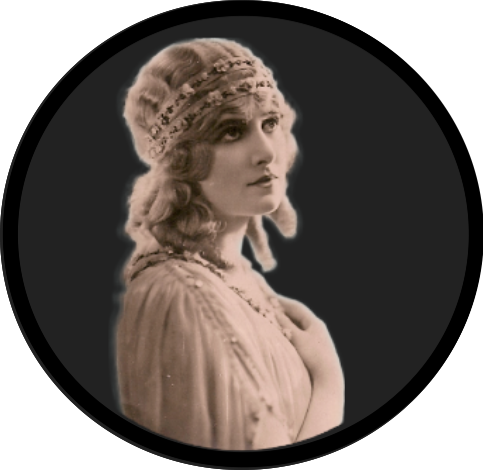
1907- Amour d’esclave (Pathé frères)
By STÉPHANIE SALMON
(Directrice des collections, Fondation Jerome Seydoux-Pathé)
Amour d’esclave was announced in May 1907 and featured in the ‘Scènes dramatiques et réalistes’ series of the Pathé frères catalogue, under the number 1688 and with a length of 210 metres. This was two months before a new system of rental service was launched in July, and almost one year before the creation of SCAGL (Société Cinématographique des Auteurs et Gens de Lettres) in February 1908. A subsidiary of Pathé, this production company would foster relationships between writers and playwrights on the one hand, and Charles Pathé’s teams on the other, with a view to producing literary adaptations and other subjects aimed at the middle classes, particularly the upper-middle class in urban areas who were regular patrons of the dramatic theatre repertoire. The film Amour d’esclave already foreshadows these trends. Moreover, it was produced at a time when the company was in excellent financial health. The year 1907 marked a peak in business for French industry, for the cinema and for Pathé in particular, which had gained full control over the means of production and distribution of its products, thanks to an expanded film studio in Vincennes, the film print factory in Joinville, and around ten international branches that had opened since 1904. The company also had a phonographic division, but cinema accounted for three-quarters of the multinational’s turnover at the time. Pathé’s position in 1907 therefore suggests that copies of Amour d’esclave were sold abroad.
The subject
Amour d’esclave is a drama that explores desire constrained by social conventions: the master, Polymos, an Athenian citizen, is married and cannot escape his position. He is bored. To amuse him, his wife introduces him to an attractive and sensuous slave dancer, Chloë. A passionate affair ensues. However, when his jealous wife attempts to separate them, it leads to Chloë’s imprisonment and poisoning, and eventually also to Polymos’ own suicide. Pathé produced several films on this theme and, whilst tragic love stories do not constitute a film genre in themselves, they form part of the category ‘dramatic and realistic scenes’, the eighth genre in the catalogue that began to be included from 1903.
The columnist Honoré Simplisse, in a text entitled Le Cinéma en plein air à Dijon, published in 1907, described a public screening in this medium-sized town during which the film was shown: ‘Everyone will remember the many episodes of love, of love that kills, such as Amour d’esclave, Amour de toréador, a lumberjack, a gypsy and so many others, with their tender, fierce and sublime gestures. Love that creates, as in Bon Grand-père, that good-natured bourgeois who knows how to forgive love when it errs, and the link that is, in such cases, the beloved offspring.’[1] The list of romantic dramas scheduled for performance in Dijon explores the same theme, with different costumes and sets – though probably not from a different perspective. It first depicts passionate love in dramatic scenes (‘love that kills’), then filial love (‘love that creates’) which is forgiving. The two types are presented as opposites. Passion – as in Amour d’esclave – leads only to tragedy.
A melodramatic plot
The two leading roles reflect a melodramatic plotline from the early twentieth century: the bourgeois man in love with his maid. Rather than adapting a play or an opera and easily presenting spectators with a contemporary story, Pathé transposed a love story into antiquity to lend it a touch of grandeur. The film’s second scene takes place in a lush garden, defying the social conventions of ancient society: the slave is permitted to walk in the garden (accompanied astonishingly by her own maid). In doing so, it highlights the significance of the stroll in the bourgeois and aristocratic cultures of the Belle Époque which serves here as a point of reference (figures 1-2). Other screenplays set in the early twentieth century would use this social practice to depict an encounter (Un roman d’amour, 1904; Les Vieux marcheurs, 1905). The stroll takes on a sensual quality thanks to the languor of the walk, the surprise of the encounter and its secret nature.
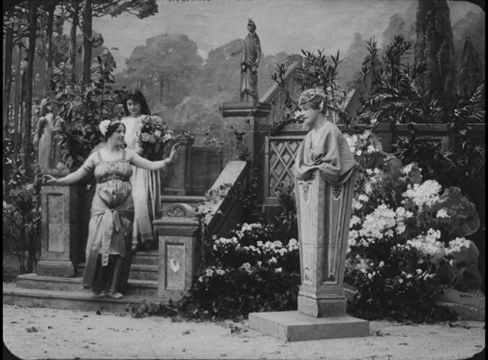
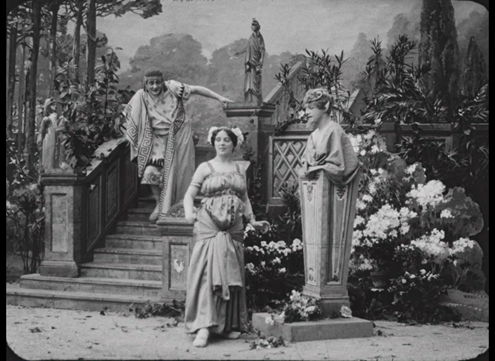
Fig. 1-2. Amour d’esclave (attr. Albert Capellani) © 1907 - Fondation Jérôme Seydoux-Pathé
The poster artist Candido de Faria chose this scene to illustrate the film’s publicity poster (figure 3). The couple in love are depicted in the foreground, bathed in the light of a Mediterranean garden. The staircase and the faun, the two ornate elements of the setting, are also reproduced. The bust form may have been inspired by a sculpture held at the Louvre, known as Faune de Vienne (from the place where it was discovered). Dating from the third quarter of the first century, only the bust remains. The faun in the film resembles it in the styling of the hair and the ears – the only distinct feature – the sense of youth it exudes, and the absence of accessories. Does the presence of the faun’s bust, which appears in the foreground of the scene, represent pagan love? Does it have an erotic connotation? On the poster, the faun seems to be blessing the forbidden love just at the moment when the slave surrenders to the kiss. In the film, the faun is not a statue but a made-up motionless actor of whom only the torso is visible, his legs hidden in a plinth. Was the production team striving for realism? To unsettle the viewer when the slave, still alone, seems to confide her secret to the statue before kissing it? The scale of the two characters – the slave and the fake statue – is the same, enhancing the importance of the faun and giving it greater impact. Living statues are a common theme in films. They appear in Pathé’s Rêve d’artiste, c. 1899; Ivrogne et statue, 1903; Jalousie et Ivresse de Pierrot, 1908; and Soeur Angélique, 1909. They are sometimes associated with the story of Pygmalion, but more often with drunkenness and dreams. However, in Amour d’esclave, the statue does not come to life even though the use of an actor might create that expectation. Its presence creates a sense of unease.
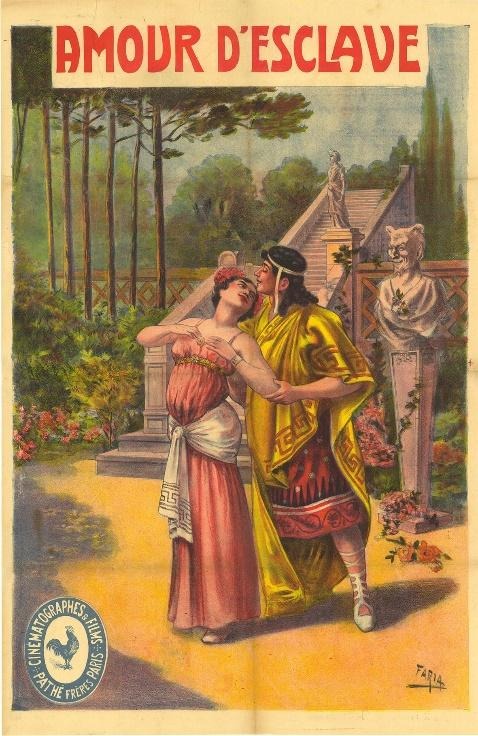
Fig. 3. Amour d’esclave. Poster by Candido de Faria, collection Fondation Pathé
Author unknown
Possibly due to its significant length for the time and its division into several scenes, Amour d’esclave was attributed to Albert Capellani by Charles Ford (Georges Sadoul, for his part, overlooked the director). This information was repeated by Henri Bousquet in 1993 in his Catalogue Pathé des années 1896 à 1914, and by Eric Le Roy in 2012 in his « Filmographie » in No. 68 of the journal 1895, dedicated to Albert Capellani (see Bousquet 1993 and Le Roy 2012). In 2026, however, the attribution has become uncertain. Firstly, the film’s screenplay was not submitted to the legal deposit until 1909. At that time, the name of the screenwriter, and sometimes the director, was often indicated in the document. Yet this is not the case for this title, for which no name is specified. Furthermore, the deposited document contains neither a synopsis nor a shot list, but only a fragment of film. In the case of this title, such a strategy should be seen as a protective measure taken by the producer to secure his rights retrospectively and guard against any duplication of copies. This may be a sign that Amour d’esclave was a success. Doubt regarding authorship is further based on the fact that, from 1909 onwards, following the revision of the Convention de Berne (after the Berlin Conference in the summer of 1908) (see Salmon, 2026), Pathé began to recognise the rights of some of its directors. Albert Capellani was part of this select circle. So it is likely that his name would have been mentioned had he been the film’s director.
The actors
The slave Chloë and her master Polymos are the two main characters. According to the account given by the actor Georges Dorival in Le Cinéma et l'Écho du Cinéma réunis no. 103 of 20 January 1914, the cast reportedly included himself in the role of Polymos, Amyot, Salvat and the dancer Rose Ridde, who would appear at the heart of the ballet in the dream sequence. Henri Bousquet, in his Pathé filmography, mentions two other names, Gabriel Moreau and Darenne Bennard, without citing his sources. This information was, until recently, included in the Fondation Jérôme Seydoux-Pathé’s online filmography, available online. Who is to be believed? The unknown Darenne Bennard, who dances three times in the film wearing ballet shoes, is said to have played the slave in love and, according to a photograph, Georges Dorival was Polymos. Bennard, who played in many Pathé films of 1906-7 and often danced in them, indeed plays the slave in love and, according to a photograph, Georges Dorival was Polymos. Ivo Blom ( 2023) notes that the same actress also appeared in two films dating from 1906, Aladin ou la lampe merveilleuse (credited to Capellani) and L'Écrin du Radjah (directed by Gaston Velle). (On the melodramatic acting in Amour d’esclave in general, see Abel, 1994: 166-167)
As for the dancer in the dream sequence, Rose Ridde (1879–1930), another film lists her in its cast, Cœur de Thellys, according to the periodical Le Diable rouge of 12 February 1910 in which Dorival also appeared. The photographs taken from the film Cœur de Thellys do not allow us to identify the dancer in Amour d’esclave with certainty as Ridde. They actually appear to be two different actresses. This actress who dances in Amour d’esclave appears in other films, such as Au Pays de l'or (credited to Chomón, 1908). Whatever the case may be, although she has only a minor role in the film, her appearance serves as an interlude, like the dance numbers in early narrative films. She dances alone at the start of the dream scene, before being joined by a corps de ballet of eighteen dancers. In the narrative, they represent sensuality and embody the dream of what is unattainable. The friezes of the Parthenon do not appear to be a reference for their choreography, as they would later be for an actress such as Napierkowska. The ballet corps’ performance is more in keeping with a conventional classical dance of the French Third Republic.
The prints
Pathé’s accounting records provide no specific information on Amour d’esclave, on its release in 1907, and even less when searching by creator (screenwriter, director, cinematographers) or regarding the number of prints sold and subsequently, possibly, rented out. However, the material currently held by film libraries and archive centres does provide some information.
Three copies were examined for the Museum of Dreamworlds project: the BFI copy (192 m.), the Dutch Eye Filmmuseum’s print (203 m.), and the 2024 4K digital restoration by the Fondation Jérôme Seydoux-Pathé (210 m.). Derived from the original negative, the latter is presented in black and white. The BFI and Eye copies appear to be based on original coloured distribution prints, even if the BFI version was preserved in black and white. In 1908, the original length of the film was presented as being 210 metres, of which 160 m. was coloured. Intertitles were in the classic Pathé red style. The colouring-in of elements such as the brazier’s flame helps to convey the intended effect: when the fire is stoked as Polymos sleeps, the coloured flame marks his entry into the dreamscape (figure 8). Also colouring-in was added to the costumes of Polymos (yellow) and Chloë (green) within otherwise blue tinted shots. Eye’s version of the dream scene ends with an explosion of colours in the fabrics the dancers twirl (figure 4). The BFI and Eye copies contain few intertitles. They are nevertheless original and correspond to the film’s narrative structure. Thus, we find ‘Kus der liefde’ (The Kiss of Love) in the Dutch print and ‘A Dream. Awful Reality’ in the English print. Compared to the negative, it appears that the two original prints have not been re-edited.
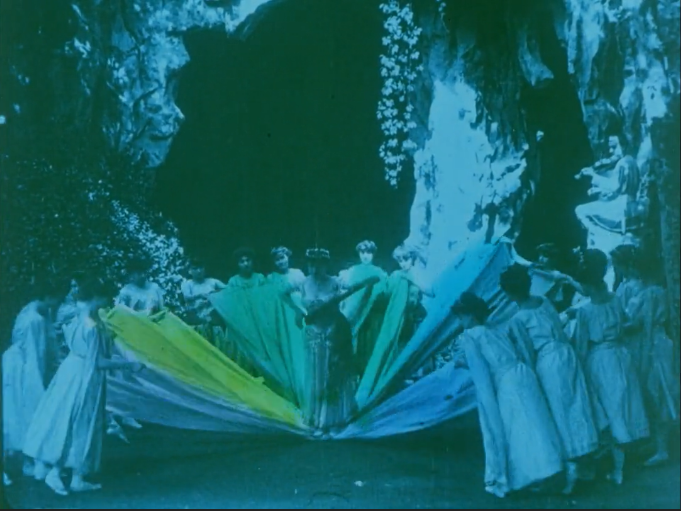
Fig. 4. Amour d’esclave (attr. A Capellani, 1907). Collection Eye Filmmuseum.
The sets
Amour d’esclave is staged against painted backdrops, from the meeting at Polymos’s house right through to the death of the two lovers. Only one scene is filmed on location in a natural setting: the dream sequence that features a dance. It is likely that the canvases were produced in the studio at 43 Rue du Bois in Vincennes, as Pathé had hired a large team of set designers following the expansion of the premises in 1904. The set designers had an entire floor on the first storey at their disposal for their work. Raw materials were stored on the ground floor of the building. Under Vallée’s direction, the team then consisted of: Hugues Laurent, a former pupil of the Germain Pilon School (now the Duperré School, founded in 1882, which teaches drawing and modelling),who had experience at the Gaîté Lyrique theatre; Albert Colas and Gaston Dumesnil (who would join Gaumont in May), trained by the set designers Butel and Valton whose workshop specialised in theatre sets; as well as Rivière, Boussard, [possibly Gilbourd], Quenu and Louis Vasseur.[2] Their task was to paint the backdrops with a view to achieving authenticity. It is unclear whether the pieces of furniture featured in the film (Polymos’s bench, the garden staircase, the brazier and the bed in his bedroom) were made by the Pathé team or hired for the purposes of the film. According to set designer Hugues Laurent, Pathé was already using a furniture rental company at that time - Touchard, ‘who was the first prop master and the first set designer in cinema’.[3] Perhaps it was from him that the company hired the bench and the bed, whose shape and papyrus flower decoration seem inspired rather more by Egypt than ancient Greece (on set design for stage and screen in France, see Berthomé, 2011).
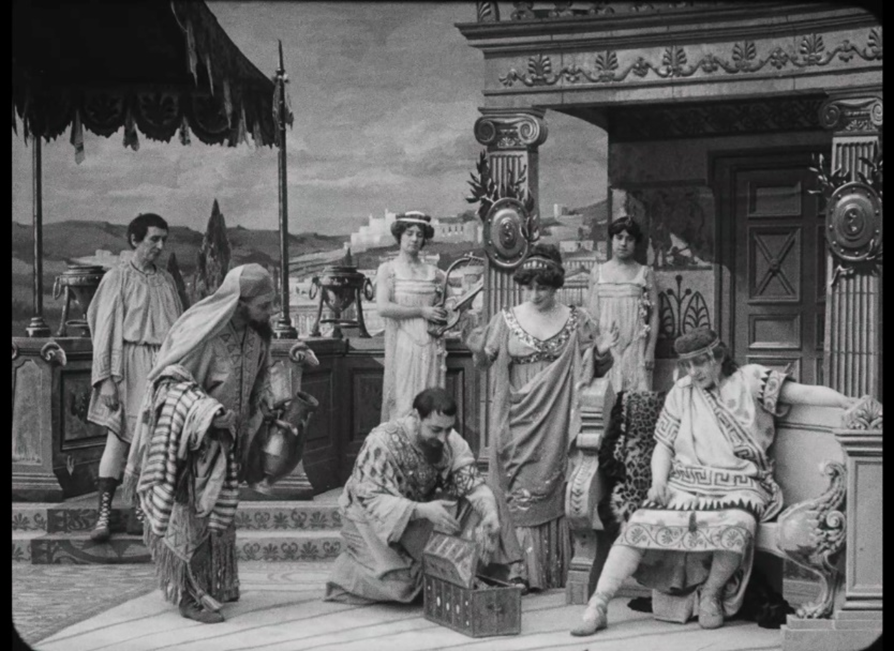
Fig. 5. Amour d’esclave (attr. Albert Capellani) © 1907 - Fondation Jérôme Seydoux-Pathé
The painted backdrops, rich in detail, form part of the spectacle. The film features four such backdrops, blending Roman and Greek decorative elements. In the first scene, the merchant Polymos sits on the terrace of his opulent residence (Fig. 5). The backdrop depicts a hill intended to represent Piraeus. A succession of buildings with light-coloured walls and temples, recognisable by their colonnades, complete the composition. The same technique was used in the Pathé film La Vestale (1908) to set the scene (see my text on La Vestale on this website). This urban backdrop, extended by a rolling horizon, is skilfully linked to the foreground through a series of motifs: cypress trees below the mansion, the start of a staircase – which reappears in the next scene – and the loggia, in front of which Polymos sits. Friezes of palmettes and lotus flowers cover the steps, adding an Orientalist touch.
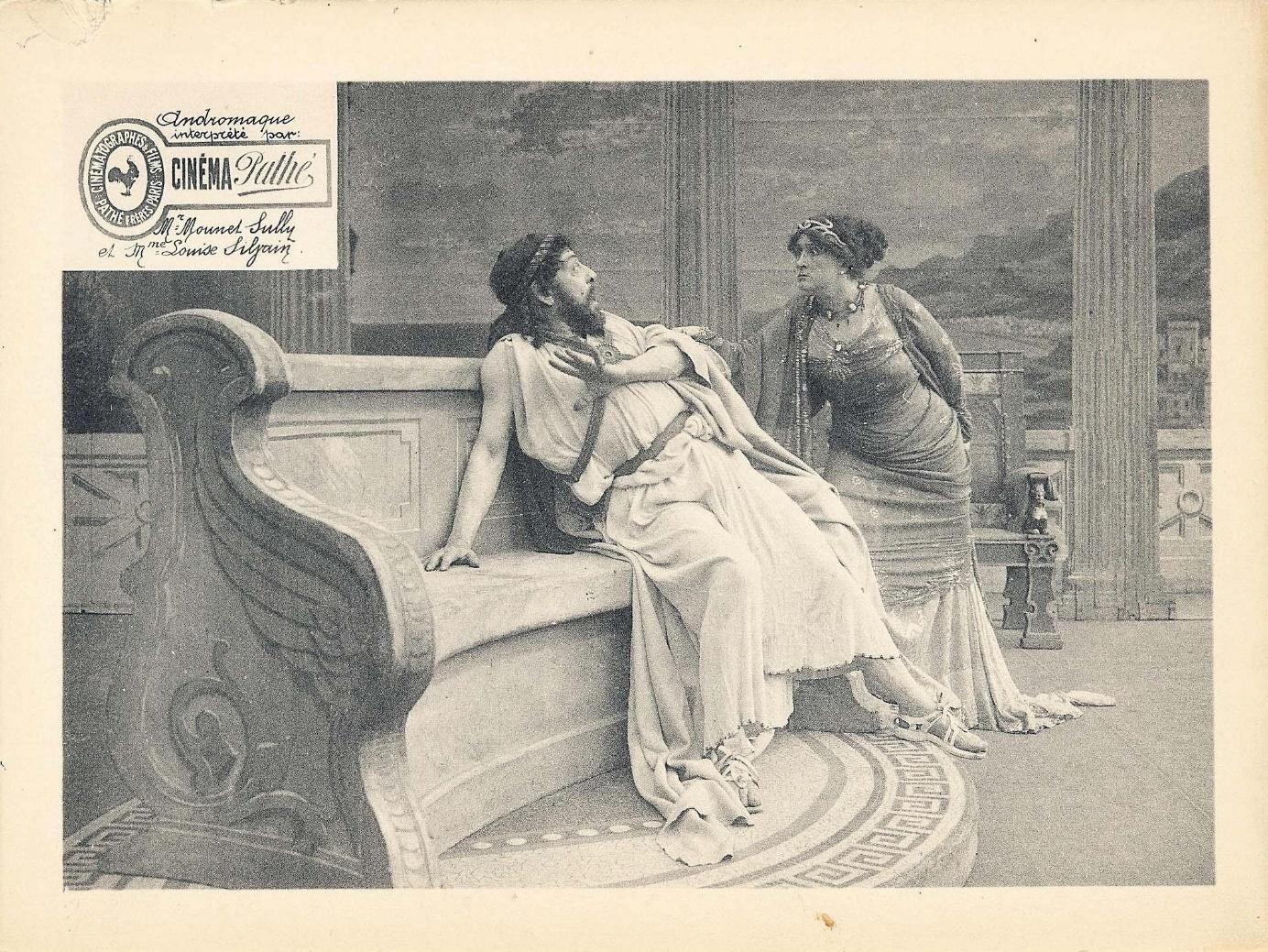
Fig. 6. Une scène d'Andromaque à la Comédie-Française (Le Film d’Art, 1909). Collection Fondation Pathé
Polymos is seated on a convex bench of the same type as the one that would appear in the film produced by Le Film d’Art, distributed by Pathé, Une scène d'Andromaque à la Comédie-Française, starring Mounet-Sully and Louise Sylvain in the title roles (figure 6).[4] The niche of the scene in Amour d’esclave is supported by Ionic pilasters decorated with trophies and surmounted by an entablature adorned with stylised palm leaves. The paintings on the niche wall (three figures, leaves), the braziers near the staircase, and the two steps decorated with palm leaves and lotus flowers that encircle the terrace in a double concave line, extending and enclosing the décor to the right of the screen, all contribute to the depiction of antiquity, though the elements cannot be precisely identified as references to archaeological research, and are without great accuracy: the door of the loggia, like the trophies, seems Roman in design.
In the second scene, set in the garden, the staircase amidst the greenery skilfully allows the characters to move through the set. It may have been inspired by the gardens of the Villa d’Este in Tivoli. The site had been depicted often enough for the set designers to draw inspiration from it (several elements of the villa’s décor were themselves inspired by paintings of the Third Roman Style).
The dream scene (figure 7), the only one set in a real location, may have been filmed in the Jardin des Buttes-Chaumont, in front of the grotto built for the park’s opening in 1867. Built at the request of Napoleon III and Empress Eugénie, the grotto made use of the existing site’s topography to create a pleasant promenade on the outskirts of Paris, in a location previously occupied by the village of Belleville (which was incorporated into Paris in 1860). In a neighbourhood that had previously been unsanitary, adjacent to former rendering and sewage disposal areas, this former quarry was repurposed as a setting to enhance the lakeside promenade. The site’s overall design drew on the presence of the quarry and the mounds formed by the earth extracted from it. By now, the vegetation has certainly changed since the film was shot, but the outline of the cave entrance – which leads to a vast chamber – appears to match that in the film. The scene is filmed outside the cave, with the dancers moving across the flagstones in front of the entrance, which forms the final shot of the set.
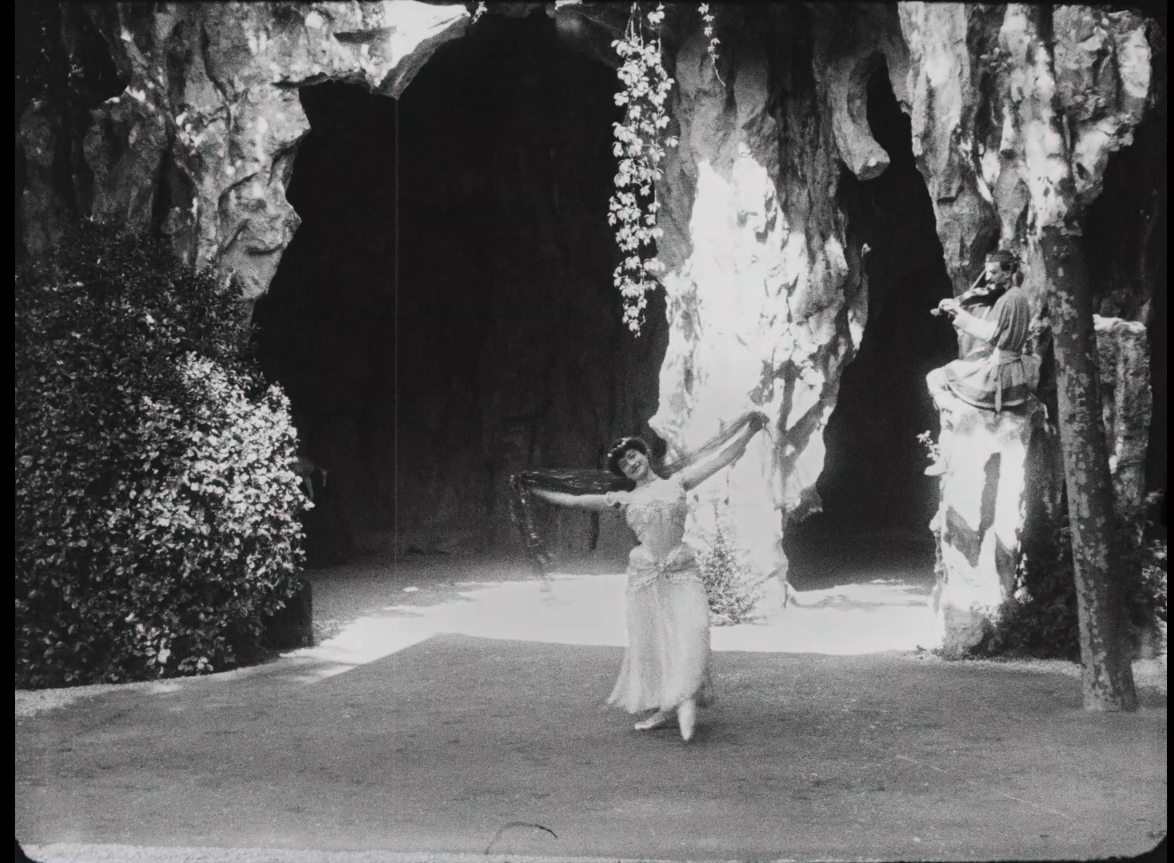
Fig. 7. Amour d’esclave (attr. Albert Capellani) © 1907 - Fondation Jérôme Seydoux-Pathé. Possibly set at the park of Les Buttes-Chaumont.
The scenes set in the prison cell, where the young woman is thrown and where she dies alongside her lover who has come to join her, echo films from earlier years. La Poule aux œufs d’or, attributed to Gaston Velle or Segundo de Chomon (late 1905), La Flûte enchantée (1906) and Odyssée d’un paysan à Paris (1906) all feature this same type of setting. The protagonist is literally thrown in by jailers, or falls from the ceiling, as the prison system is shown to operate brutally. Other films set in antiquity, such as Idylle romaine (1908) and La Vestale (1908), also contain a scene of imprisonment. In the first example, the protagonist is rescued and avenged. In the second and final example, she is lowered into a tomb to be walled up alive. Barring a miracle, salvation seems impossible (see my text on La Vestale on this website). In Amour d’esclave, the lovers sacrifice themselves to be reunited in death.
The concept of film spectacle
Even in 1907, the concept of film spectacle was closely linked to that of theatre from the same period: the opulence of the sets and the multitude of elements comprising them create an impression of lavishness that enriches the scenography, although there are few characters in most scenes. The painted or three-dimensional elements serve to frame the action rather than advance the plot. The technical means employed appear simple and are ultimately used sparingly for the time (no short focal lengths, tracking shots or dioramas). Although widely used in studios, the film also contains no special effects, apart from the flame spontaneously igniting in the vault. The profusion of some elements, such as the number of dancers in the dream sequence, is significant and spectacular. The screen frames the action as much as it draws the viewer in. The machinery of cinema, which has little place in this film, is replaced by pictoral and theatrical effects, such as the colouring of costumes, the flame flaring up, or the colour explosion at the end of the dance in the dream sequence. A year before the creation of the SCAGL, it is still through this reference to the stage that cinema defines itself as a spectacle. The sets certainly support the action rather more than the actors’ performances do, which, perhaps constrained by the romantic plot, remain conventional. Their acting does not lean towards psychology, but towards romantic drama: they respond to a situation placed within an exotic and dramatic framework.
The various painted scenes, whether depicting exteriors or interiors, have the effect of transporting the viewer into a doomed romance set in the past. The question of archaeological accuracy is therefore of secondary importance, even though the set designers draw inspiration from a specific stylistic vocabulary to accomplish their task (figure 8). Ivo Blom points out that the tripod with winged sphinxes, at the centre of the frame in the bedroom and which opens the dream when the slave stokes the fire there, is also found in the mother’s house in Idylle romaine (1908). The two films were shot a few months apart. This brazier, the original of which is kept at the Museo Archeologico Nazionale in Naples (MANN), was found in Herculaneum. Piranesi produced plates of it (‘Tripod with Sphinx, found at Herculaneum’, Volume I, plate XI, and ‘Tripod with sphinx-shaped supports, after the tripod discovered in 1760 in the Temple of Isis at Pompeii’, published in his Vasi, candelabri, cippi, plate 92 [Rome, 1771]). The object was captured by nineteenth-century photographers such as Giorgio Sommer, who also reproduced it on postcards. It is likely that Pathé’s set designers drew directly on such illustrations from their training, or on photographs, to reproduce objects that were striking in their form. The frieze on the brazier, decorated with stylised flowers, appears, however, to have been reinterpreted (the original is encircled by bovine heads linked by garlands). In the film, the use of an ‘authenticating’ classical prop therefore involves the insertion of a Roman motif into a Greek setting, much like the trophies on the terrace or Polymos’s salute at the beginning of the film.[5]
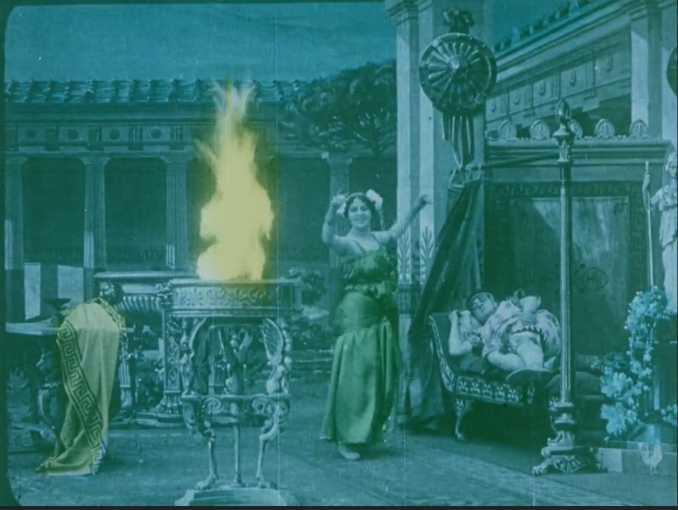
Fig. 8. Darenne Bennard in Amour d’esclave (attr. Albert Capellani). Collection Eye Filmmuseum
The various scenes evoke antiquity, without, however, depicting it with any concern for historical accuracy or reconstruction. The film’s synopsis, published in the May 1907 issue of the Supplément Pathé frères, sets the action in Greece, without specifying the date. The setting is described as follows:
‘The scene takes place in Athens. On the horizon, the silhouette of Piraeus against the dark blue of the Gulf of Aegina. Polymos, half-reclining on the circular bench of the peristyle, weary of orgies, songs, wine and lyres, absent-mindedly pushes aside the rich fabrics, the Corinthian bronzes, the amber and mother-of-pearl presented to him by the Nubian merchants, and clutches his temples with his hands like a sick man tormented by obsession. The appearance of the dancer Chloë, summoned by the wife before the situation turns against her, soon cures him of his ailments. He falls in love with her.’
The publication of the synopsis for cinema exhibitors did not, however, prevent confusion. For instance, the journalist who praised the programme at the Théâtre Cinéma Pathé, which had opened in Bourges, wrote in L’Indépendant du Cher on 10 November 1907: ‘a magnificent colour reconstruction of Roman life in the time of Tiberius’. He had presumably seen the film, but overlooked its Grecian setting. To attract the audience, it mattered little to Pathé whether the published description of the film was accurate. Its effect, with its exotic array of classical places, terms and objects, was to portray an ambitious film rich in sets. The film’s length (210 metres) and its presentation in various scenes would not be the distinguishing features when compared to the other titles released between April and July 1907 that were shown during this lengthy session in Bourges: Boar Hunt (scenes of sports and acrobatics, 205 metres), Boxing Match (125 metres) and Algerian Woman’s Revenge (190 metres). But Amour d’esclave had the advantage of being presented in colour upon its release, and this ‘extra’ allowed it to be highlighted in a programme. As for the various scenes that make up the film, they evoke an enthralling antiquity without, however, depicting it with a concern for accurate reconstruction.
Stéphanie Salmon
Footnotes
- ^ Honoré Simplisse, Nos soirées d’été : Le Cinéma en plein air à Dijon, 1907, p. 4.
- ^ Hughes Laurent, Souvenirs de la maison Pathé des années 1904 à 1906, fonds Commission de Recherche Historique, CRH105-B4, Cinémathèque française.
- ^ Ibid. p. 5.
- ^ The curved exedra bench or schola, with lion’s feet and sometimes lion’s heads too on the sides, was based on original tombs at Pompeii like the Tomb of Mamia. It was endlessly used and popularized by Lawrence Alma-Tadema in his late nineteenth-century paintings, starting with An Exedra (1869) and culminating in such examples as Autumn (1873) and Silver Favourites (1903). Just like Alma-Tadema, early twentieth-century filmmakers would often use exedra benches as markers of Antiquity, though mostly of smaller size. See Blom, 2023.
- ^ A statue on the right on the terrace is vaguely imitating the well-known Roman statue of Athena or Minerva Giustiniani, now at the Vatican Museum, and based on a Greek bronze of the late 5th–early 4th century BCE. It was endlessly copied in the nineteenth and early twentieth century.
Abel, R. (1994) The Ciné Goes to Town: French Cinema, 1896-1914. Berkeley/ Los Angeles: University of California Press.
Berthomé, J. (2011), 'Les décorateurs de cinéma en France', 1895, 65(65), pp. 90-111. DOI: 10.4000/1895.4437.
Blom, I. (2023) Quo vadis?, Cabiria and the ‘Archaeologists’: Early Italian Cinema’s Appropriation of Art and Archaeology. Turin: Kaplan.
Bousquet, H. (1993). Catalogue Pathé des années 1896 à 1914, Vol. 1907-1909, Bures-sur-Yvette: Edition Henri Bousquet.
Le Roy, E. (2012). ‘Filmographie’, in: Gili, J.A., LeRoy, E. (eds.), Albert Capellani, de Vincennes à Fort Lee, 1895 - Revue d'histoire du cinéma, 68. Paris : AFRHC, pp. 241-276.
Salmon, S. (2026). ‘Emergence du droit des metteurs-en-scène (1909-1912’, in: Auclair, C., Christie, I., et.al. (eds.), Copy/Rights and Early Cinema: Proceedings of the 17th International Domitor Conference. Ann Arbor: Lever Press. Forthcoming.