
1913- A City Reborn on Screen: Rediscovering the Sets of Jone, ovvero Gli ultimi giorni di Pompei
By AYLIN ATACAN
At the turn of the 19th century, Pompeii was the richest ancient archaeological site through which to elaborate and narrate the past. Its unique preservation also made the city and its vanished inhabitants popular subjects for early cinema. Silent films produced during this period were often fictional, though travel films and documentary footage were also common.[1] Pompeii thus became an “experimental case” for early filmmakers and a pivotal subject, particularly for the Italian film industry.
There are four silent films based on the 1834 novel The Last Days of Pompeii by Bulwer Lytton:[2] Gli ultimi giorni di Pompei (Società Anonima Ambrosio Film, directed by Arturo Ambrosio and Luigi Maggi, 1908); Gli ultimi giorni di Pompei (Ambrosio Film, directed by Eleuterio Rodolfi, 1913); Jone, ovvero Gli ultimi giorni di Pompei (Pasquali Film, directed by Giovanni Enrico Vidali, 1913); and Gli ultimi giorni di Pompei (Società Anonima Grandi Films, directed by Amleto Palermi and Carmine Gallone, 1926). [3]The novel, according to Maria Wyke (1997:270), ‘brings the ruins to life by narrating a sensational, melodramatic love story set against the backdrop of the doomed city’.
All four films share a similar narrative structure, and both décor and spatial representation can be examined under common thematic categories. Taken together, the recurring scenes across these works include outdoor settings such as street views and the Forum, interior settings such as the House of the Tragic Poet and the Villa of Diomed, religious scenes in the Temple of Isis, spectacles in the Amphitheatre, and depictions of decadence.[4]
Jone, ovvero Gli ultimi giorni di Pompei was released by Pasquali Film,[5] directed by Giovanni Enrico Vidali, and had a runtime of 95 minutes.[6] Much has been written about the Ambrosio version of 1913,[7] but in this essay, I will concentrate on the lesser-known Pasquali film, as it is a print of this version that survives in the BFI archive. My focus here will be on the Pasquali film’s mise-en-scène and how its settings draw on both the archaeological evidence for the city and the reception of that evidence in, for example, nineteenth-century paintings, to bring alive in moving images the last days of the town and its inhabitants. As noted by Adrian Stähli (2012: 81), this production, like the other version produced by the Ambrosio Film in 1913, was filmed on three-dimensional sets:
The Rodolfi and Vidali films were both shot on three-dimensional sets that carefully reconstructed Pompeian architecture, streets, house interiors, and furniture, rather than merely using painted backgrounds. Some exterior scenes of the Vidali version were even shot on authentic locations in Pompeii. Both films stage the destruction of Pompeii as a spectacular climax, with the Vidali film using actual footage from an eruption of Mount Vesuvius.[8]
This adaptation follows the novel’s storyline closely and was filmed in settings informed by archaeological sources, resulting, as with the Ambrosio version of 1913, in a more historically accurate representation of the ancient city than earlier. The story follows an Athenian man, Glaucus, who falls in love with the Greek Ione, while Nydia, a blind flower seller, is desperately in love with Glaucus. Arbaces, an Egyptian priest responsible for the Temple of Isis, murders Ione’s brother and accuses Glaucus of the crime. Arbaces plots this because he is jealous of the love between Ione and Glaucus. On the last day of Pompeii, Nydia helps Glaucus and Ione escape and succeeds in getting them aboard a fleeing ship, after which she drowns. Like the 1908 version, the film opens with an introduction of the characters. However, unlike its predecessor, these characters appear against carefully constructed set designs rather than blank backgrounds. A notable departure from the other adaptations is the reintroduction of another female character, Julia, the daughter of Diomed, who is portrayed as a friend of Glaucus. Julia acts as a contrast to Ione: whereas Ione is pure, intelligent, and noble, Julia embodies superficiality and petty jealousy. Arbaces uses Julia’s jealousy to fuel his own plots against Glaucus. He plays on her emotions, turning her vanity into a tool for his schemes. Her choices help set in motion the chain of betrayals and false accusations that lead to Glaucus’s trial and near-execution. Several interior sequences are set in Julia’s home, The Villa of Diomed.
Outdoor Scenes and the Forum
The film includes three significant outdoor scenes. The first appears at the beginning, immediately after the introductory storyboards, where Mount Vesuvius is shown smoking in the background. The framing technique used in the opening scene of the film, with a circular border at the top, is reminiscent of stereograph cards (fig. 1).[9] Throughout its history, Pompeii lived under the shadow of Vesuvius, an active volcano whose true nature was unknown to the ancients. The city of the dead’s relationship with the volcano is deeply ironic: while Pompeii met its tragic end because of the eruption, its remarkable state of preservation owes everything to the same event.[10] Many scholars have noted that this unique preservation has made Pompeii a microcosm of ancient Roman architecture. For example, architectural historian Spiro Kostof (1985), in his seminal A History of Architecture: Settings and Rituals, entitled the chapter on Roman architecture ‘Rome: Caput Mundi’ and used Pompeii to illustrate the urban fabric and architectural components of an ancient Roman city.[11]
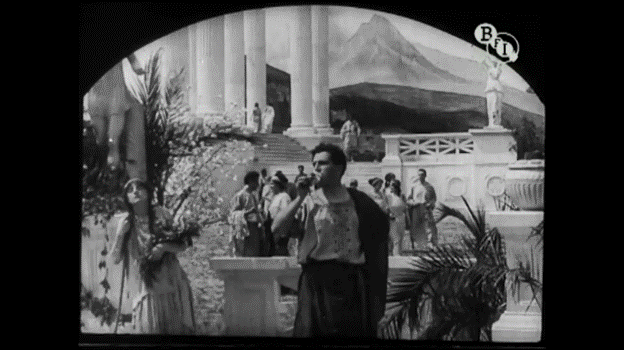
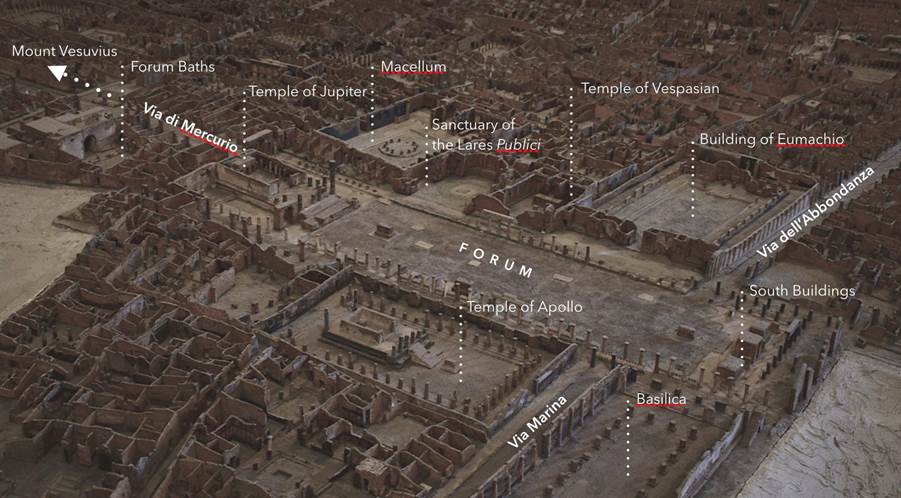
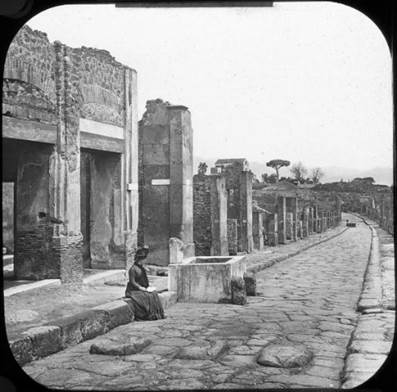
As in the 1908 original and the other 1913 adaptation, the characters are depicted in a street scene near the Forum, composed of architectural elements such as monumental columns, stairways, urban furnishings like seating units, greenery, and statues. This setting underscores the Forum’s role as the central social and meeting space of Pompeii.[12] The Civic Forum, a rectangular open area surrounded by colonnades and located in the southwest of the city, was the hub of commerce, politics, and daily life in Pompeii (fig. 2). Constructed as the city’s new urban core in the Early Imperial Period, the Forum was designed on a monumental scale, employing costly materials such as marble for colonnades, statuary, and other architectural components (Richards, 2009). One of Pompeii’s major thoroughfares, the Via dell’Abbondanza, ran through the Forum and extended toward the Amphitheatre (fig. 3). Numerous public facilities were situated along this axis, reinforcing its importance as a civic and social artery. This monumental urban space later became one of the most frequently visited locations in Pompeii and was much admired by modern visitors.
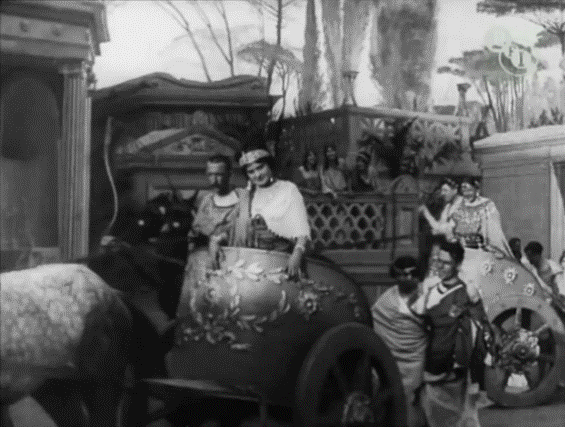
The film’s second outdoor scene presents a view of another, unnamed street (fig. 4). In this sequence, a stepped terrace serves as the backdrop, where a group of figures watches the unfolding events, resembling spectators in a theatre. The careful staging of this scene emphasises that Pompeii’s streets, like the Forum, functioned as social spaces where people gathered, observed, and interacted, showcasing the city’s vibrant public life.[13]
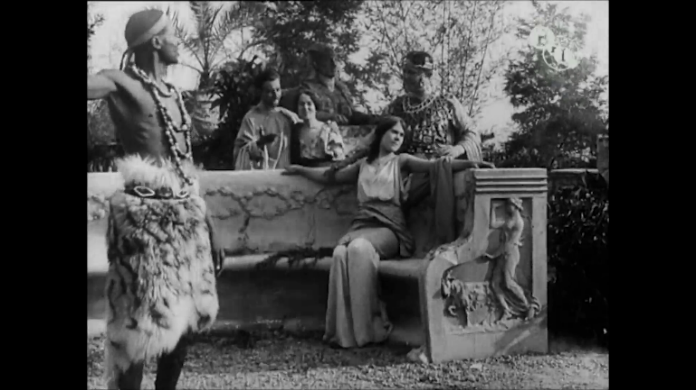
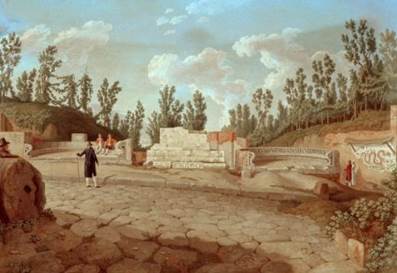
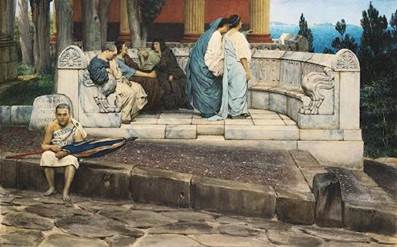
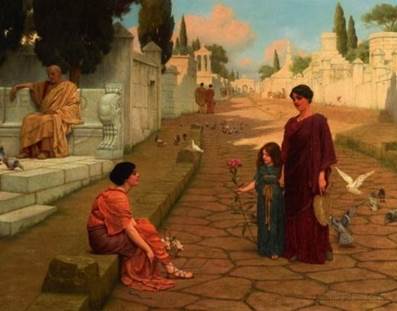
In the third outdoor scene, the camera captures a semicircular seating unit placed in front of the entrance to Arbaces’ house, where Arbaces and Ione meet (fig. 5). This exedra, set among plants, trees, and statues, functions as an element of urban furniture. In Pompeii, semicircular seats were usually placed along streets with tombs. Exedrae were found on the Street of Tombs, the Stabian Street, and the street outside the Herculaneum Gate, as well as in private peristyle gardens. The furnishings and accessories employed in the film, such as the exedra, were modelled on items unearthed in excavations, thereby offering audiences insight into the material culture of Pompeii’s houses and urban spaces. Although traditionally an outdoor seating arrangement, the exedra was occasionally employed as an interior furnishing in silent films. Directors may have done this to enhance the spatial depth of scenes or to monumentalize otherwise ordinary private settings. These semicircular seats were among the most frequently illustrated pieces of urban furniture from Pompeii in nineteenth-century art. For instance, the well-known open-air seat dedicated to the Priestess Mamia on the Via dei Sepolcri, just outside the Herculaneum Gate, was depicted in numerous artworks. Examples include Road of Tombs by Jacob Philipp Hackert (1793) (fig. 6a), An Exedra by Sir Lawrence Alma-Tadema (1869) (fig. 6b), and Outside the Gate of Pompeii by John William Godward (1905) (fig. 6c). According to Blom (2023:158), Cines films on Roman antiquity (1909–1918) often featured exedra benches, echoing the prototype painted by Alma-Tadema in An Exedra (1871), itself inspired by the semi-circular stone bench at the so-called Tomba di Mamia in Herculaneum. In the film, such features help construct a Pompeii that appears at once familiar and richly atmospheric- an urban landscape rendered spacious, ornamented, and recognisably luxurious to early twentieth-century spectators.
Interior Scenes and the Domus
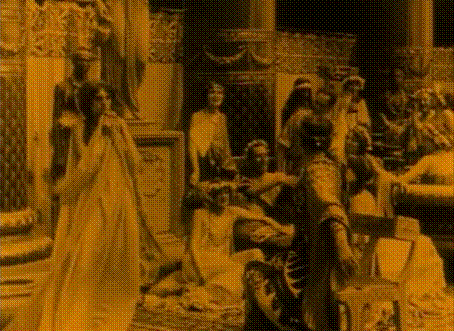
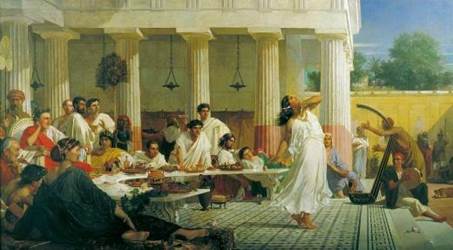
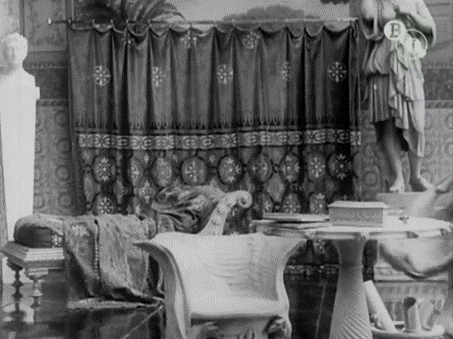
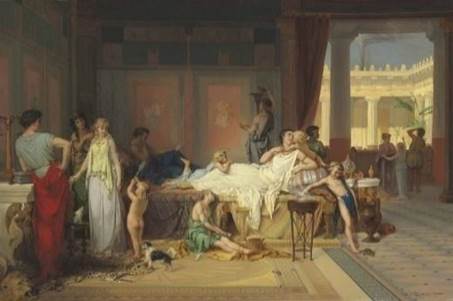
Several interior scenes are set in the houses of Arbaces, Julia, Ione, and Glaucus. Unlike the other film versions, the first interior scene occurs in the house of the priest Arbaces, depicting a feast in a flamboyant domestic setting (fig. 7).[14] Domestic activities performed in reclining positions, such as resting and dining, were popular themes in representations of daily life in ancient Pompeii and were often portrayed with many participants. The tradition of reclining while dining, which originated in ancient Greece, continued into the Roman period, gradually evolving to include women and becoming a marker of elite status. The banqueting scene in the Pasquali film effectively conveys this elite practice and is reminiscent of similar scenes depicted in 19th-century artworks (fig. 8). We can point to several 19th-century paintings that emphasise banqueting and reclining as markers of Roman identity, which clearly influenced later cinematic imagery. Examples include Lawrence Alma-Tadema’s The Roses of Heliogabalus (1888), The Vintage Festival (1870), as well as Thomas Couture’s monumental The Romans in their Decadence (Les Romains de la décadence) (1847). These works visualise the Roman banquet as a scene of collective leisure, excess, and status display, and their popularity established a strong visual tradition for artists and filmmakers alike. One of the most striking cinematic translations of this tradition can be found in Louis Feuillade’s Héliogabale/ L’Orgie romaine (1911). Although a minor entry in Feuillade’s career, the film stages Emperor Héliogabalus’s decadent court through scenes of reclining figures framed by convincing Roman architecture.[15] The frieze-like compositions, hand-tinted colours, and monumental sets echo the grandeur of 19th-century banquet paintings, transforming the emperor’s court into a theatrical display of excess and cruelty. In this sense, The Roman Orgy (L'Orgie romaine) demonstrates how fin-de-siècle pictorial conventions of Roman feasting directly shaped early cinema’s vision of antiquity. In the film, the visual opulence and slight decadence of Arbaces’ feast serve a similar narrative function: the exoticised richness of his household marks him as an ambiguous and morally suspect ‘Other,’ standing in deliberate contrast to the more restrained domestic spaces of Pompeian citizens and thereby visually preparing the spectator for his role as the film’s antagonist.
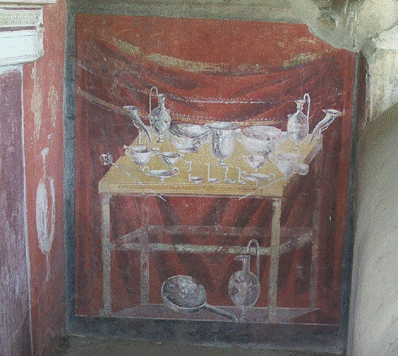
A major architectural space associated with dining in Roman houses was the triclinium, named for the three klinai (banqueting couches) arranged in a U-shape and set against the walls of the room. The kline was a Greek-style couch used for reclining and, in some cases, sleeping, in both living rooms and triclinia. [16] Various forms of kline, ranging from movable wooden couches to fixed masonry versions, are well represented in Pompeian houses. Wall paintings depicting banqueting scenes in Pompeii and Herculaneum show participants reclining on couches with elegant cushions while dining at tables. The couches were often decorated with luxurious textiles and accompanied by marble or bronze tables, which held fine tableware made of costly materials such as silver, gold, bronze, or semi-precious stone, including items like the scyphus, cantharus, and simpulum (fig. 9).[17]
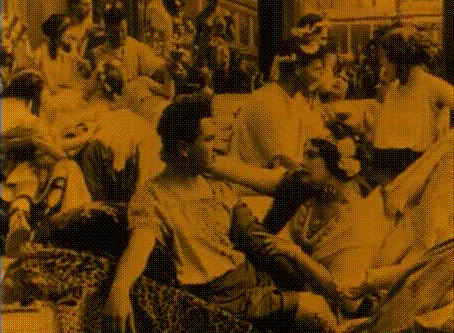
A second vividly depicted feast takes place in the triclinium of Julia's house. The scene places Glaucus and Julia in the foreground, with a two-story collonaded garden in the background, reflecting archaeological evidence that many triclinia were connected to peristyle[18] gardens (fig.10). Despite variations in specific details, both feasting scenes illustrate one of the most celebrated aspects of Roman upper-class life: the luxurious, conspicuous, and joyful consumption of food and drink.
Model House: The House of Tragic Poet
The next interior sequence depicts Glaucus’ house, focusing on the moment when he frees the blind girl, Nydia, and brings her to his home. The events unfold in the atrium, reconstructed as a modified version of the House of the Tragic Poet (fig. 11). Between 1824 and 1826, the small yet elegantly decorated House of the Tragic Poet was excavated. It was named after a wall painting originally interpreted as depicting ‘a tragic poet reciting his work to a group of listeners’ (now re-identified as a mythical scene in which Admetus and Alcestis listen to the reading of an oracle) (Beard, 2010: 82). The House of the Tragic Poet became widely accepted as a prototype of Pompeian domestic architecture. The house gained fame for its wall paintings and mosaics in the atrium and triclinium. Its plan closely conforms to Vitruvius’ description of the Roman domus in De Architectura, making it a ‘model house’ widely used as a reference for Roman domestic architecture. ‘Since its discovery, this small house has come to be regarded as a veritable paradigm of the Roman domus and has enjoyed a rich afterlife, furnishing a kind of stage set for the projection of our own retrospective notions about Roman life and manners’ (Bergmann, 1994: 226). The atrium, decorated with several mythological paintings, has been interpreted as a ‘memory theatre’ in reference to the paintings’ content (Bergmann, 1994: 249). Its rich decorative context made it a focus of artistic illustration from its discovery onward. William Gell introduced the house to the public in Pompeiana (1832), and Sir Edward Bulwer-Lytton later used it as the dwelling of his character Glaucus. Following its early representations, the house became a widely used visual model for fictional environments in paintings and illustrations, functioning as an intermediary between reality and antiquity, and helping to reanimate the so-called ‘city of death.’
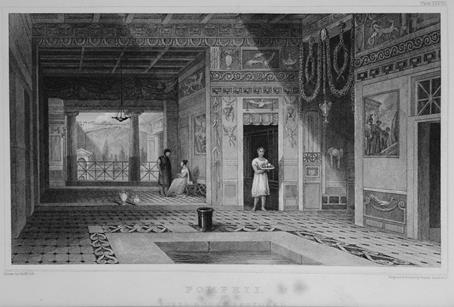
Gell’s reconstructed atrium view, presented in a single-point perspective (fig. 12), emphasises the architectural setting of the atrium and the spaces beyond. The impluvium occupies the foreground, while the lararium marks the background and vanishing point. [19]Gell illustrated the reflection of light from the roof opening (compluvium) on the floor, and all architectural elements and decoration are depicted in meticulous detail. Later visual representations, including paintings, lithographs, and photographs, frequently used nearly identical angles.
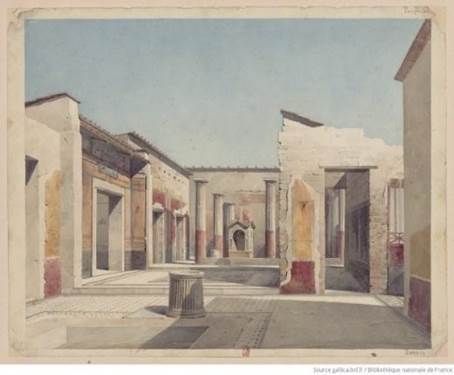
However, Gell’s illustration was not the first. Henri Labrouste, a French architect trained at the École des Beaux-Arts, painted the house’s actual state of excavation as a coloured wash on paper circa 1824-1830 (fig. 13). In this depiction, architectural elements frame the views and create spatial sequences. Labrouste’s work was executed after the wall paintings had been removed to the museum, though the pastel colours and remnants of frescoes remained visible. According to Bergmann (1994), post-discovery representations pursued two aims: some sought to document and record the remains accurately, while others aimed to re-create the domestic atmosphere.
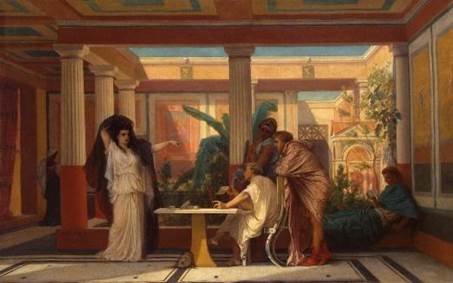
In the second half of the 19th century, recreations became increasingly popular. Artists began animating the domestic environment by inserting human figures. For instance, Gustave Boulanger’s 1855 painting Theatrical Rehearsal in the House of an Ancient Roman Poet depicts a performance in the peristyle, referencing the mosaic of actors and dramatists (fig. 14). Architectural and decorative details, including the lararium, wall paintings (copies of the originals preserved in the National Archaeological Museum of Naples), and reconstructed furniture, create a robust spatial recreation.
A more detailed version was painted by Pierre Olivier Joseph Coomans in 1869, titled The Last Hour of Pompeii The House of the Poet (fig. 15). This painting shows the view from the cubiculum[20]to the peristyle, with reclining figures as the focal point, emphasising the act of reading and leisure. The depiction includes intricate accessories such as chests, jewel boxes, vases, candelabra, mirrors, chandeliers, clothing, and jewellery, as accurately as possible. Human figures highlight social differences: slaves serve their masters, and the looming eruption of Vesuvius in the background reminds viewers of the impending catastrophe.
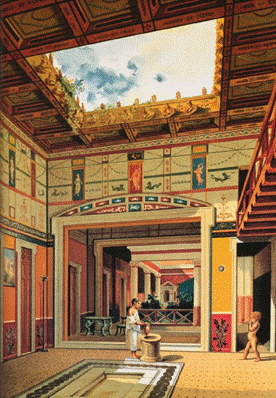
In 1898, D. Capri produced a chromolithograph framing the atrium-tablinum[21]-peristyle axis of the House of the Tragic Poet, based on G. Discanno’s illustration (fig. 16). Fewer human figures are present, and the focus is on architectural depiction. This “ideal reconstruction” highlights details such as the atrium, impluvium, compluvium, lararium, wall paintings, mosaics, and decorative objects, serving as a medium of architectural documentation.
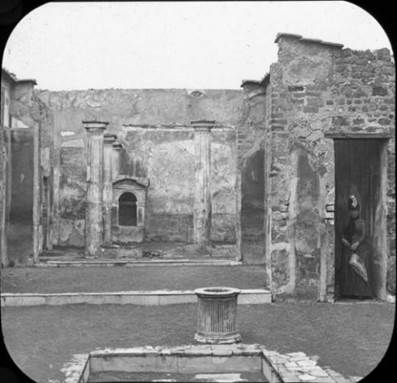
The house was also a popular subject in 19th-century photography, appearing in guidebooks and lantern slides. One example shows a Victorian woman posed in the tablinum, echoing Labrouste’s angle (fig. 17). Similar to painters, photographers inserted human figures, often visitors, to revive the past, convey scale, and evoke a nostalgic or romanticised atmosphere of the ruins.
The Villa of Diomed
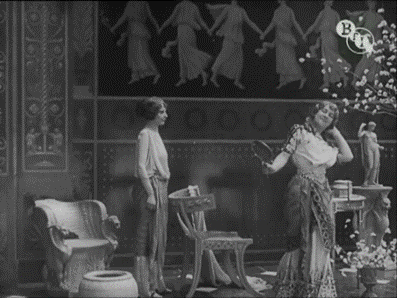
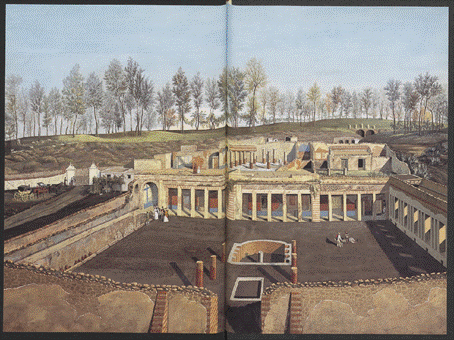
The third domestic interior scene portrays Ione’s bedchamber, or cubiculum, which appears to be modelled on Julia’s bedchamber in the Villa of Diomed (fig. 18). Julia, the daughter of the wealthy Diomed, had a cubiculum overlooking the villa’s garden. The space is depicted as dark and intended for sleep, consistent with Bulwer-Lytton’s detailed descriptions of the room’s furnishings, which include small items on the dressing table such as a circular steel mirror, cosmetics, unguents, perfumes, paints, jewellery, combs, ribbons, and gold pins. Bulwer-Lytton ( 1850, Book the Third, Chapter VII:206 ) also notes that Julia’s dressing room, located just outside the cubiculum, featured a curtain richly embroidered with gold flowers, emphasising the luxurious tastes of the Roman elite.
Almost a century before the technique of making full plaster casts of the body cavities had been perfected, the solid debris here allowed the excavators to see the full form of the dead, their clothing, even their hair, moulded into the lava (Grant, 1971: 134).
The villa’s layout, with its vista toward the sea, created a more sophisticated spatial experience compared to urban houses lacking such natural perspectives. Grant (1971:134) describes the architectural setting:
The collonaded entrance leads straight into the peristyle, an arrangement which, according to Vitruvius, is appropriate for a country villa... The south side of the peristyle is flanked by an apsed sunroom, and a lower level is adorned by the largest garden in the Pompeian region. Its trees, shrubs, and flowers, grouped around a fountain, fish-pond, and pergola (used as a summer dining-room), stood within a continuous colonnade. To the stroller within its shade, the space between each pilaster framed a different, delightful picture of land and sea; and the terraced belvederes at the corners of the walk, facing the coast, enjoy one of the most agreeable vistas in the world.
Carl Georg Enslen, a notable panorama artist, illustrated the villa in 1825 (fig. 19), providing one of the earliest visual records of the site under excavation. His perspective, from coast to land, emphasises the scale of the villa’s garden, and he included human figures, likely 19th-century visitors, to convey scale and spatial experience.
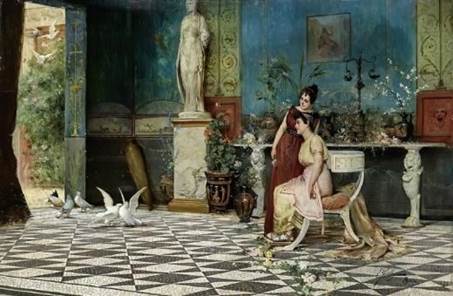
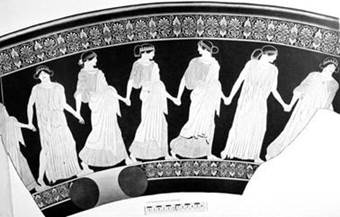
In the film, the scene features a seated noblewoman holding a mirror, (see fig. 18) accompanied by her slave, replicating well-known 19th-century painting compositions (fig. 20). Additional details highlight the cubiculum’s opulent decoration, including marble furniture, a statue, a small table, and personal items such as boxes of various sizes. The background features painted décor with large-scale female figures, imitating the wall paintings from the Villa of Mysteries, another Pompeian villa near the Herculaneum Gate, excavated just four years before the film’s production. The female figures in both the villa’s original walls and the film’s cubiculum scene closely resemble dancing women depicted on mid-4th-century BC Attic red-figure vases (fig. 21). This carefully curated setting also contributes to the characterisation of Ione: its refined décor, emphasis on personal adornment, and softly monumental painted figures construct a graciously feminine space that aligns with the novel’s portrayal of her as virtuous, cultured, and delicately attuned to beauty. In this way, the mise-en-scène not only reproduces architectural and artistic models but also serves to visualise Ione’s moral and emotional world for the viewer.
Temple of Isis Sequences
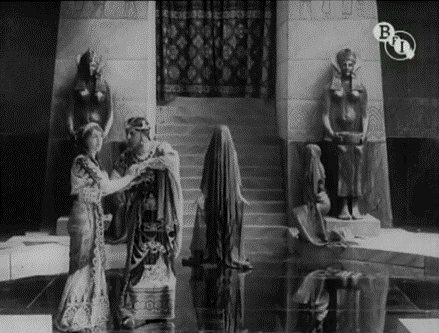
The film shows both the exterior and interior of the temple, along with the performance of the cult ritual (fig. 22). However, the exterior reconstruction is not entirely faithful to the actual architecture of the temple. Mystery cults, such as those devoted to Isis, had followers and temples throughout the Roman world. In Pompeii, Isis was a highly popular deity, with a large temple dedicated to her worship (Aldrete, 2004, 223).
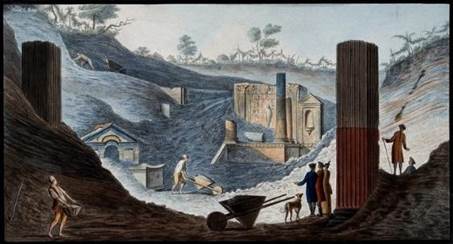
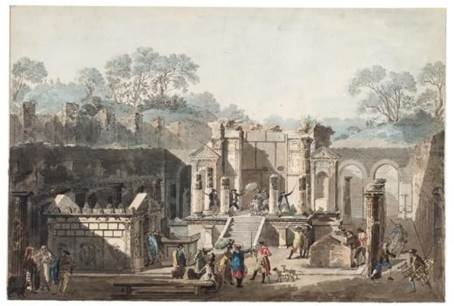
The Temple of Isis was situated near the Large Theatre at the Triangular Forum and, unlike other temples, was open daily. Its high walls and single entrance ensured that ceremonies inside were invisible from the outside. The temple quickly became an artistic subject after its excavation. The temple had become a popular background for photographers in the 1850s and featured in several studies. The small temple dedicated to the Egyptian goddess Isis and located just behind the Large Theatre was revealed almost intact. Perhaps due to its well-preserved state, it was used as a recurring visual image in the illustrated guides as well as personal accounts. Pietro Fabris created an engraving of its discovery in 1779 for Campi Phlegraei, a publication of Sir William Hamilton’s explorations[22](fig. 23), while Francesco Piranesi’s 1788 engraving depicted the temple’s state post-excavation (fig. 24). Fabris emphasises spectators observing the excavation, whereas Piranesi places human figures within the ruins, transforming them into performers on a stage.
The outdoor decoration of the temple in the film diverges from reality. The entrance is approached via a path flanked by sculptures, emphasising Arbaces’ authority. This exterior, however, does not correspond to the excavated remains of the Temple of Isis in Pompeii; its architectural modesty is likely intentional, designed to magnify Arbaces’ narrative role by transforming the temple into a more imposing personal domain for the villainous priest, in keeping with his characterisation in the novel.
In the interior, reflective flooring, absent in earlier versions, mirrors the actors performing ritual dances, reinforcing the temple’s mystical and theatrical atmosphere. The construction of the interior further contributes to Arbaces’ exoticisation: the décor, costumes, and ritual choreography draw heavily on 19th-century European fantasies of Egyptian style, with darkened lighting, drapery, and patterned surfaces evoking an imagined Orient. These visual codes situate Arbaces as a figure outside “normal” Pompeian culture, marking him as culturally and morally other and aligning the sacred space he controls with the themes of secrecy, manipulation, and danger central to his role in the story.
Amphitheatre
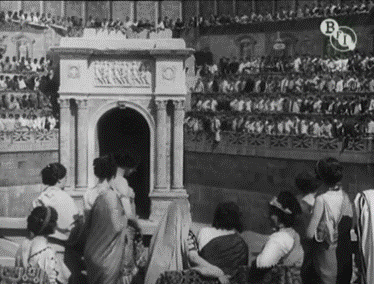
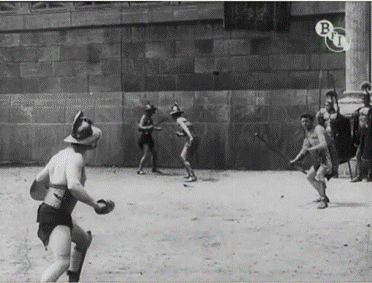
The film includes two notable scenes set in the amphitheatre. The first depicts chariot races, staged in this large outdoor arena. Real horses are used, and the crowd of spectators is filmed from multiple angles, emphasising how such mass spectacles were central to urban life and attracted the populace (fig. 25a-b). The second amphitheatre scene presents a circus performance during a gladiatorial combat. A real elephant participates in the event, and Glaucus is sent into the arena to fight a lion and tigers released from cages. He is shown standing in the arena surrounded by wild animals. Compared to the 1908 adaptation, this production was considerably more expensive, featuring three-dimensional sets with massive décor, numerous actors forming large crowds, and the use of live wild animals, demonstrating the filmmakers’ ambition to convey spectacle, scale, and realism.
Ancient amphitheatres were more than venues for spectacle in the Roman world; they were symbols of power, social hierarchy, and cultural identity. Gladiators fought for honour and survival, while exotic wild animals displayed Rome’s dominion over nature and its far-reaching empire. Elite spectators sat in elevated seats, asserting political authority and reinforcing social order, while ordinary citizens gathered to watch, entertain, and participate in civic life.
The amphitheatre of Pompeii is located at the end of the Via dell’Abbondanza, in the southwest corner of the city. This grand structure had a profound impact on the cultural life of Pompeii, more so than many other public buildings (Zanker, 1998). With an estimated capacity of around twenty thousand spectators, it gained widespread fame for its gladiatorial combats, which drew Romans from neighbouring towns. Consequently, the amphitheatre became a popular social space for both Pompeians and visitors. Graffiti on its walls indicates that, before the construction of the amphitheatre, gladiatorial contests had taken place in the Forum.
Other structures in this area include the Gladiators’ Barracks behind the Large Theatre, the House of the Gladiators, and the Large Palaestra, discovered in 1776 (Cooley and Cooley, 2013). The Large Palaestra served as a training ground for the upper-class youth and was situated adjacent to the amphitheatre. In antiquity, as with the Colosseum in Rome, the Pompeian amphitheatre functioned as 'a place to go to see and be seen, a place of visible social status and rigid social hierarchies' (Bomgardner, 2000: 42). Its excavation attracted considerable attention, and along with gladiatorial games, it became a popular visual theme in art.
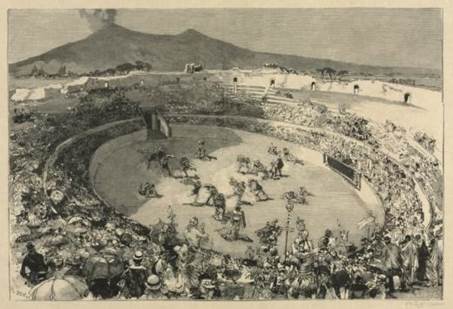
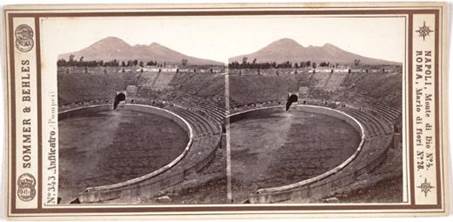
For example, in 1884, the French painter and etcher Auguste Louis Lepère produced an engraving titled The Festival of Pompeii, the Circus of Gladiators, recreating a gladiatorial game viewed by a Victorian audience (fig. 26). Lepère included human figures dressed in both ancient costumes and 19th-century attire. Vesuvius appears in the background, smoking, as a reminder of the catastrophic eruption. The artist emphasises the scale of the amphitheatre by depicting dozens of figures that gradually shrink and blur toward the edges of the scene near the mountain. Photographers Giorgio Sommer and Behles produced comparable albumen stereographs of the amphitheatre with Vesuvius in the background (fig. 27). Despite the difference in media, both the engraving and the photographs share compositional strategies: framing the amphitheatre alongside the mountain to convey both scale and context. In the context of the film, the amphitheatre takes on an even deeper narrative importance: it is the place where Glaucus is publicly humiliated and sent to face deadly punishment, where Arbaces’ crimes are finally exposed before the assembled crowd, and where the first violent signs of Vesuvius’s eruption interrupt the spectacle and propel the story toward catastrophe.
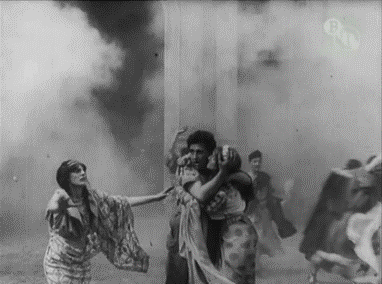
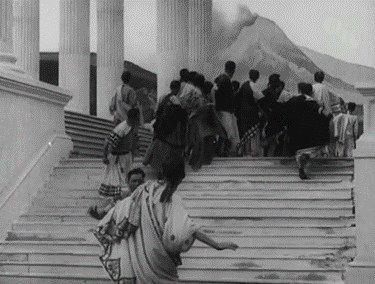
The film’s climax, set in the amphitheatre and in the streets around it, stages the terror and horror created by Vesuvius’s eruption during the gladiatorial combat. The street sets used earlier are reused, this time filled with spectators fleeing the eruption. Red-shaded sequences, present in other versions, are enhanced with heavy smoke, signalling fear (Figure 28a-b).
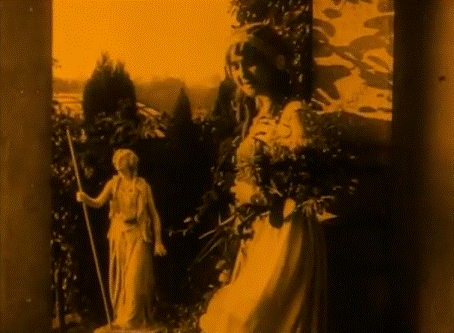
Unlike the two Amrosio films that end with the eruption and Nydia’s death, but like the novel, this film includes a post-catastrophe episode, showing Ione and Glaucus living in Greece ten years later. The scene opens to a garden, directing attention to a memorial statue of Nydia, the blind girl who saved their lives (fig. 29). Whether the statue is real or an actress posing as Nydia is unclear. This narrative innovation differentiates the film from its predecessors by suggesting life and continuity after Pompeii’s destruction, symbolising resurrection and challenging the notion that time froze with Vesuvius’s eruption.
Conclusion
As with the two Ambrosio versions, the film allows spectators to become pseudo-time travellers, meditating on Pompeii’s fate. The film’s choreography of life before and after the eruption reflects a conceptual 'resurrection' of the city. A detailed mise-en-scène analysis reveals significant efforts to replicate Pompeii’s buildings, urban spaces, and architectural features.
Themes such as banqueting share strong visual parallels with 19th-century artworks. From actor poses, costumes, and gestures to spatial arrangements, furniture, and depiction of slaves and masters, the scenes closely echo the pictorial tradition. The film adopts visual codes derived from such artworks, with more varied tinting than previous versions: dark green for interiors and purple for outdoor sequences.
The film employs the 'tableau' or 'proscenium arch' shot, showing actors’ full bodies within their environment and allowing viewers to perceive spatial depth. Key locations, the atrium, cubiculum, and triclinium in private spaces; streets, the Forum, Temple of Isis, and Amphitheatre in public spaces, convey Pompeii’s architectural diversity. Furniture arrangements, such as chairs, tables, and personal accessories in domestic interiors or seating units in urban scenes, reinforce realism. Painted décor replicates actual wall paintings, while spatial ornamentation, including sculptures, greenery, curtains, fabrics, and minor objects, creates a vivid representation of Pompeian daily life.
Among all sequences, the colossal amphitheatre scenes, enhanced with live animals and three-dimensional reconstructions, are the most spectacular. In contrast, bathing scenes, which featured in earlier films, are absent, highlighting the amphitheatre as the central stage for audience engagement and spectacle. Ultimately, by using these painstakingly reconstructed settings- rooted both in archaeological evidence and in the antiquarian imagination of the original novel- the film not only provides a stage for its fictional characters but also deepens the drama and pathos of Pompeii’s destruction. In doing so, it returns to the very premise introduced at the beginning: enabling modern spectators to admire cinema’s capacity to resurrect the distant past and to witness, with renewed emotional force, the final hours of a lost city.
Aylin Atacan
Footnotes
- ^ As an example of early travel films, see Visit to Pompeii (1901), produced by the Warwick Trading Company (UK).
- ^ For further information about Lytton see Goldstein, 1979: 227-241; Jenkyns, 1995: 141-166; Mitchell, 2003; Goldhill, 2012: 92-118.
- ^ The first known narrative film on Pompeii, titled The Last Days of Pompeii, was produced in 1900. Not based on Bulwer-Lytton’s novel of the same name, it was a five-minute silent short that depicted 'pagan sinners' suffering the consequences of the volcanic eruption (Guardiola, 2015: 184-201). Directed by W. R. Booth, a pioneer of British cinema, the film focused on the city’s destruction by Mount Vesuvius and portrayed the desperate flight of its inhabitants.
- ^ For brief information on Pompeii’s layout and its buildings, refer to the official site of the Archaeological Park of Pompeii (https://pompeiisites.org/en/pompeii-map/), a decentralised body of the Ministry of Culture, which has special authority and is responsible for the preservation, conservation, and promotion of public use of the archaeological site.
- ^ Pasquali Film was an Italian film production company founded in 1909 in Turin by Ernesto Maria Pasquali, a journalist and scenarist who became one of the pioneers of Italian cinema. The company quickly grew in size and reputation, opening modern studios in Turin and Rome and distributing its films internationally. During its peak years (1912–1914), Pasquali Film was among the most productive Italian studios, releasing dozens of works each year, including literary adaptations, historical dramas, melodramas, crime films, and comedies. Its films often displayed a distinct style, elegant, sentimental, and dramatic, featuring upper-class settings, romantic intrigue, and emotional intensity. For examples of other productions by Pasquali Film, please see La città eterna in this database.
- ^ The film was restored in 2008 by the Museo Nazionale del Cinema in Torino and the Cineteca del Comune di Bologna, in collaboration with the Film Museum, the British Film Institute, and the Deutsche Kinemathek Museum für Film und Fernsehen. The restoration aimed to preserve and promote the silent films produced by Turin companies.
- ^ For more information on Ambrosio version of 1913 film see Michelakis and Wyke, 2013, and Wyke, 1997.
- ^ We can also note that the eruption of Vesuvius served as an important motivation for making such films. The volcano had dramatically erupted again in 1906, killing around one hundred people, and renewed activity was reported in 1913. Thus, even though the stories were set nearly 1,850 years in the past, they carried a particular resonance and immediacy for contemporary audiences.
- ^ A stereograph card- a stiff card with a pair of nearly identical photographs mounted side by side- is the physical medium that holds the pair of photos for 3D viewing. They were extremely popular from the mid-1800s through the early 1900s, used both for entertainment (like virtual travel) and education (science, geography, history).
- ^ As Goldstein (1979) mentions, the ancient city of Pompeii was first described as the 'city of the dead' by the Scottish historical novelist, playwright, and poet Sir Walter Scott during his visit to Pompeii and Herculaneum in 1832.
- ^ The Latin term Roma Caput Mundi (Rome Capital of the World) was first used by the Roman poet Lucan.
- ^ Since Pompeii is described as a microcosm of ancient Roman architecture, we can consider the Pompeian Forum as a smaller-scale counterpart that shares the same architectural language as the Roman Forum. For analysis and deconstructed views of the Roman Forum, see Gorski and Packer, 2015.
- ^ On streets and daily life in ancient Rome and Pompeii see Aldrete, 2004; De Albentiis, Foglia, 2009; Hartnett, 2017.
- ^ The BFI print does not include the mentioned feast scene. The tinted images are taken from the 2008 restored version by Eye Filmmuseum.
- ^ For information on Emperor Heliogabalus, see also the film Héliogabale (Film d’Art, 1910) and the related article on this site.
- ^ The seminal work on the ancient Greek symposion remains Murray, 1994.
- ^ Scyphus is a deep, two-handled drinking cup used in ancient Greece. It typically has a low foot and horizontal handles. It was commonly used for wine. Cantharus is a cup associated especially with Dionysus. It has a high stem and tall, looping handles that rise above the rim. Often used in religious or ritual contexts. Simpulum is a Roman ladle or small dipper with a deep bowl and a long handle. It was used for pouring libations (ritual liquid offerings). In Roman priestly iconography, it’s one of the standard ritual implements.
- ^ Peristyle is a continuous porch formed by a row of columns surrounding the perimeter of a building or a courtyard.
- ^ Impluvium (Latin impluvium, from impluvium rainwater basin) is a shallow, rectangular or square basin set into the floor of the atrium (the central open courtyard) of a Roman house. Its primary function was to catch and collect rainwater that fell through the compluvium, the opening in the roof above the atrium. Lararium (plural: lararia) comes from Latin lar, meaning household spirit or guardian deity. It was typically a small, sacred space, often a niche, shelf, or altar, within the house where the family could honour and make offerings to the Lares and other protective gods.
- ^ In a Roman house, the cubiculum was typically a small room used for sleeping, relaxation, or private meetings, located off the main atrium or peristyle.
- ^ A tablinum was a reception room located between the atrium and the peristyle.
- ^ William Hamilton published a volume called Observations on Mount Vesuvius, Mount Etna, and Other Volcanos in1772, followed in 1776 by a collection of letters about his studies on volcanoes to theRoyal Society, Campi Phlegraei: Observations on the Volcanoes of the Two Sicilies. It is acceptedthat with this book, 'the volcano had become an established part of the European GrandTour' (Mori, 2010:172).
Jone o Gli ultimi giorni di Pompei (original)
1913
Set in Pompeii and featuring the eruption of AD79. Based on the novel by Edward Bulwer-Lytton. Rl.1. Ione and Glaucus, who are in love, buy flowers f…
Ultimi Giorni di Pompei, Gli (original)
1926
Set in Pompeii and based on the novel by Edward Bulwer- Lytton. Rl.1. Various shots of the ruins of Pompeii and Vesuvius (137). A reconstruction of l…
Aldrete, G. S. (2004) Daily Life in the Roman City: Rome, Pompeii and Ostia. Westport, CT: Greenwood Press.
Beard, M. (2010) Pompeii: The Life of a Roman Town. London: Profile Books.
Bergmann, B. (1994) 'The Roman house as memory theatre: The House of the Tragic Poet in Pompeii', The Art Bulletin, 76(2), pp. 225-256.
Bomgardner, D. L. (2000) The Story of the Roman Amphitheatre. London: Routledge.
Bulwer-Lytton, E. (1850) The Last Days of Pompeii. Rahway, N.J.: The Mershon Company. Second edition. First edition 1834.
Cooley, A. E. & Cooley, M. G. L. (2013) Pompeii and Herculaneum: A Sourcebook. London: Routledge.
De Albentiis, E. & Foglia, A. (2009) Secrets of Pompeii: Everyday Life in Ancient Rome. Los Angeles: J. Paul Getty Museum.
Dunbabin, K.M.D. (2005) The Roman Banquet: Images of Conviviality. Cambridge: Cambridge University Press.
Goldhill, S. (2012) 'A Writer's things: Edward Bulwer Lytton and the archaeological gaze; or, What's in a skull?', Representations 119 (1), pp. 92-118.
Goldstein, L. (1979) ‘The Impact of Pompeii on the literary imagination’, The Centennial Review, 23(3), pp. 227–241.
Gorski, G.J. and Packer, J.E. (2015) The Roman Forum: A Reconstruction and Architectural Guide. Cambridge: Cambridge University Press. https://assets.cambridge.org/97805211/92446/frontmatter/9780521192446_frontmatter.pdf
Grant, M. (1971) Cities of Vesuvius: Pompeii and Herculaneum. London: Weidenfeld and Nicolson.
Guardiola, R.R. (2015) ‘“It Is like Soho, only bigger”: Doctor Who and modern interpretations of Pompeii’, in: M.G. Morcillo, P. Hanesworth & Ó.L. Marchena (eds.), Imagining Ancient Cities on Film: From Babylon to Cinecittà. New York/ Abingdon: Routledge, pp. 184–201.
Hartnett, J. (2017) The Roman Street: Urban Life and Society in Pompeii, Herculaneum, and Rome. New York: Cambridge University Press.
Jenkyns, R. (1995) ‘Late antiquity in English novels of the nineteenth century’, Arion, 3(2/3), pp. 141–166.
Kostof, S. (1985) A History of Architecture: Settings and Rituals. New York: Oxford University Press.
Michelakis, P., & Wyke, M. (eds.) (2013) The Ancient World in Silent Cinema. Cambridge: Cambridge University Press.
Mitchell, L. (2003) Bulwer Lytton: The Rise and Fall of a Victorian Man of Letters. London: Bloomsbury Publishing.
Mori, J. (2010) The Culture of Diplomacy: Britain in Europe, c. 1750-1830. Manchester: Manchester University Press.
Murray, O. (1994) Sympotica: A Symposium on the Symposion. Oxford: Clarendon.
Richards, J. (2009) The Ancient World on the Victorian and Edwardian Stage. London/New York: Palgrave MacMillan.
Stähli, A. (2012) 'Screening Pompeii: The last days of Pompeii in cinema', in Kenneth, L., Seydl J. L. ,& Coates, V. (eds.). The Last Days of Pompeii: Decadence, Apocalypse, Resurrection. Los Angeles: Getty Publications, pp. 78-88.
Wyke, M. (1997) Projecting the Past: Ancient Rome, Cinema and History. New York: Routledge.
Zanker, P. (1998) Pompeii: Public and Private Life. Cambridge, MA: Harvard University Press.