
1909- The Way of the Cross (Vitagraph)
By JON SOLOMON
(Professor Emeritus. Department of Classics, University of Illinois Urbana-Champaign)
Introduction
The Vitagraph Company, one of the first film production companies in the United States, produced The Way of the Cross in the summer of 1909. The plot parallels that of the Polish novel Quo Vadis, naming the Roman military officer protagonist Valerius instead of Vinicius, the Christian woman Leah instead of Lygia. But when the protagonists submit to martyrdom in the arena, the conclusion parallels more closely the English melodrama The Sign of the Cross. Director J. Stuart Blackton’s ambitious visual conception requires seventeen different sets. Four of them depict different parts of a gladiatorial arena, one filled with as many as fifty costumed spectators cheering on a gladiatorial triumph that had been depicted in a well-known Gérôme painting. In addition, Blackton created a powerful use of double exposure at the culmination of the story, making a large, white cross appear before Valerius, ultimately convincing him to follow ‘the way of the cross’.
The Structure of The Way of the Cross [1]
On a street in Rome during the reign of Nero, a procession of Christians is threatened by men with clubs. Valerius wird der Vergnügungen uberdrüssig, (‘Valerius grows weary of pleasures’) The protagonist, the Roman military officer Valerius, attends a symposium at a Roman house with a dozen filleted men and women carousing around a table laden with vessels and ornaments. While rejecting the advances of the courtesan Gallia with his right arm, Valerius wins a round of dice with his left. Valerius’s defeated opponent (unnamed; hereafter the ‘Roman villain’) argues with and threatens him, standing and raising his sword. Valerius walks out.
On the street Valerius greets a group of soldiers, then crosses the street just as a group of five Christians, including Leah dressed in white, enter from the back right and kneel, being led in a prayer by two grey-bearded men who hold a cross and a written scroll. Valerius is immediately smitten by Leah. As she kneels to pray, she unwraps a white scarf from her head. Valerius takes the scarf and walks back across the street, repeatedly holding it up to his nose and face and then putting it down inside his cuirass. The entire screen is soon filled when the group of men with clubs enters from the back right and harasses the Christians, and some of the revellers from inside stand at the doorway on the left. The soldiers now shove the men and the Christians to the back of the scene and out to the right, while Valerius throws his arms around Leah to separate and rescue her. Gallia has been watching this and sends her servant to follow Valerius and Leah out the back left.
Arriving at the doorway of Leah’s house, Leah thanks Valerius profusely and they part, Leah being escorted in by her younger brother Paulus. Gallia’s servant espies all of this, hides herself behind her black scarf, and leaves the scene.
Die eifersüchtige Gallia schilt Valerius wegen seiner Liebe zu Leah (‘The jealous Gallia scolds Valerius because of his love for Leah)’ Nero’s palace. A skiff rowed by two men on a canal across the foreground brings Valerius, who waves [not a ‘Roman salute’], disembarks, toasts Nero, and sits next to him. Gallia walks to them, immediately sees Leah’s scarf and pulls it out from the cuirass. She laughs and taunts Valerius, then shares her laughter with Nero. Hugging the emperor, she induces him to write a note which is then given to a soldier.
Leah sits in her house next to an Ionic-styled column with a moulded base. While talking with her father, a Roman guard walks in with her younger brother and gives her Nero’s scroll, which she gives to her father: Nero ersucht um Ihr Erscheinen. (‘Nero requests your presence.’) After hugging her father and brother, she follows the guard out the door.
Valerius sits with Nero at a palace drinking party. The guard leads in Leah, who praises her god. A male reveller tries to force a drink on her, but Valerius pushes the reveller to the ground, threatens the rest, and leads Leah into the next room. He dismisses the guards and then tries to make love to her. But she proclaims her faith and holds up the cross she wears attached to a long necklace. Viewed from a panning camera, Valerius escorts her out to the right, espied upon and threatened by the Roman villain and Gallia. Leah’s brother is waiting outside, and Valerius sends her home with two soldiers as an escort.
Am folgenden Tage Gallia plant die Ausrottung der Christen; ‘On the following day Gallia plans the extermination of the Christians’) Enthroned, Nero is signing proclamations. Gallia and the Roman villain have him sign theirs: Ich, Kaiser von Rom, dekretiere hierdurch die Todesstrafe für alle Christen. Jeder, der die Verhaftung der letzteren herbeiführt, erhält eine Belohnung von 50 Stücken Gold. – Kaiser (‘I, Emperor of Rome, hereby decree the death penalty for all Christians. Whoever brings about the arrest of the latter shall receive a reward of 50 pieces of gold. Caesar’) Valerius standing on the other side of Nero, protests, but Nero signs it. The Roman villain takes it away, and Gallia gives Nero a long hug. Valerius knows he must act.
Rechtzeitige Warnung (‘Timely Warning’) A stranger robed in black comes to Leah’s house. She is in the interior room with her father and brother. The stranger gives a small scroll to Leah, who reads it: Nero hat die Ausrottung der Christen befohlen. Rettet Euer Leben. Ein Freund (‘Nero has ordered the extermination of the Christians. Save your lives. A friend)’. She hands it to her father, who is escorted out by her brother, as the stranger takes off his robe to reveal that he is Valerius. He kisses Leah’s hand and urges her to flee.
Leah with father and brother scurry to a cave in a cliff. Leah looks behind to see if they are being followed, then raises her hands to the sky in prayer. They enter.
The Roman villain leads the crowd with clubs to search Leah’s house as Roman soldiers stand behind them.
Eine Woche später: In Lebensgefahr. Paulus sucht nach Lebesmitteln (‘One week later: In mortal danger. Paulus searches for food.’) In the cave, Leah’s father lies on the ground, an empty basket next to him, rubble on the ground. At least five people sit behind him in the shadows. Leah gives Paulus the basket, kisses him on the forehead. He goes out. She gestures, then swoons.
The Roman villain walks out the door of the first house. Gallia stands next to him. Two soldiers standing there see the approaching Paulus with the basket and arrest him. The Roman villain rubs his hands together in glee. Gallia goes back into the building. The Roman villain follows the two soldiers.
Torture room. The soldiers throw Paulus to the ground, then onto a rack roller.
Leah steps out, prays. Valerius sees her, escorts her back into the cave.
Three men continue to torture Paulus while the Roman villain questions him. Paulus collapses onto the ground, gives them the information as to her whereabouts. The Romans run out.
Valerius says goodbye and turns to leave the cave just as the Roman soldiers arrive. He raises his sword and returns inside. Meanwhile, the Christians inside are kneeling and holding their crosses. Leah stands above the rest. The Romans rush in. The Roman villain grabs her around the waists to carry her out, but Valerius knocks him down. He rises, sword in hand, standing to the right of Leah, with Valerius to the left with his arms folded.
Am folgenden Morgen: Die Wahl des Christen (‘The next morning: the Christian’s choice.’) The Roman villain brings the two before Nero in a different setting. Valerius argues on Leah’s behalf, kneels before Nero, and surrenders his sword. Nero condemns Leah to the arena.
At the entrance to the gladiatorial arena., Two black slaves precede Nero, who beckons to Valerius. Valerius greets various people, then enters with Gallia.
A Thracian murmillo defeats a retiarius. He steps on the fallen gladiator, turns to the crowd, and raises his sword, à la Gérôme’s Pollice Verso. Nero, wir, die wir im Begriffe sind, zu sterben, lassen Dich grüssen (‘Nero, we who are about to die, salute you.’)
From an interior vault of the arena, Soldiers lead the Christians out.
In the arena, through the open iron gate, two trumpet players (tubicinae) lead a procession of nearly two dozen Christians holding crosses. All wear dark robes except Leah, still in white, again holding up her cross. She sees Valerius in the stands and lifts the cross towards him. He turns to leave his seat.
Valerius letzter Kampf zwischen Liebe und Pflicht (‘Valerius’ final struggle between love and duty.’) Inside the arena again, the Christians proceed out withLeah as the last. Valerius catches up with her and pleads with her. She insists on proceeding to her martyrdom and exits. Alone , Valerius sees a vision of Leah holding her cross, then of Gallia offering him a goblet, then a large, white cross. Valerius kneels, stands, raises his arms into the air and prays. He is converted.
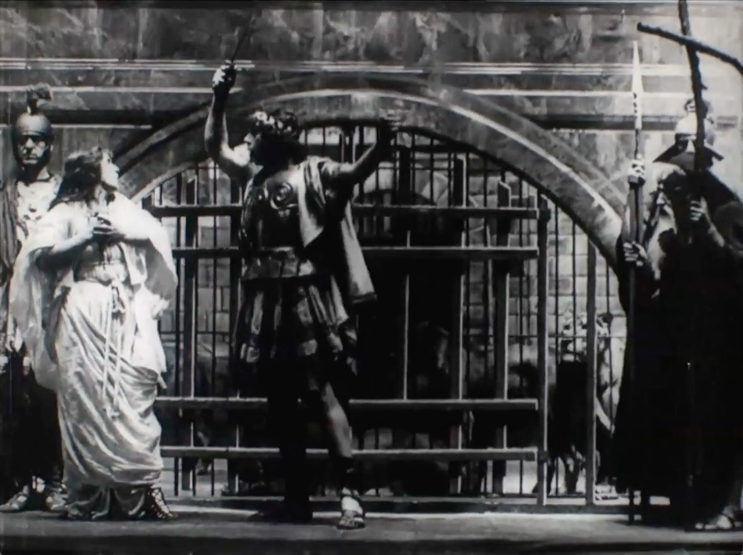
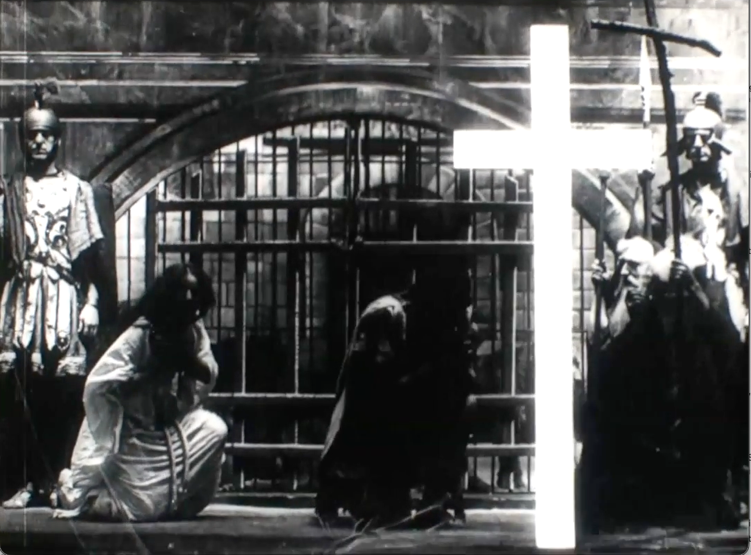
Arms still raised, he walks into the underground chamber (hypogeum), where lions are waiting on the other side of the gate. Leah kneels on the left; other Christians on the right hold a cross. Valerius raises his sword to fight for Christianity, but she points out that this is not the true path. A large cross appears. All kneel. The cross disappears; all rise. Valerius tells the guards he is ready for them to the open the gate. The Christians go out, then Leah and Valerius, his arm around her.
Vitagraph and the creation of a Protestant narrative
The Way of the Cross was produced by Vitagraph, one of the earliest American film companies.[2] Two English ex-patriots, J[ames] Stuart Blackton and Albert E[dward] Smith, founded the Vitagraph Company in New York City in 1897, and already by 1898 they were issuing the first propaganda films for the Spanish-American War, using cigar smoke and floated photos of battleships and pinches of gunpowder in a shallow container filled with water to recreate the Battle of Santiago Bay.[3] Blackton was also an innovator in animation, making his first stop-action film The Humpty Dumpty Circus in 1908.[4] Beginning in February and March 1908, Vitagraph pioneered the American filmization of historical narratives and classics of literature with Francesca di Rimini and The Story of Treasure Island. It followed these with Cupid’s Realm in late March. Although the story is modern, the ancient Roman figure of Cupid plays a dynamic role and therefore qualifies as Blackton’s first film involving classical antiquity.
Most American filmmakers of the silent era, in their selection of material to film, do not differentiate the history or mythology of classical antiquity from the history or mythology of other historical eras or cultures. The common denominator is serious, non-contemporary, costume drama, not a particular period. Accordingly, Blackton followed in August with The Viking’s Daughter: The Story of the Ancient Norsemen and The Water Sprite, a Legend of the Rhine. During the subsequent months, he directed film adaptations of several Shakespearean histories, including Macbeth and Richard III, and two Shakespearean Ancient tragedies, Antony and Cleopatra and Julius Caesar, as well as his adaptation to screen of Oscar Wilde’s Salome.[5] These were all produced in 1908. He began 1909 with more ancient history films.[6] He produced Virginius in February, and later that month he directed his first biblical film, Saul and David, starring Maurice Costello.[7] Costello would also play the lead male role of Valerius here in The Way of the Cross, which was released in August. The rest of the cast here includes Rose Tapley as Leah, Edith Storey as Gallia, William Humphrey, and Stuart Holmes. They belonged to the Vitagraph Company’s group of stock actors, which was a new concept Blackton introduced to the American film industry.[8]
Although approximately half of the films released in the United States in 1907-1909 were of foreign origin, it is not known whether Blackton was inspired by such 1908 Italian Ancient films as the Ambrosio/Maggi Last Days of Pompeii or Nero, or in the Burning of Rome, representing between them two of the triad of popular nineteenth-century ancient historical novels—The Last Days of Pompeii (1834), Ben-Hur: A Tale of the Christ (1880), and Quo Vadis (1896).[9] In 1907, Sidney Olcott and Kalem had produced a 1000-foot American adaptation of Ben-Hur, including a chariot race. However, finding them guilty of copyright infringement, courts enjoined the film from distribution. Avoiding legal issues, Blackton capitalized on the popularity of Henryk Sienkiewicz’ Quo Vadis, but to stay safe he renamed the protagonists but only just enough as to recall the novel’s characters. Vinicius becomes Valerius, and Lygia becomes Leah. Like Quo Vadis, The Way of the Cross is set in Rome during the reign of Nero and visualizes Nero’s lavishly raucous palace court. And the adapted plot again features a Roman military officer falling in love with a Christian woman and ultimately converting to Christianity.On the other hand, the ending of the novel Quo Vadis does not martyr the protagonists in the arena. There the strongman protector Ursus wrestles the wild auroch intended to kill Lygia and saves the lovers. The Way of the Cross imitates more closely the ending of Wilson Barrett’s 1895 four-act historical stage tragedy, Sign of the Cross. There the protagonists Marcus Superbus and Mercia defy Nero and demonstrate the power of paleo-Christian faith with their martyrdom in the arena. Barrett himself was British, but his play premiered in St. Louis in the U.S. In 1904, William Haggar adapted the play as a British film, but it is only 213 meters in length, too short to contain the same kind of detailed narrative as Blackton’s film.
The Way of the Cross was written by Reverend Madison C. Peters, a Protestant. At the time, the population of the United States was approximately one third Catholic but more than fifty percent Protestant (Methodists, Baptists, Presbyterians, Lutherans, Disciples of Christ, Episcopalians, et al). Writing for such a mixed demographic and avoiding doctrinal material, Peters conceived the story as a historical martyr tragedy. Being an American film, there is no mention, let alone view, of the Roman catacombs. And even in the final scenes, when the pagan Roman Valerius, having a second vision of the cross, puts his arm around Leah and escorts her through the open iron gate towards the lions, the story remains nondenominational, and there are no images of Jesus or saints, only white crosses.
The design of the sets
Blackton depicted the story by building seventeen different sets. These include a dining room (triclinium), two different Neronian court assemblies, four arena sets, a torture room, an exterior street set, a cave entrance and interior, additional domestic and palace interior rooms, and several exterior doorways. As was characteristic of Vitagraph’s historical films of 1909, e.g., Jephthah’s Daughter and The Judgment of Solomon, Blackton and his crew filled each set with people and painted images for almost every scene and created motion by incorporating multiple entrances and exits. The camera even pans across one set.
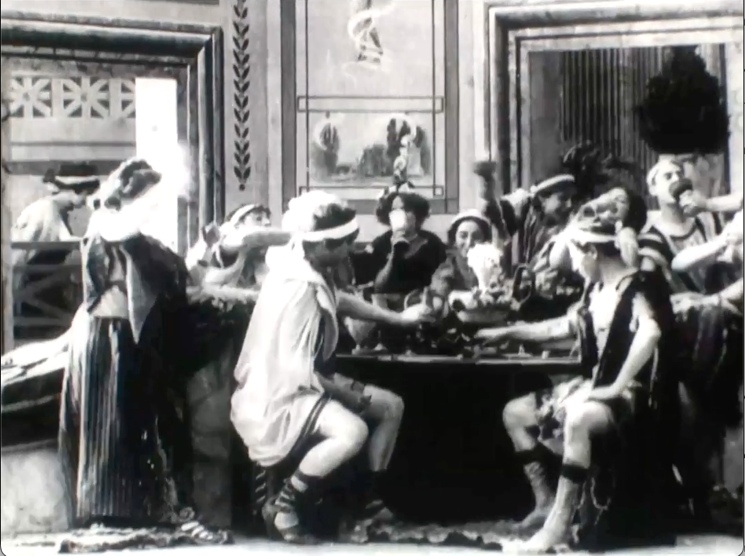
Figure 1. Caption. Courtesy of BFI National Archive
The first interior set we see is a free but complex adaptation of a Roman triclinium (figure 1). The traditional three couches (lecti) are replaced by a large oval table set with a centerpiece, multiple goblets, pitchers, and a decorative amphora-shaped vessel with a high neck. Closest to the camera are Gallia, Valerius, and the unnamed Roman villain who soon becomes Valerius’ nemesis. The revelers fill the lower three fifths of the shot, leaving the upper two fifths available for the viewer to look through a large, open, deeply molded window and doorway. Reminiscent of Roman mural painting, an architectural feature with stereotypical Roman lattice work is visible through the window, and through the door one sees nearby a large, fluted column. To enliven that background space, Blackton has several passersby walk the entire distance from outside the window to the doorway. The wall between the window and doorway is decorated with two fresco panels consistent with Roman third-style conventions, an upper panel containing a lightly sketched painting of a mythic or allegorical figure, the lower showing a landscape scene with two figures or statues at either end. To the left of the panels is a vertical vegetal band of a repetitive floral pattern very much in keeping with the style of Roman wall painting, particularly the Third‑Style.
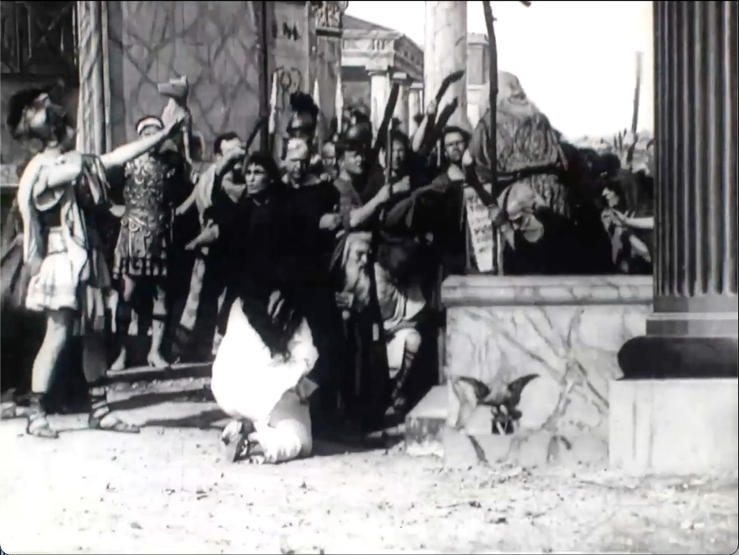
Figure 2. Courtesy of BFI National Archive
The exterior street set (figure 2) also uses several tricks to create the image of depth and extended spaces. The door to the left provides a passage for the revelers to exit into the street, and Blackton has his actors and extras enter and exit the scene via the front and back left and right. This frame shows Valerius to the far left, the armored Roman villain just behind him. Leah and her fellow Christians kneel and hold their scroll and crosses. The club-wielding mob menaces them from behind, and soldiers stand in the back. To expand his use of the space before the Christians and mob arrive, Blackton has Valerius cross the street to the right side, go back to the left side here, then escort Leah out the back of the set and to the left after the others exit to both the left and the right.
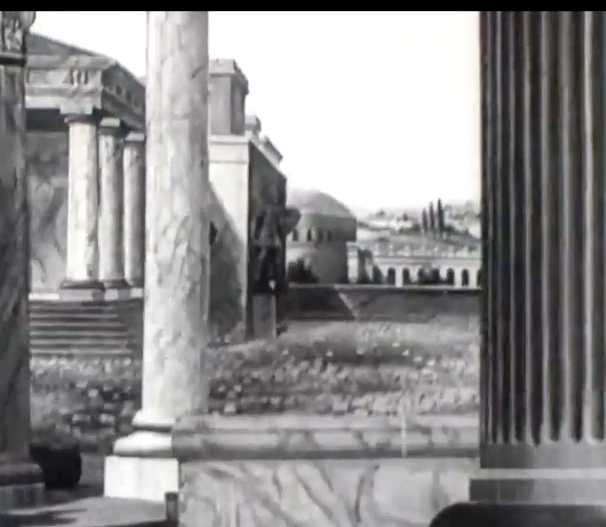
Figure 3. Courtesy of BFI National Archive
Behind them is a scene painting (figure 3; detail of figure 2) that features a free-standing, unfluted marble column, behind which is a Roman temple-like structure with a deep-columned portico and sculpted entablature. Moving deeper into the distance, a monumental rectangular structure (a Curia building perhaps) partially conceals a rotunda, an arched stoa or portico, a cluster of cypress trees, and distant occupied skyline and hills. On the right is a partially visible fluted Ionic column, an illustration of Blackton’s attention to detail and attempt at authenticity.
Also of interest are two different open-air sets of Nero’s court. The first, decoratively festooned, is fronted by a narrow canal and includes an ancient musical ensemble in the back right (figure 4a). Here Valerius is arriving by boat. He does not give a ‘Roman salute’ (of the kind that first emerges in the Quo vadis of 1913)” but waves.[10] The second features statuary in all four corners (figure 4b). Both sets are filled with costumed extras posing as courtiers.
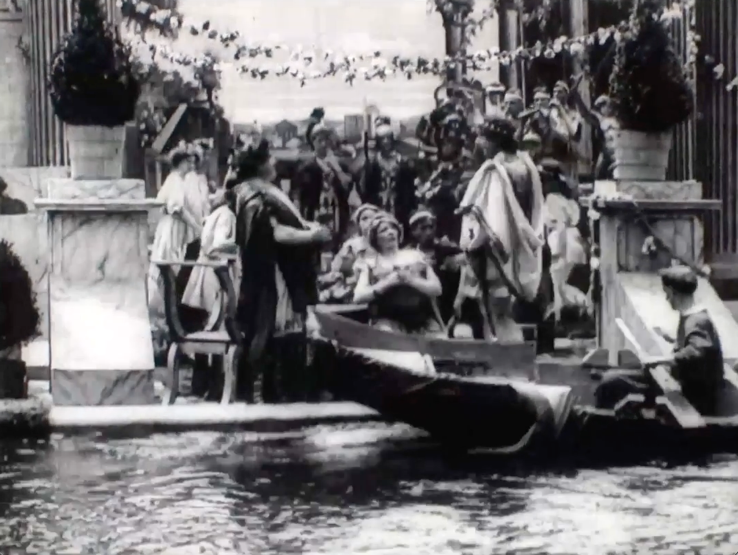
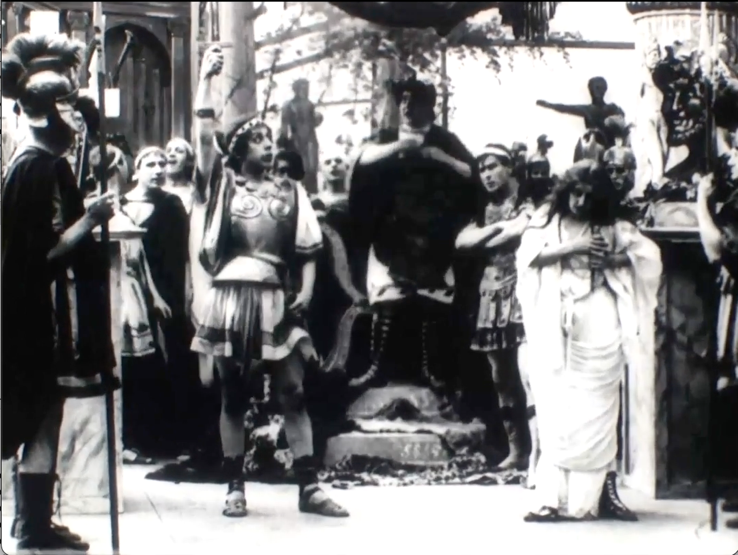
Figure 4a and b. Courtesy of BFI National Archive
Demonstrating technical creativity, the camera pans to follow Valerius and Leah leaving this room in Nero’s palace (5a-c). The rare pan serves to emphasize their burgeoning relationship, metaphorically extending it in space and time.
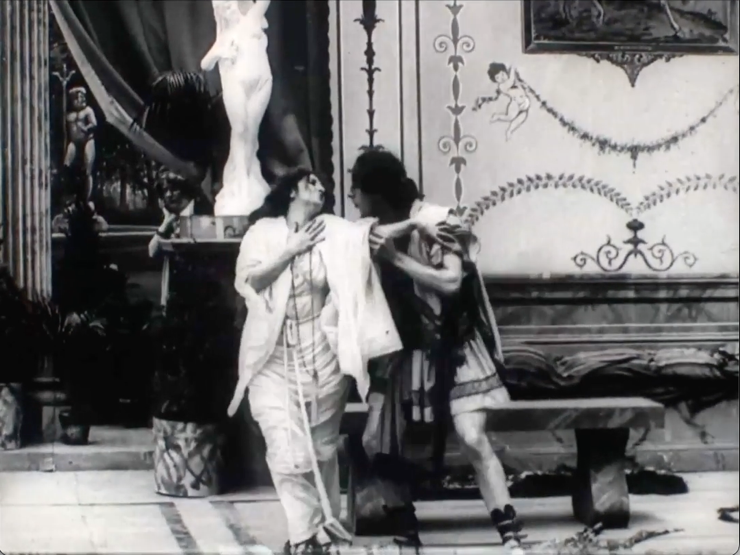
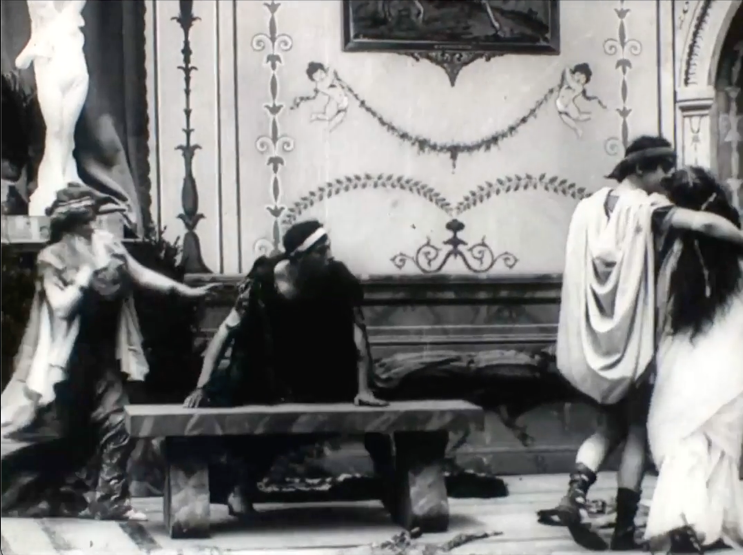
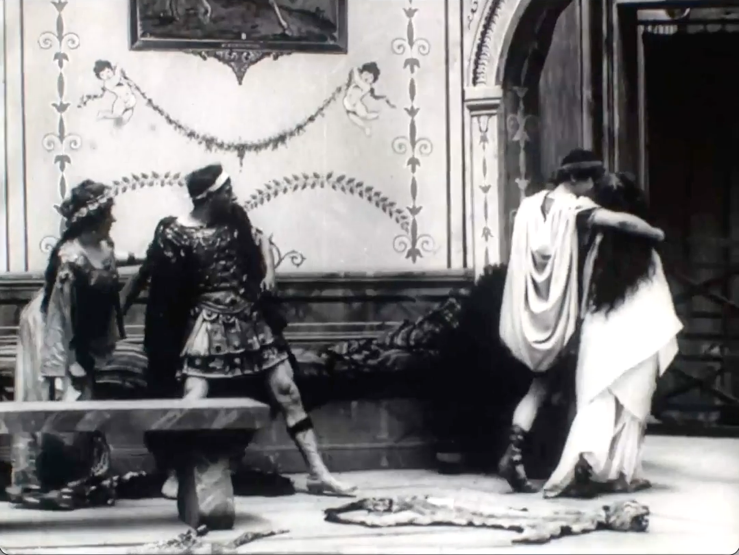
Figure 5a-c. Courtesy of BFI National Archive
Considering the early date of this film and the relatively limited budget, it is important to note that Blackton created four different views of the arena, demonstrating its importance to the narrative. The first is the entrance (Figure 6a), which includes two steps and Nero’s two black slaves, which were already a commonplace assumption. The second is the arena itself (figure 6b), complete with the sand surface, the podium wall draped with cloths, the seating cavea above, and the iron-gated entrance to the hypogeum to the right. The victorious murmillo standing over his defeated retiarius opponent recreates the popularized 1872 image of Gérôme’s Pollice Verso. A black slave is again visible on the far left. Drawing on visual and ideological legacies of nineteenth-century slavery, early twentieth-century films often featured racialized depictions of enslaved Black Africans, exemplified by the blackface character of Maciste in Cabiria (1914).
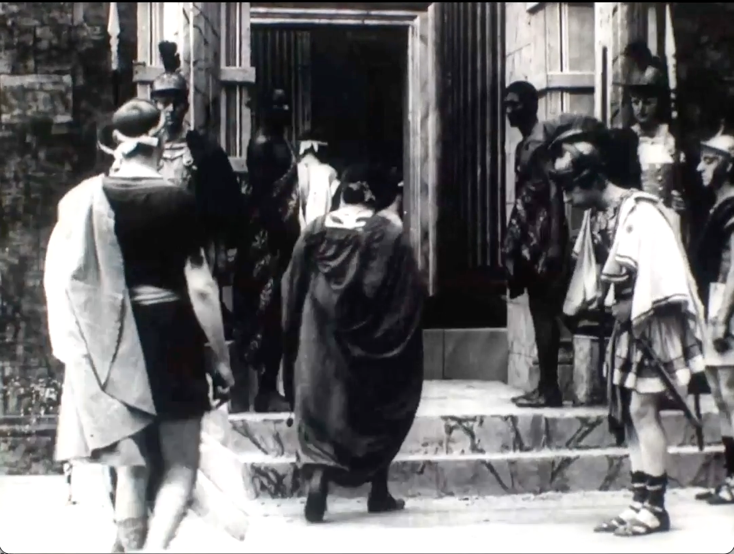
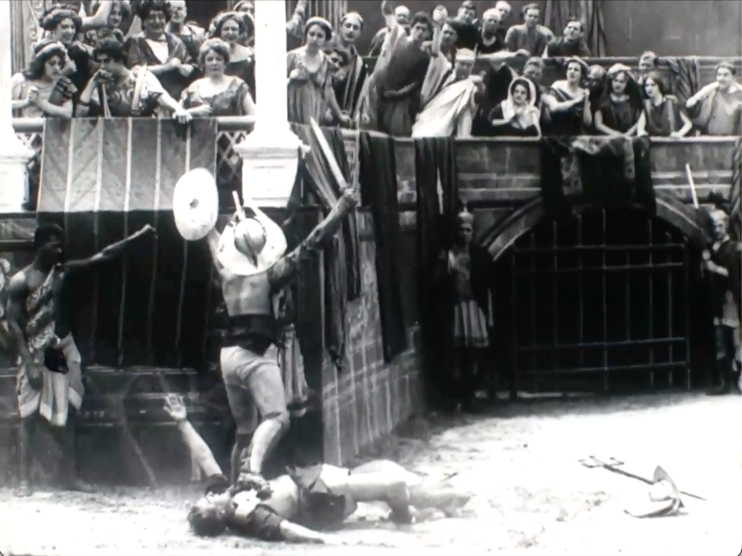
Figure 6a and b. Courtesy of BFI National Archive
Third is the corridor inside the arena structure, painted to look like ashlar stonework on the left and center, and again the signature narrow flutes of an Ionic column on the right (figure 7). This is the set where Blackton employs double-exposure to insert Valerius’s three visions. This first vision of Leah suspended in the air recalls a similar technique employed in the Ambrosio/Maggi Nero, or the Burning of Rome, although there it is the tormented Nero who has visions of his cruel treatment of the Christians in the arena, the opposite of Valerius having visions of Leah and then the cross. Fourth was the hypogeum, with its arched iron gate and screen, behind which we see the arena sands and the lions awaiting the arrival of Leah and Valerius (figure 8a). A second vision of the cross, before which Leah and Valerius kneel, is the final factor in Valerius’ conversion (figure 8b).
This single, powerful image depicting the spiritual conclusion of The Sign of the Cross conveys the film’s theme without recourse to intertitles, visually articulating the spiritual miracle that is occurring.
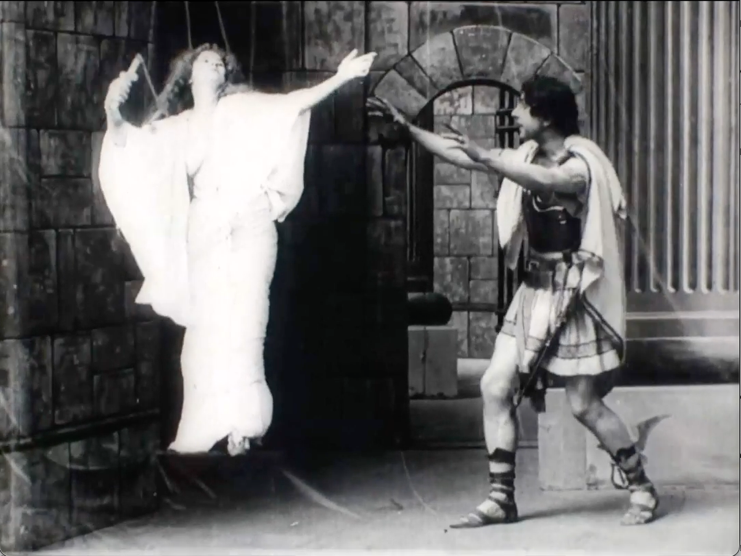
Figure 7. Courtesy of BFI National Archive
Conclusion
We have very little information about the impact of The Way of the Cross. 1909 was a year of rapid expansion, but the broader film industry had not yet fully developed the common process of soliciting reviews from major newspapers. Multiple one-reel films were being released by Vitagraph, Edison, Biograph, Selig, Lubin, Kalem, and other companies each week. Despite its importance as an early American silent film set in antiquity, The Way of the Cross would not have seemed exceptional at the time. Vitagraph did place a lengthy plot summary in Moving Picture World, but research thus far has discovered no other evidence of the film’s impact. Early in the sound era, Cecil B. DeMille directed his high-profile version of The Sign of the Cross (1932), almost guaranteeing that there would not be another version of The Way of the Cross. Nonetheless, this 1909 film already displays the grand design, attempts at authenticity, fascination with Neronian Rome, and the nondenominational piety that would reappear frequently in American biblical epics produced in subsequent decades.
Footnotes
- ^ The lone copy of the film is held by the BFI, albeit with German intertitles as it comes from the Joye collection. The cards currently present in the film to show dialogue or description pass in a flash, hence for convenience I am indicating their content where they occur and providing translations of them.
- ^ Erish, 58-75; Slide, Gevinson, 15-17.
- ^ (Smith, Koury, 66-68.
- ^ Moving Picture World 3.18 (October 30, 1908) 339.
- ^ Buchanon, 471-473; Slide, Gevinson, 18-21; Uricchio, Pearson, 1993, 65-68.
- ^ Uricchio, Pearson, 1989, 15-17.
- ^ Shulman, 36-37.
- ^ Jacobs, 61.
- ^ Bowser, 23.
- ^ Winkler, 2009, 77-93.
Bowser, E. (1990) The Transformation of Cinema: 1907–1915. Berkeley: University of California Press. Series The History of American Cinema, Vol. II.
Buchanan, J. (2011) ‘Shakespeare and silent film’, in Burnett, M.T., Streete, A. and Wray, R. (eds.) The Edinburgh Companion to Shakespeare and the Arts. Edinburgh: Edinburgh University Press, pp. 467–483.
Erish, A.A. (2021) Vitagraph: America’s First Great Motion Picture Studio. Lexington, KY: University Press of Kentucky.
Jacobs, L. (1939) The Rise of the American Film: A Critical History. New York: Harcourt, Brace and Company.
Shulman, T.C. (2019) Film’s First Family: The Untold Story of the Costellos. Lexington, KY: University Press of Kentucky.
Slide, A. with Gevinson, A. (1987) The Big V: A History of the Vitagraph Company. Metuchen, NJ: Scarecrow Press.
Smith, A.E. and Koury, P.A. (1952) Two Reels and a Crank. Garden City, NJ: Doubleday & Company.
Uricchio, W. and Pearson, R.E. (1989) ‘“Films of quality,” “High art films,” and “Films de luxe”: Intertextuality and reading positions in the Vitagraph Films’, Journal of Film and Video, 41, pp. 15–31.
Uricchio, W., & Pearson, R. E. (1993) Reframing Culture: The Case of the Vitagraph Quality Films. Princeton: Princeton University Press.
Winkler, M.M. (2009) The Roman Salute: Cinema, History, Ideology. Columbus, OH: Ohio State University Press.