
1910 - Cléopâtre and Le Caprice du vainqueur: Roman Egypt in Paris
By MARIA WYKE
This analysis concerns the two Pathé historical dramas in the BFI National Archive that represent the Romans in Egypt – Mark Antony in Cléopâtre (1910) and Julius Caesar in Le Caprice du vainqueur (The Winner’s Whim, 1910), known in its British circulation as The Egyptian Maid.[1] In the third scene of Cléopâtre, according to the film’s resumé, Mark Antony chases after the general Octavian whose army we see is stationed by the banks of the Nile under spreading palm trees (video clip 1). Positioned centre frame, Antony is berated for having deserted Rome and fallen for the beauty of Queen Cleopatra – manifested in his Egyptianate costume when all those around him are in Roman dress and when he was wearing a Roman general’s uniform at the start of the film. Although this Pathé historical drama, directed by Ferdinand Zecca and Henri Andréani, notionally reconstructs the distant time and place of Egypt in the 30s BCE, the artificiality with which it dislocates ancient Egypt and places it before a modern French camera is blatant: the transplanted palm trees decorate a French landscape, and the actors’ breath condenses in the chilly French air of January 1910. Although this dislocation may be the result of constraints on production, I argue that it carries important symbolic significance. A comparison of the two Pathé films demonstrates that they are both reconstructing the ancient world according to distinctively French specifications.[2]
Videoclip 1: Mark Antony confronts his wife Octavia and the general Octavian in the Roman encampment by the Nile, Cléopátre (1910). Courtesy of BFI National Archive.
A poster produced by the Parisian atelier of Candido de Faria to publicize Cléopâtre boasted that the film belonged to the Pathé studio’s Série d’Art, a project systematically to redefine cinema as a cultural product equivalent to theatre (figures 1 and 2).[3] The project involved the creation of literate scripts on cultivated subjects often adapted from the stage by respected playwrights. The scenarios were performed by reputable actors - here Madeleine Roch from the Comédie Française is advertised in the title role. They moved within deep and sumptuous period sets – here the death scene is composed pictorially in a variety of bright colours, with the queen reclining under a large canopy, clasping her asp on the point of death, positioned within a monumental chamber that is richly decorated with Pharaonic images. The narratives were accompanied by dedicated musical scores and frequently enhanced by the routines of celebrated dancers - the poster lists both Mademoiselle Rianza and Mademoiselle Napierkowska as making an appearance. The publicity poster thus draws attention to the traditions of French performance and visual culture and, in doing so, to the engagement of Cléopâtre with the practices of French Orientalism.
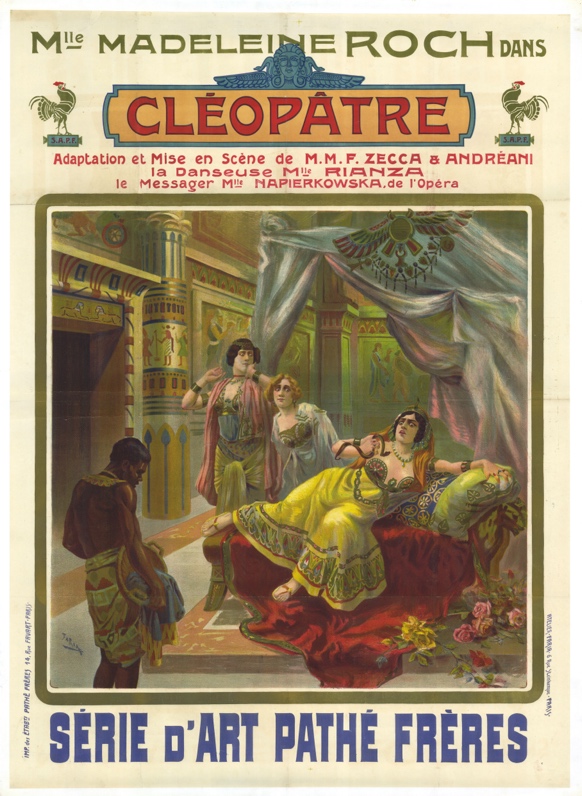
Figure 1. Poster advertising the release of Pathé Frères’ Cléopâtre (1910), signed by Candido de Faria. Courtesy of the Fondation Jérôme Seydoux-Pathé.
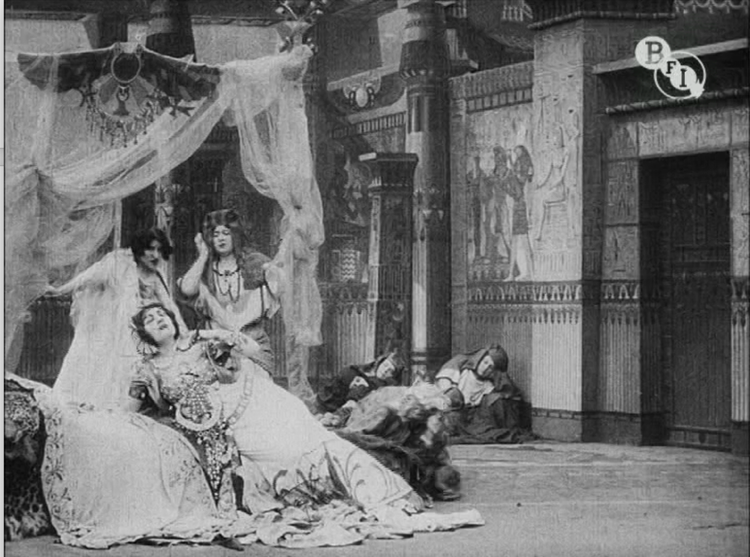
Figure 2. The pictorial scene from Cléopâtre (1910) on which the poster is based. Courtesy of BFI National Archive.
Digging into the archaeology of the film’s Egyptian dreamworld takes us back in time not to the 30s BCE but to nineteenth-century Paris. The film’s presentation of Cleopatra as an exotic femme fatale draws on the plotline of a play about her by Victorien Sardou and Émile Moreau that had first been performed in Paris on 23 October 1890 with Sarah Bernhardt in the title role (Daugherty, 2022: 15-40). In the film, as in the play, Cleopatra arrives at Tarsus in her dazzling galley to lure Antony away from his Roman life and, back in Egypt, puts on exotic entertainments to retain her hold over him. Additionally in the play, but not in the film, Cleopatra persuades Antony at Actium to give up his wife and declare war against Rome yet deliberately sabotages his battle plans to ensure his defeat and prevent him ever returning there (Hughes-Hallett, 1990: 288-289). The film’s tableaux echo some of the sets of the play (evidenced in etchings of the performance published in the Parisian magazine L’Illustration two days after its premiere), as when Cleopatra disembarks from her barge and first displays herself before the Romans or when the queen listens intently to a messenger delivering news of her lover’s defeat. While the cruelty with which Cleopatra poisons the messenger in the film and orders the disposal of their body evokes her Orientalist iconography, most famously, in the painting by Alexandre Cabanel, Cléopâtre essayant des poisons sur des condamnés à mort / Cleopatra Testing Poisons on Condemned Prisoners (1887).[4]
French Orientalism was grounded in Napoleon’s invasion of Egypt in 1798 as well as in the cataloguing of its present and past by the academics who went on the campaign and developed the discipline of Egyptology. One ‘great collective appropriation’ of Egypt by France (Said, 1978: 84) was the publication between 1809 and 1822 of the twenty-three volumes of the Description de l’Égypte, ou Recueil des observations et des recherches qui ont été faites in Égypte pendant l’expédition de l’armée française, publié par les orders de sa majesté l’empereur Napoléon le grand / Description of Egypt, or the Collection of observations and researches which were made in Egypt during the expedition of the French Army, published by the order of His Majesty the Emperor, Napoleon the Great (Said, 1978: esp. 42-3, 84 and 87; Hosford and Wojtkowski, 2010: 1-10; Bryan, 2011: 183-188). Cleopatra had a significant role to play in this French colonialist project of territorial and epistemic possession of Egypt. On a bronze medallion struck by Jean-Jacques Barre to celebrate the publication of the second edition of the Description in 1826, for example, the act of ‘rediscovery’ of ancient Egypt by modern France is represented as a triumphant, fully armed Roman general unveiling a bare-breasted Egyptian woman – most likely Julius Caesar uncovering Cleopatra VII given the celebrity of that story as told in Plutarch’s biography of the Roman general (figure 2). As the embodiment of Egypt, the woman reclines passively on a crocodile gazing up at her conqueror, before a cluttered scene of palm trees, the Gizeh Pyramids and the Temple of Denderah whose exterior walls (without coincidence) bear a colossal stone relief of Cleopatra VII and her son Caesarion (Curl, 1994: 132; Wyke, 2002: 254).
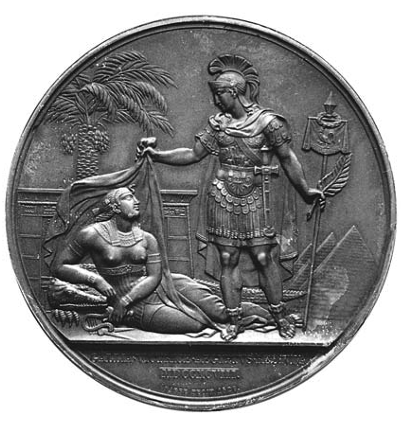
Figure 2. France unveils Egypt. Bronze medallion of 1826. Reproduced from Wyke 2002: 254. Courtesy of Peter A. Clayton.
This Cleopatra fulfils all three definitions of how Orientalism operates as originally set out by Edward Said in his work published in 1978 that established the term as a critical post-colonial concept. Firstly, Orientalism is a Western set of practices designed to control the East; here Queen Cleopatra is displayed in order to memorialise territorial conquest by modern France. Secondly, Orientalism is the academic study by the West of the East; here Cleopatra lies among the carefully reconstructed treasures of ancient Egypt that the Description was designed to catalogue. Thirdly, Orientalism is a binary and hierarchical imagining of the West in contrast to the East; here a voluptuous woman lies prone before her dominating male victor. Modern Egypt is colonised by its representation as Cleopatra VII - a mysteriously antique and languidly feminine spectacle that invites Western comprehension, penetration and control. It was according to these structures of thinking and the Egyptomania which they sparked in French culture that Cleopatra came to be represented on the stage and in the visual arts of the nineteenth century as an exotic femme fatale – the embodiment of a dangerous but nonetheless desirable and available Orient (Hughes-Hallett, 1990: 254-275).
That portrait of the queen reemerges in 1910 in Pathé’s Cléopâtra – both in the performance on screen and in the studio’s resumé.[5] The richly descriptive, though brief, résumé explains at the outset that its account of Cleopatra is inaugurating Pathé’s Série d’Art and ascribes to the queen motives and actions that are not always visible on screen but clearly stem from her performance on the Parisian stage in Sardou and Moreau’s play. The film’s starting point, it explains, is the period in which the queen of Egypt was seeking to seduce Mark Antony, ‘conqueror and governor of the Orient’ (vainqueur et chargé des affaires d’Orient). In the second of eight scenes, conceived in depth, Cleopatra glides across the back of the screen into a Roman encampment on her galley ‘of silver oars and sails of silk and purple’ (aux rames d’argent, aux voiles de soie et de pourpe). As Cleopatra, Madeleine Roch directs a scheming expression at the camera before her elaborately costumed and assured self-display brings Mark Antony to his knees in adoration. His wife Octavia and her brother the general Octavian peer in from left screen with melodramatic horror at this scene of Oriental seduction (figure 3).
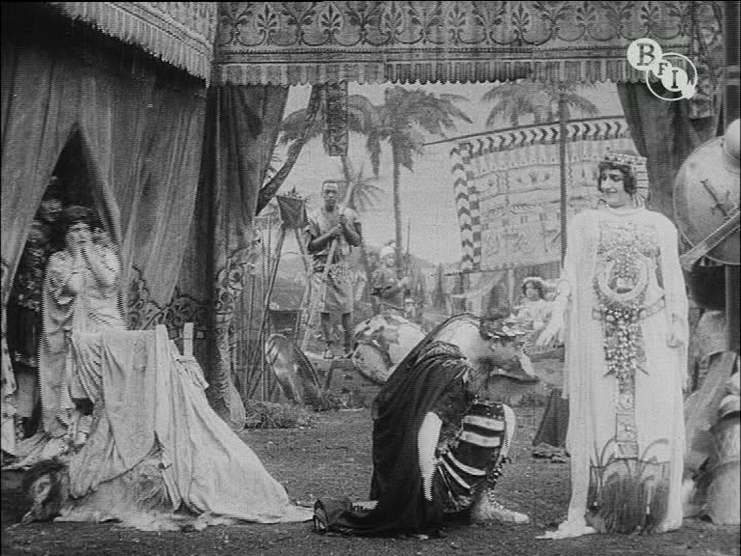
Figure 3. Octavia watches in horror as Cleopatra seduces her husband away from his Roman values, Cléopâtra (1910). Courtesy of BFI National Archive.
Whisked away from his Roman world by a highly visible black oarsman on board Cleopatra’s ornate galley, Mark Antony becomes ‘the instrument of this ambitious queen’ (l’instrument de cette reine ambitieuse). Lured into the world of Egypt where he ‘comes to forget that he was once Roman’ (en vient à oublier qu’il etait Roman), Antony starts to wear Pharaonic costume and is later regaled in the fourth scene by a show that manifestly transgresses gender and reduces warfare to spectacle – a chorus of small girls perform a dainty sword fight costumed as soldiers (figure 4). A brief glimpse of another staged sword fight, this time between two gladiators, is followed by the entry on screen of children in Eastern dress and blackface who run around clashing cymbals. The cymbals visualise for offscreen spectators in the cinema the supposed discordance of Cleopatra’s world, and that discordance may also have been emphasised aurally by the musical style selected to accompany this sequence when screened.[6]
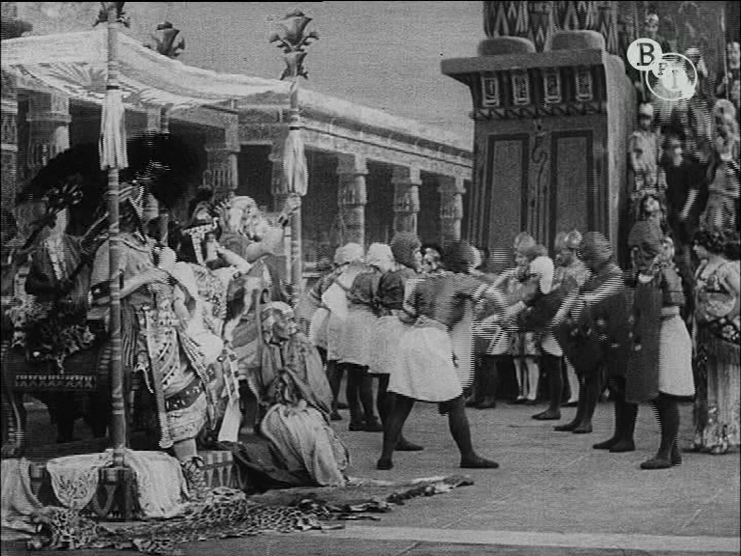
Figure 4. Antony and Cleopatra watch the playful performance of a swordfight, Cléopâtra (1910). Courtesy of BFI National Archive.
The Pathé résumé indicates that later, after Cleopatra has assembled a considerable fleet, she nonetheless secretly betrays Antony who kills himself as a consequence (en secret trahissait Antoine qui se tua), even though that betrayal is only treated on the Parisian stage and not in any surviving versions of the Pathé film. Cléopâtre concludes with the general Octavian forcefully penetrating the queen’s bedchamber, although he clearly expresses consternation on discovering that she has escaped display in his Roman triumph through her suicide (figure 5). Thus, the Pathé film appears to sit relatively comfortably within a Napoleonic Orientalism that performs the possession of the East by the West. Transposed to modern France, ancient Egypt is cast as the feminine ‘other’ capable of seducing and destroying men until the proper masculine authority over it of the West is restored.
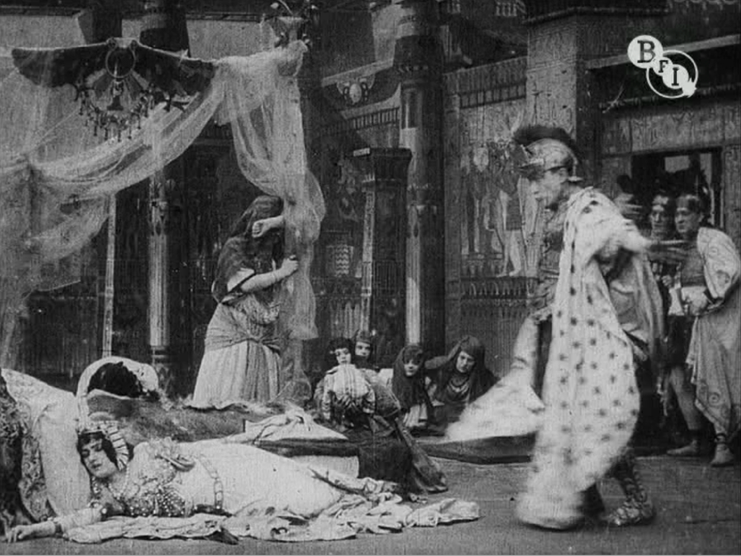
Figure 5. Octavian discovers that Cleopatra has killed herself, Cléopâtra (1910). Courtesy of BFI National Archive.
However, this understanding of Pathé’s Cléopâtra is complicated by the comparison it invites with another film the studio released just a month later in February 1910, Le Caprice du vainqueur or The Winner’s Whim. It was advertised as the second in Pathé’s Egyptian series, shared the same directors, performances by the dancer Rianza, and a number of sets – including the one supposedly on the banks of the river Nile but actually staged on the outskirts of Paris.[7] An open courtyard in the queen’s palace seen at the start of Cléopâtre becomes Caesar’s banquet hall in the second film. The bedchamber in which Cleopatra dies in the first film becomes the room in which the Egyptians conspire against Caesar in the second. Both these sets, as well as the Roman encampment by the Nile that the films also share, are shot from slightly different perspectives in the second film. The production of this shorter Pathé film (some 165 m. to the 355 m. of Cléopâtra)[8] utilising the earlier film’s sets may well have been designed as a cost-effective means to produce another Egyptian drama, but their comparison reveals some intriguing intratextual disruptions between the two films. For the Orientalism of the second film about Julius Caesar seems radically different from that of the first film about Cleopatra.
The plotline of Le Caprice du vainqueur is a fiction, without any basis in the historical record of Julius Caesar’s stay in Egypt. That fictionality is marked, perhaps, by the absence of a named historical figure in the film’s title and by the more fantastical design of its Egyptian costumes. Interpreting the screen performances with the aid of the Pathé summary available from the Fondation Jérôme Seydoux-Pathé and the more elaborate scenario that survives at the Richlieu site of the Bibliothèque nationale de France,[9] we are shown two innocent girls coming towards the banks of the sacred Nile among its spreading palm trees in order to draw water into their clay vessels under the watchful eye of their mother. We appreciate the danger that they are in from the film’s opening shot of the Roman encampment, with Caesar in military uniform gesticulating in good spirits with his soldiers. Unusually, the camera pans left to take in the girls whom Caesar has glimpsed. Burning with desire and ‘full of his power’ (fort de sa puissance), he demands with bold, assertive gestures that the young dancer Tsit come to his palace that very night to entertain him (figure 6). Despite the evident concern of her family for her safety among the Romans, and the anger of Tsit’s fiancée at Caesar’s caprice, her sister goes to the palace in the dancer’s place. However, the sister’s sacrifice is insufficient to satisfy Caesar who takes her captive and demands again that the dancer be brought to him. Tsit ‘does not dare disobey the conqueror for fear of reprisals’ (par crainte des représailles, Tsit n’ose désobéir au vainqueur). We observe the sister’s expression of fear as she cowers at the tyrant’s feet in the palace but, elsewhere, joy emerges on the faces of her fellow Egyptians as they secretly begin to plan vengeance for this humiliation.
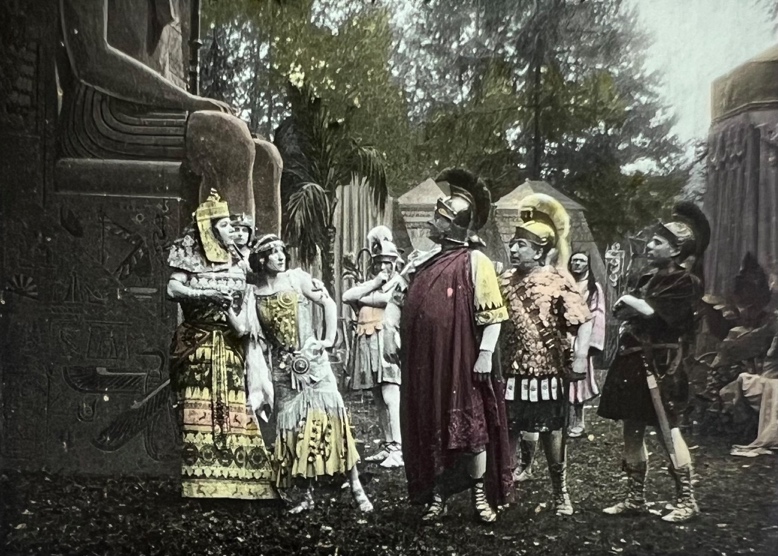
Figure 6. Caesar demands that Tsit come to his palace that night, Le Caprice du vainqueur (1910). Screenshot courtesy of the Collection CNC.
At the festivity in the palace, first a chorus of Egyptian women and then Tsit perform an Egyptian dance for the delighted Caesar enthroned on screen right. In contrast, Tsit’s fiancée and mother watch anxiously screen left as, in Tsit’s role, Rianza dances fluidly and sensuously in the foreground. But Tsit’s fiancé, intoxicated with anger, has successfully raised ‘the people against the tyrant’ (le people contre le tyran) and joyfully snatches back the tyrant’s ‘prey’ (sa proie) as his palace is set on fire (figure 7). In a state of utter terror, Caesar escapes, but soon ‘ominous glimmers light up the house of Caesar whose walls collapse upon the Romans’ (des lueurs sinistres éclairent la maison de César dont les murs s’écroulent sur les Romains). The Egyptians thank their god for this supreme vengeance as the palace burns and Romans lie prostrate near the banks of the Nile. In the print of the film that survives at the archives of CNC, the scenes in these final moments glow with a bright red tint that signals danger and destruction.
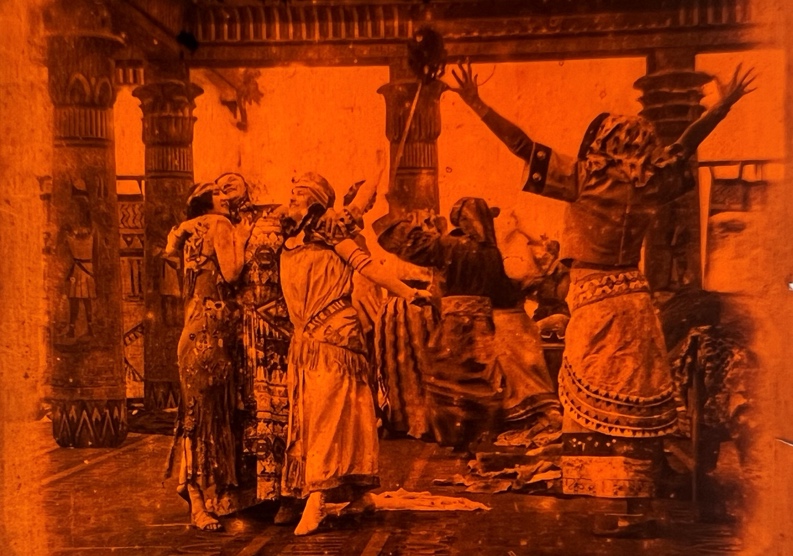
Figure 7. Mother and daughters are reunited as Caesar’s palace begins to burn, Le Caprice du vainqueur (1910). Screenshot courtesy of the Collection CNC.
According to the review in The Bioscope for 10 February 1910: ‘The Egyptians, unable to endure tyranny any longer, have revenged themselves, and the last picture of all shows the smoking ruins of Caesar’s palace, standing for token of their victory over the Romans’. In Le Caprice du vainqueur, the tyrant’s persistent demands for a dance demonstrates how he exercises control through the abuse of women’s bodies. It is the Western male not the Eastern female who is cruel and licentious. In response, and overturning the discourses of colonialism, by the film’s end an innocent woman as the embodiment of vulnerable Egypt has been rescued, the house of Caesar has collapsed and the West has been defeated by the East not the East by the West. How might we explain this difference between the two films in the way Pathé has relocated Roman Egypt to Paris?
Here again digging into the archaeology of the films’ ancient Egyptian dreamworlds can be helpful, this time leading us back not to the Napoleonic era but to the more recent Second Empire. The sets of Cléopâtre are attributed to the atelier of Marcel Jambon, the sets of Le Caprice du vainqueur to that of Joubert.[10] Both are archaeologically far more detailed in design than French films of the period set in ancient Greece, Rome or Byzantium.[11] Set designs for early cinema in France were created by painters trained in the production of theatre backdrops (Berthomé, 2011: 93-99). We have already observed that the film sets evoke particularly the Egyptianate designs for Sardou and Moreau’s five-act play Cléopâtre first performed in 1890. Those theatre designs are attributed to a number of people including the Parisian Opéra’s scene painters Auguste-Alfred Rubé, Philippe Chaperon and Jean-Baptiste Lavastre.
Digging deeper back in time, those three designers had also been involved in preparing the sets for Giuseppe Verdi’s opera Aïda when it premiered in Paris in 1880 and before that in Cairo in 1871. Earlier still they had produced some of the décor for the colonialist celebrations of the opening of the Suez Canal in 1869 and painted the panorama in the Suez Canal Pavilion for the 1867 Exposition Universelle in Paris. They did all this in consultation with the French Egyptologist Auguste Mariette who was founder and head of the Egyptian Service of Antiquities and Director of the Bulaq Museum in Cairo. He had overall charge of ensuring the archaeological authenticity of the opera’s scenario and sets (and, to an extent, its music), the décor at the Suez Canal inauguration and the exhibition displays. Mariette, in turn, had constructed a spectacular Egyptian Temple at the Exposition with the purpose of both public entertainment and education – a form of ‘didactic’ Egyptomania (figure 8). The temple interior, used to exhibit museum antiquities, was designed according to the features of an Old Kingdom tomb (Humbert, 2016: esp. 31-4; Jarsaillon, 2018).[12] The shared sets of the two Pathé films are full of colossal lintels, supported by thick pillars with papyrus leaf capitals, cavetto cornices, highly decorative wall frescoes, and symbols such as the winged scarab (figures 5 and 9). They thus constitute products of the science of Egyptology mixed with the fantasies of Egyptomania. In their antiquarian designs, the two Pathé films add themselves to these layers of a distinctively French mode of Orientalism.
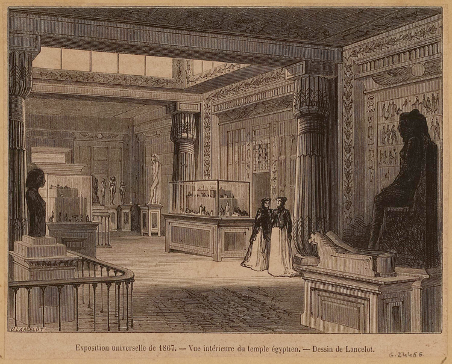
Figure 8. Engraving of the interior of the Egyptian temple, Exposition universelle 1867. Musée Carnavalet. Wikimedia Commons https://commons.wikimedia.org/wiki/File:Exposition_universelle_de_1897.__Vue_int%C3%A9rieure_du_temple_%C3%A9gyptien._G.24466.jpg

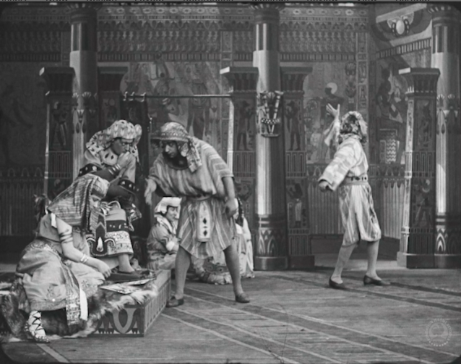
Figure 9. The elaborately antiquarian design of the chamber in which the Egyptians plan vengeance against Caesar, Le Caprice du vainqueur (1910). Courtesy of the Fondation Jérôme Seydoux-Pathé.
This form of quasi-scholarly response to ancient Egypt had taken intense hold in the Second Empire. France claimed privileged access to and special understanding of Egypt’s archaeology. Within the second, intellectual, aspect of Orientalist discourse according to the definitions of Said, France presented itself as investigating, interpreting, reconstructing and educating about an ancient civilisation considered the foundation of Western civilisation and the cradle of the world. Through its combined scholarly activities and artistic productions, France cast ancient Egypt in highly emotive terms as damaged and vulnerable, endangered by imperial conquest, tomb robbery and modern development and cast itself as its careful protector for modern Egypt and for the world. It also presented itself as possessed of a mission to civilise the Orient or mission civilisatrice (Hosford and Wojtkowski, 2010). It is this layering of French appropriations of Egypt, from the Napoleonic era through the Second Empire, that might help explain why the second Pathé film treats Julius Caesar as a conqueror capriciously abusing the vulnerability of innocent Egypt. This Caesar could be suggestive of the more militaristic, territorially focussed approach to the country that was attributed by France to Britain.
But after the collapse of the Second Empire in 1870, Julius Caesar might even evoke the failed ambitions of Louis Napoleon. The emperor had presented his resuscitation of French empire as gloriously prefigured in the imperialism of Caesar. He considered the subjugation of Gaul as the manifest destiny of Western civilization, so that in the second volume of his monumental but unfinished history of the Roman dictator written with the collaboration of classical scholars (Histoire de Jules César, 1865-6) he had lauded the great benefits of its colonization by Rome. To provide evidence for the second volume’s laudatory retelling of Caesar’s military campaigns in Gaul, Napoleon III had instituted a national commission responsible for the topographic, historical and archaeological investigation of the sites of the Roman victories, especially at Alesia. Iconographically he was also linked to Julius Caesar in, for example, the official Portrait of Napoleon III painted in oils by Jean-Hippolyte Flandrin and first exhibited in the London Universal Exposition of 1862 before being shown on multiple occasions in Paris. The emperor stands in a general’s uniform staring intensely out of the canvas next to a marble bust of Napoleon Bonaparte crowned with laurel as an earlier French Caesar. His hand rests on a desk where are visible maps of France and a copy of Julius Caesar’s Commentarii de bello Gallico (figure 10). For these reasons, Julius Caesar became closely bound up with the French emperor and ‘Caesarism’ developed as a political theory in the latter half of the nineteenth century better to legitimate or to critique the novelty of Napoleon III’s regime, consisting as it did in the exercise of absolute power by a leader who shored himself up on populist foundations (Hemmerle, 2006: 292-295; Wyke, 2007: 56-8 and 159-164; (Nicolet, 2009: 414-417).
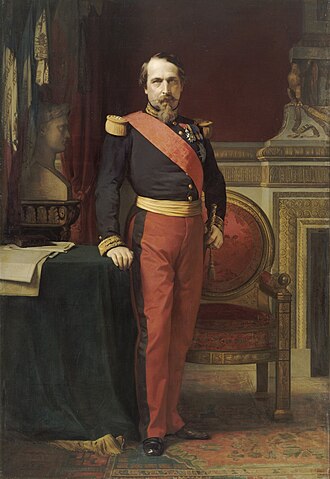
Figure 10. Napoléon III by Jean Hippolyte Flandrin (1862). https://commons.wikimedia.org/wiki/File:Napol%C3%A9on_III_par_Jean_Hippolyte_Flandrin.jpg

Ever since Karl Marx described Louis Napoleon and his coup d’état as a Karikatur in The Eighteenth Brumaire of Louis Bonaparte (1852), the emperor had been criticised as a farcical parody of his uncle Napoleon I. It is no surprise, then, that the sustained correlation Louis Napoleon established for himself with Julius Caesar provided one of many devices for satire in European political cartoons during his lifetime and after. Although he exercised a harsh regime of censorship within the French empire, caricatures deriding the emperor as a farcical French Caesar appeared in Britain, Germany and elsewhere. For example, at the outbreak of the Franco-Prussian war, Napoleon III was depicted as ‘The Modern Caesar’ in the British magazine Fun (20 July 1879). He is attired ludicrously in Roman military costume but disturbingly struggles to hold back his ‘dogs of war’ (Scully, 2011; esp. 168-169 and its figure 10). The production of such caricatures may help explain what appears to be the somewhat comic tenor of the wild gestures with which the actor playing Caesar, Gabriel Moreau, performs shock at the firing of his palace in the final stages of Le Caprice du vainqueur (figure 11). The film’s use of the word caprice in its title also suggests that the conqueror’s behaviour is akin to the tantrum of a child.[13]
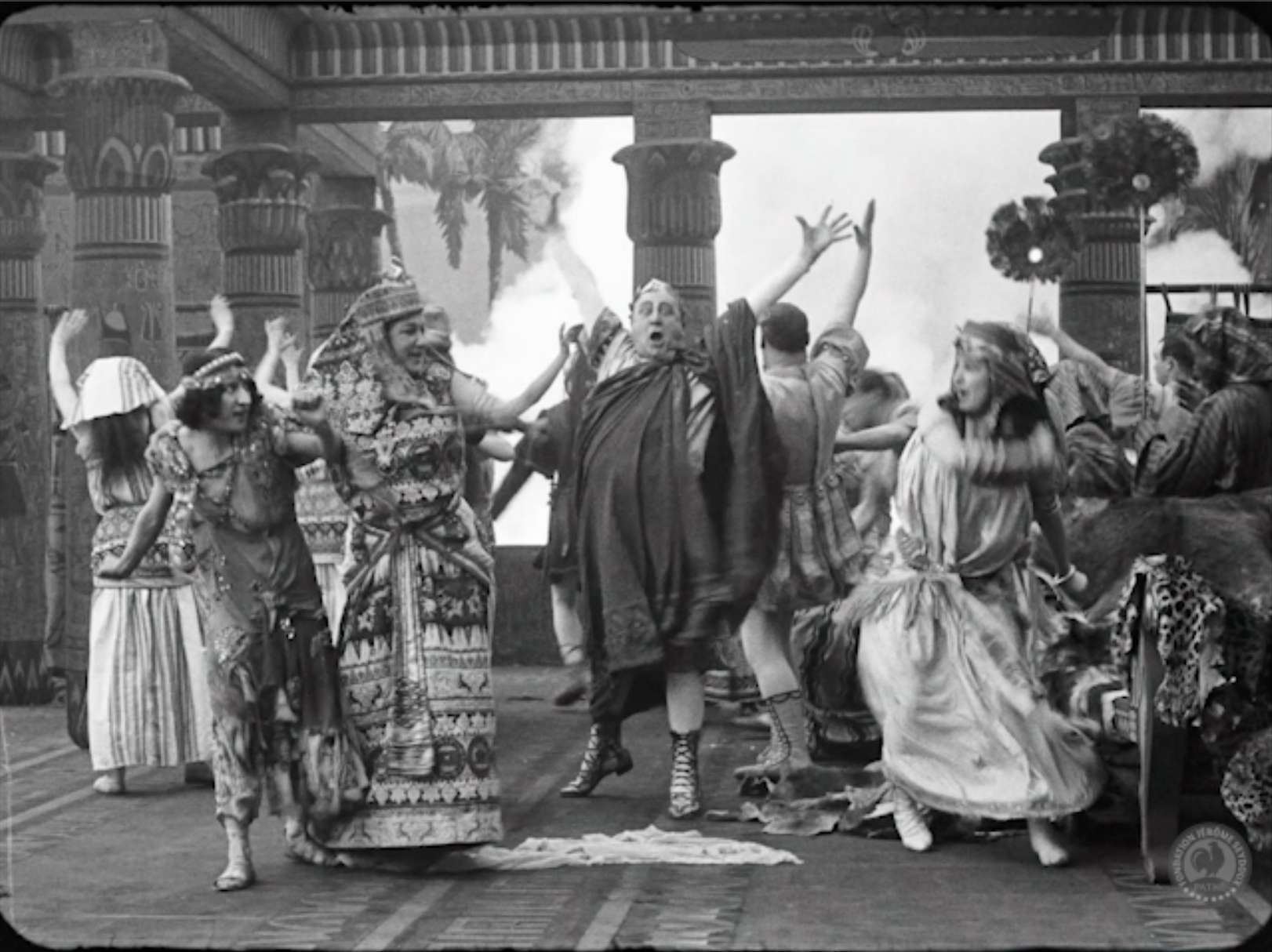
Figure 11. Caesar realises his palace is on fire in Le Caprice du Vainqueur (1910). Courtesy of the Fondation Jérôme Seydoux-Pathé.
Understanding that the Pathé film Le Caprice du vainqueur offers a distinctively French take on Egypt as the victim of Western assault should lead us back to a reassessment of the Orientalism of the studio’s earlier film Cléopâtre. Richard Abel comments on the latter film that it is locked into the old tableaux style, refuses its characters any subjectivity and, as with other Oriental films from Pathé and Gaumont, demonises the East as feminine (Abel, 1994: 258). But near the end of the film, its editing takes spectators through nine shots in quick succession that together assemble a mobile and impassioned Eastern tragedy of extreme proportions: Cleopatra looks out from her balcony; in the harbour below, the general Octavian salutes his troops; Cleopatra catches sight of what is happening and rushes down; Mark Antony disembarks and commits suicide despite the queen’s distraught protests and, as she retreats back up the stairs enclosed within a monumental Pharaonic statue, Octavian places his foot exultantly on the corpse of his fellow Roman; in extreme distress, Cleopatra withdraws indoors from her balcony; she lies down on a couch in her exotic bed chamber; outside Octavian discovers that its door is locked and gesticulates for his soldiers to break in; Cleopatra accepts the bite of the asp and falls with dignity to the floor as her servants look on in horror and weep; Octavian and his soldiers break into the chamber and he expresses his consternation that she is dead. It turns out that, at least in its final moments, this film too offers a challenge to the visual rhetoric of the West’s masculine mastery of the feminine East - for we are invited to witness and engage with the suffering of the Egyptian queen, the grief of her female servants and her escape in death from the victory of Rome.
In conclusion, in these two Pathé films, ancient Egypt is not constructed as a self-contained world belonging to another time and place. It is instead merged with modern-day France, in its recognisable landscape and chilly temperature, the use of actors and dancers from the Parisian stage, the brownface of some of the Egyptian characters and the modernism of some of the dances. Ancient Egypt is transformed into a cinematic world in which past and present meet, and where, thanks to the distinctiveness of French Orientalism, we catch a momentary glimpse of challenges to the authority of the male and of the West. Antiquity becomes a vehicle on screen for the expression of French national identity and its ambiguous relationship to its Eastern Other. In The Spectacular Past: Popular History and the Novel in Nineteenth-Century France (2004), Maurice Samuels argues that, after the French revolution, the visual commodification of history (such as in panoramas and phantasmagoria shows) gave French viewers an artificial sense of control over their past whereas the realist novel attempted to dismantle such ideas of mastery (Samuels, 2004). I would argue that the later optical technology of silent cinema sometimes offered both a sense of control over history and an escape from it in the same medium.[14]
Footnotes
- ^ According to the review in The Bioscope for 10 February 1910 and, for example, the Hamilton Herald and Lanarkshire Weekly News for 16 April 1910.
- ^ I am deeply grateful to Emma Durrant, who has recently completed a PhD on ancient Egypt in the 1867 exposition in France, for her helpful suggestions on how to interpret these two Pathé films and the difference between them in terms of the intricate relationship between the idea of ancient Egypt and French national identity in the nineteenth and early twentieth centuries. I have drawn here on some of her turns of phrase in communication with me on the subject of French Orientalism.
- ^ On the Pathé project to redefine cinema as an art akin to theatre, see Abel, 1994: 38-41, 181-183 and 246-277.
- ^ For the importance of Sardou and Moreau’s theatre sets and Cabanel’s Orientalist iconography to the visual composition of Cléopâtre, see Ivo Blom’s analysis of the film on this website.
- ^ The resumé for Cléopâtra (1910) can be found on the website of the Fondation Jérôme Seydoux-Pathé at https://www.fondation-jeromeseydoux-pathe.com/document/cleopatre/5fdd2ae2af99ca9e7f2816c6?pageId=60cb01f76fb6ab1f3a2a5382&q=cleopatre&pos=5 (accessed 22 July 2026).
- ^ On music and sound in the exhibition of silent film, see e.g. Barton, Trezise, 2019: 1-21.
- ^ For a discussion of the surviving prints of Le Caprice du Vainqueur and the sets it recycled from Cléopâtre, see the analysis of Cléopâtre by Ivo Blom on this website. The film was restored in 2016 by CNC – Archives françaises du Film from a 35mm nitrate tinted copy with Swedish intertitles and from a 35mm black and white nitrate negative.
- ^ The original film lengths are drawn from their details on the website of the Fondation Jérôme Seydoux-Pathé.
- ^ The résumé is available at https://www.fondation-jeromeseydoux-pathe.com/document/Caprice-du-vainqueur-le/5fdd2ae2af99ca9e7f2816fa?pageId=60cb01f76fb6ab1f3a2a5382&q=Caprice&pos=5 (accessed 22 July 2026). The scenario is available at https://gallica.bnf.fr/services/engine/search/sru?operation=searchRetrieve&version=1.2&query=%28dc.title%20all%20%22Le%20Caprice%20du%20vainqueur%22%29&keywords=Le%20Caprice%20du%20vainqueur&suggest=1 (accessed27 July 2026). Quotations are from the résumé.
- ^ In his analysis of Cléopâtre on this website, Ivo Blom notes that Jambon had died two years before the production of the film but as studios like Pathé often rented from workshops sets which had already been used on the stage, these Egyptian sets may well have been designed by him or at least by his atelier after his death.
- ^ See, for example, comments on this website on the loose reconstruction of ancient Greece, Rome or Byzantium in early French cinema, respectively Stéphanie Salmon on Amour d’esclave (1907) and Ivo Blom on Héliogabale (1910) and Bélisaire (1910).
- ^ Following Jean-Marcel Humbert, ‘Egyptomania’ has become the key term to describe ancient Egypt as it was reproduced and interpreted in the modern popular cultural imagination from the early nineteenth century in media such as architecture, ornamentation, furniture, the visual and performing arts and museology (as Jarsaillon, 2018: 359). See also the exhibition on Aïda and Egyptomania held at the Museo Egizio in Turin in 2022, https://aida.museoegizio.it/. My thanks to Ivo Blom for drawing the exhibition to my attention.
- ^ I am very grateful to Lara Lensi from the University of Florence who, at the 19th International Domitor conference in Brazil pointed out to me a potentially comic flavour to the film’s ending.
- ^ For discussion of silent cinema’s visions of ancient Egypt as being more insidious vehicles of the French colonial project, see Shohat, 1991 and Lant, 1997).
Caprice du vainqueur, Le (original)
1910
The attempt to set fire to an Egyptian Palace where Caesar is being entertained. (NFA Catalogue)
Cléopâtre (original)
1910
The story of Cleopatra, Queen of Egypt, and her love for the Roman Mark Antony. Cleopatra is seen at her court prior to departing for Mark Antony'…
Abel, R. (1994) The Ciné Goes to Town: French Cinema, 1896-1914. Berkeley/ Los Angeles: University of California Press.
Barton, R. and Trezise, S. (eds.) (2019) Music and Sound in Silent Film: From the Nickleodeon to The Artist. London / New York: Routledge.
Berthomé, J. (2011), 'Les décorateurs de cinéma en France', 1895, 65(65), pp. 90-111. DOI: 10.4000/1895.4437.
Bryan, C. (2011). 'Egypt in Paris: 19th century monuments and motifs', in Jean-Marcel Humbert and Clifford Price (eds.), Imhotep Today: Egyptianizing Architecture. New York / London: Routledge, pp. 183-205.
Curl, J. S. (1994). Egyptomania: The Egyptian Revival; A Recurring Theme in the History of Taste. New York: Manchester University Press.
Daugherty, G. N. (2022). The Reception of Cleopatra in the Age of Mass Media. London: Bloomsbury Academic.
Hemmerle, O. B. (2006). 'Crossing the Rubicon into Paris: Caesarian comparisons from Napoleon to de Gaulle', in Maria Wyke (ed.), Julius Caesar in Western Culture. Malden, MA: Blackwell Publishing, pp. 285-302.
Hosford, D. and Wojtkowski, C. J. (2010). French Orientalism: Culture, Politics,and the Imagined Other. Newcastle upon Tyne: Cambridge Scholars Publishing.
Hughes-Hallett, L. (1990). Cleopatra: Histories, Dreams and Distortions. London: Vintage.
Humbert, J-M. (2016). 'How to stage AIDA', in Sally MacDonald and Michael Rice (eds.), Consuming Ancient Egypt. London: Taylor & Francis, pp. 47-63.
Jarsaillon, C. (2018). 'Modern Egyptomania and early Egyptology: The case of Mariette's 1867 Egyptian Temple', Nineteenth-Century Contexts: An Interdisciplinary Journal, 40: 4, pp. 359-376.
Lant, Antonia (1997). ‘The curse of the Pharaoh, or How cinema contracted Egyptomania’, in: Matthew Bernstein & Gaylyn Studlar eds., Visions of the East: Orientalism in Film, London: I.B. Taurin, pp. 69-98. This text originally appeared in the journal October, 59, Winter 1992, pp. 87-112.
Nicolet, C. (2009). 'Caesar and the two Napoleons', in Miriam Griffin (ed.), A Companion to Julius Caesar. London: Blackwell Publishing, pp. 410-417.
Said, E. W. (1978). Orientalism. London: Routledge.
Samuels, M. (2004). The Spectacular Past: Popular History and the Novel in Nineteenth-Century France. Ithaca, NY: Cornell University Press.
Scully, R. (2011) 'The cartoon emperor: The impact of Louis Napoleon Bonaparte on European comic art, 1848-1870)', European Comic Art, 4.2, pp. 147-180.
Shohat, E. (1991). 'Gender and culture of empire: Toward a feminist ethnography of the cinema', Quarterly Review of Film and Video, 13:1-3, pp. 45-84.
Wyke, M. (2002). The Roman Mistress: Ancient and Modern Representations. Oxford: Oxford University Press.
Wyke, M. (2007). Caesar: A Life in Western Culture. London: Granta Publications.