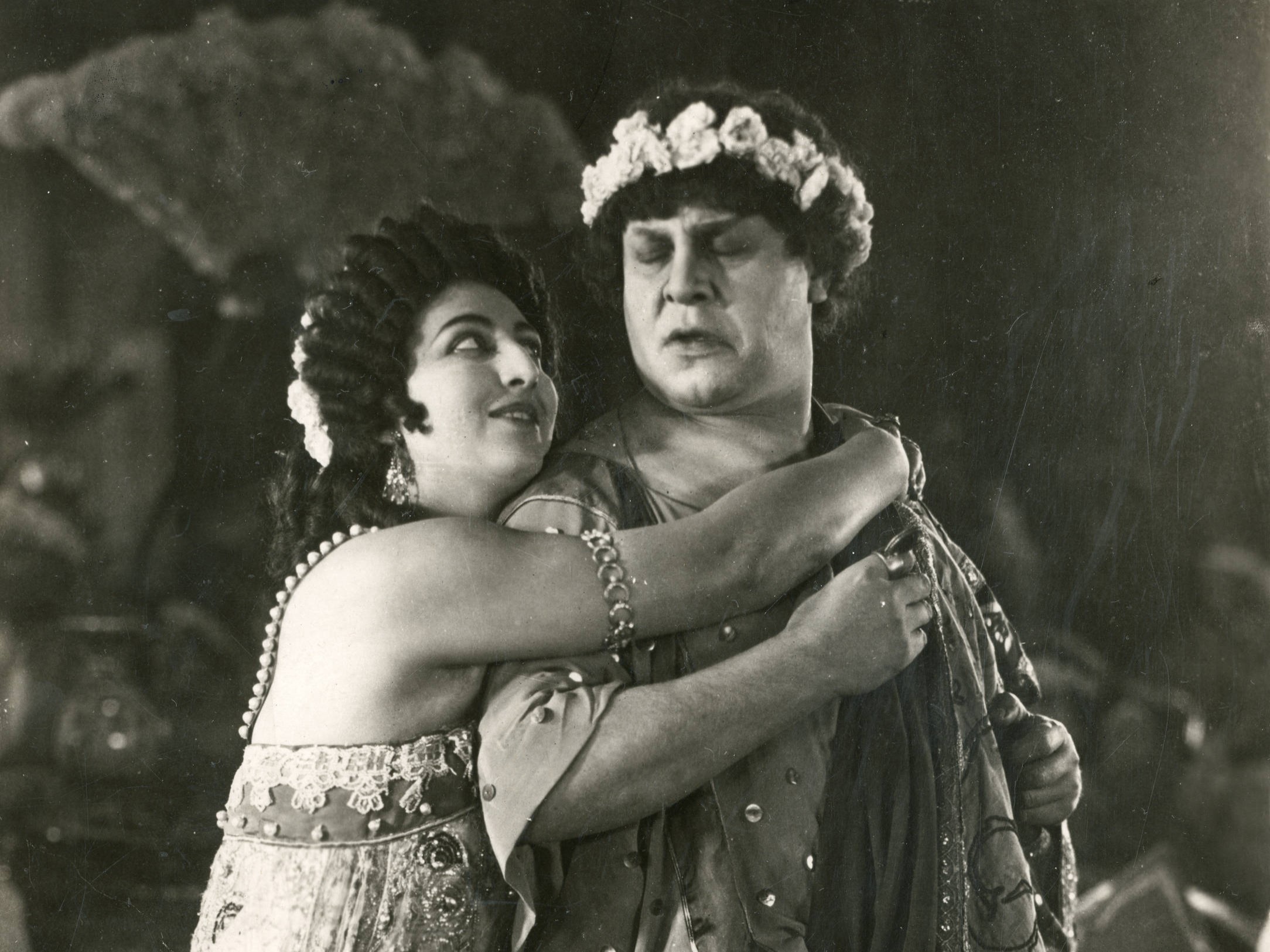
Quo Vadis? (original)
1924
Alternative Titles
N/ABFI identifier
42269For further information on how to access the film and associated materials, check the Notes on the Print under the Technical tab.
Synopsis
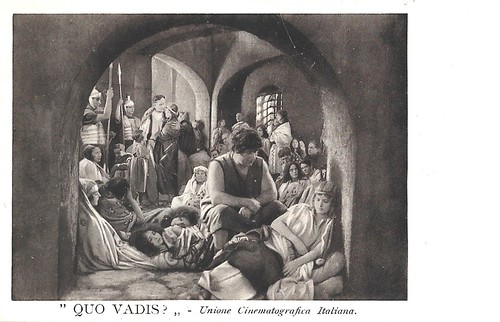
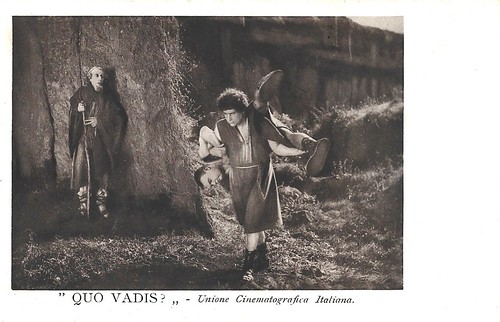
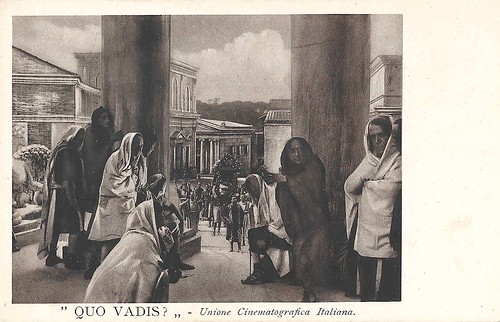
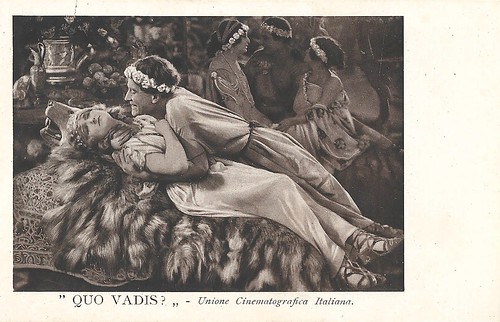
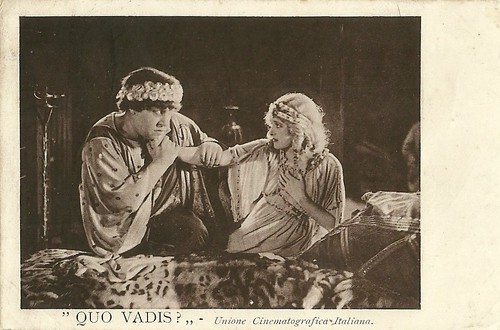
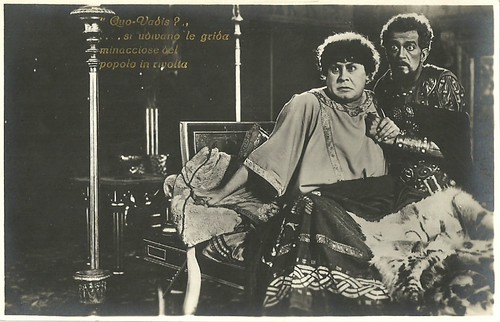
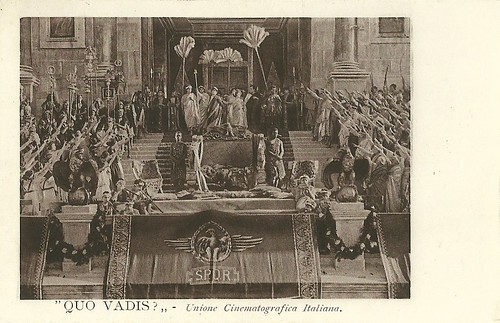
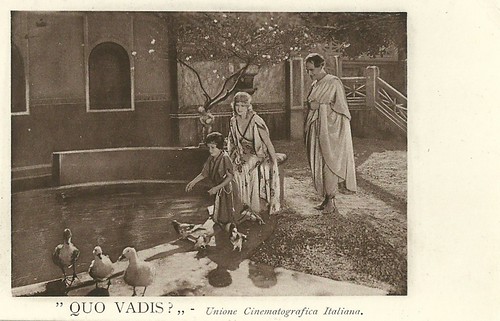
A story of the persecution of the Christians by the Emperor Nero. Rl.1. Nero amuses himself by watching his victims being cast into the wayer to feed his lampreys. He is attended by Petronius, his 'elegantiae arbiter', and Tigellinus, commander of the Imperial Guard. Nero signs a proclamation condemning all Christians to death. In the catacombs Peter the Apostle preaches to the Christians including Plautus, a young patrician, and his family. The corruption of the palace is reflected in the lives of the common people to whom Nero's proclamation is read. Amongst the crowd is Chilo, a charlatan philosopher. Vinicius, a young general and nephew of Petronius, returns from the wars to his uncle's home. Eunice, a slave girl devoted to Petronius, is sold some incense by Chilo who tells her that it will obtain her master's love. Vinicius relates in flashback to Petroniushow he met Lygia, the daughter of a foreign king, held by Rome as a hostage and entrusted to the care of Plautus. Petronius promises Vinicius that he will see Nero about the girl. Eunice burns the incense before a statue of her master. Nero gives Petronius a warm welcome. Tigellinus is jealous (991). Rl.2. Nero orders Lygia to be given to Vinicius. The pretorians fetch her from Plautus. Ursus, he strong and devoted slave, follows her. She is taken to the Palatine and placed in the care of Lucila, a freed woman. The two women meet Livy, the only child of the Empress Poppaea, who has escaped from his nurse. Poppaea finds them together and is struck by Lygia's beauty. Lygia is forced to attend a licentious banquet given by Nero where she meets Vinicius again. He presses his attentions on her. Nero sees them together and is attracted by the young girl (810). Rl.3. Lygia continues to repel Vinicius. Nero feigns a fatherly concern for the young girl and leads her away to his appartments. Petronius realises that the only way to save Lygia is to send for the Empress. Poppaea arrives in time to rescue Lygia from Nero's advances. Nero places Lygia once more in Vinicius' care. The banquet continues and Poppaea restores Nero to good humour by persuading him to sing. Lygia makes her way to the garden where she finds Ursus and implores him to find some way of returning her to Plautus and his family. As the Palatine orgy grows wilder, Peter prays with Plautus for Lygia to be returned...[Footage missing.] Ursus carries of Lygia as she is being escorted to the home of Vinicius. He is seen by Chilo. That night Nero has a nightmare in which Lygia appears. He asks Tigellinus to take him to a soothsayer for the dream to be interpreted (874). Rl.4. Vinicius receives the news of Lygia's abduction. Nero visits the soothsayer who foretells the burning of Rome. leaving, the Emperor sees Ursus carrying the rescued Lygia through the deserted streets. He follows and ultimately corners Lygia in her refuge. She is rescued once more by Ursus who stabs Nero in the process. Tigellinus escorts the Emperor home (766). Rl.5. Livy, the child, falls ill and dies. His nurse cries out that the Christian Lygia has bewitched him. Nero summons Vinicius and demands to know Lygia's whereabouts. When he confesses that she has been abducted, Nero falls into a rage but is restored to good humour by the wily Petronius. Petronius offers his nephew the slave girl Eunice. She begs to be allowed to stay and Petronius orders her to be whipped. Meanwhile Vinicius searches in the streets for Lygia. He is seen by Chilo who offers to guide him to her in exchange for money. Petronius witnesses the whipping of Eunice and realises her love for him. Chilo, aided by a renegade Christian, Croton, takes Vinicius to the catacombs where Lygia and other Christians are hiding. Ursus rushes to ehr defence, sends Chilo and Croton flying and wounds Vinicius. Lygia nurses him (981). Rl.6. Vinicius begs Lygia's forgiveness. She realises that sheloves him and prays for his conversion. Nero sends Petronius an invitation to hear him recite his new poem on the burning of Troy.Chilo arrives on the scene as the restored Vinicius returns. Vinicius orders him to be whipped and Chilo vows vengeance. Nero, determined to surpass The Iliad, recites his poem. He is acclaimed by the sycophantic courtiers but Petronius tells him the poem lacks fire. Nero looks at Rome and the watchful Tigellinus grasps his meaning. Two days later a fire is started. Nero is enraptured. Vinicius searches for Lygia (807). Rl.7. Petronius is unable to hide his indignation and his denunciation of Nero is overheard by Tigellinus. As Nero plays his lyre panic fills the streets and the populace make their way to the Palatine crying for vengeance on the arsonists. Vinicius saves Plautus' wife and child from their collapsing house but is unable to find Lygia. At the Palatine the crowds break through the guards and cry for Nero. Nero looks around desperately for a scapegoat. Chilo creeps to the throne and suggests the Christians. Nero announces to the threatening crowds that they are responisble. Christians are immediately arrested wholesal. Petronius advises Vinicius to save Lygia. Peter yields to his followers' advise and leaves Rome. On his way he meets Christ who asks him "Quo vadis?" Peter returns. The Christians are cast into prison, including Lygia, Ursus, Plautus and his family. The martyrdom of the Christians commences: they are thrown into the arena and fed to the lions. Nero and Poppaea, attended by Petronius and Vinicius, watch the massacre. Nero tells Vinicius that he has a surprise for him. Petronius tries to console his nephew by telling him that Lygia is not among the prisoners. He receives a message that the mutinous legions of Spain and Gault have proclaimed Galba emperor and are marching on Rome. More Christians are sent into the arena but Lygia is kept behind on Nero's orders. Plautus is separated from his family but escapes from the lions by climbing into the evergreen decorations (1213). Rl.8. Petronius hands the message from Gaul to Nero who immediately sends him to his house. Anticipating Nero's order, Petronius invites his friends to a feast and, after reading alound a scurilous document addressed to Nero, asks a surgeon to open his veins. Eunice dies with him. Plautus' wife is lashed to a chariot with her child. The child is rescued by Ursus but the mother is dragged around the arena in a chariot race with the other Christians similarly treated. She manages to gain control of the chariot and the crowds are so impressed with her bravery that the crowd cry for ehr release and she is reunited with her son. The revolting legionaries enter the city as Ursus is led into the arena to fight a bull to which Lygia has been bound. Nero anxiously awaits the outcome and is furious when Ursus kills the bull and releases Lygia. The crowd once again demand that she be released. Vinicius rushes to Lygia and joins in the pleas for mercy. Nero refuses and the enraged crowd take control as Galba's men enter the arena. Tigellinus grabs Nero and takes him to the Palatine whilst Vinicius leads the mobs in pursuit. Two Christian slaves take pity on the panic-stricken Emperor and lead him to Plautus who has been reunited with his family and the other Christians. Ursus wants to revenge himself on Nero but Lygia pleads tolerance. Plautus sets Nero free and he takes refuge in a peasant's cottage. As Galba's troops approach he reluctantly takes his own life, aided by the peasant. Lygia and Vinicius are married by Peter (1100). (7542ft) Note: English intertitles. Sections are obviously missing, particularly from reel 3. (Shotlist)
- Production Country: Italy
- Production Company: Unione Cinematografica Italiana
- BFI Category: Fiction
- Source: N/A
Cast
Emil Jannings (Nero)
Elena Sangro (Poppea)
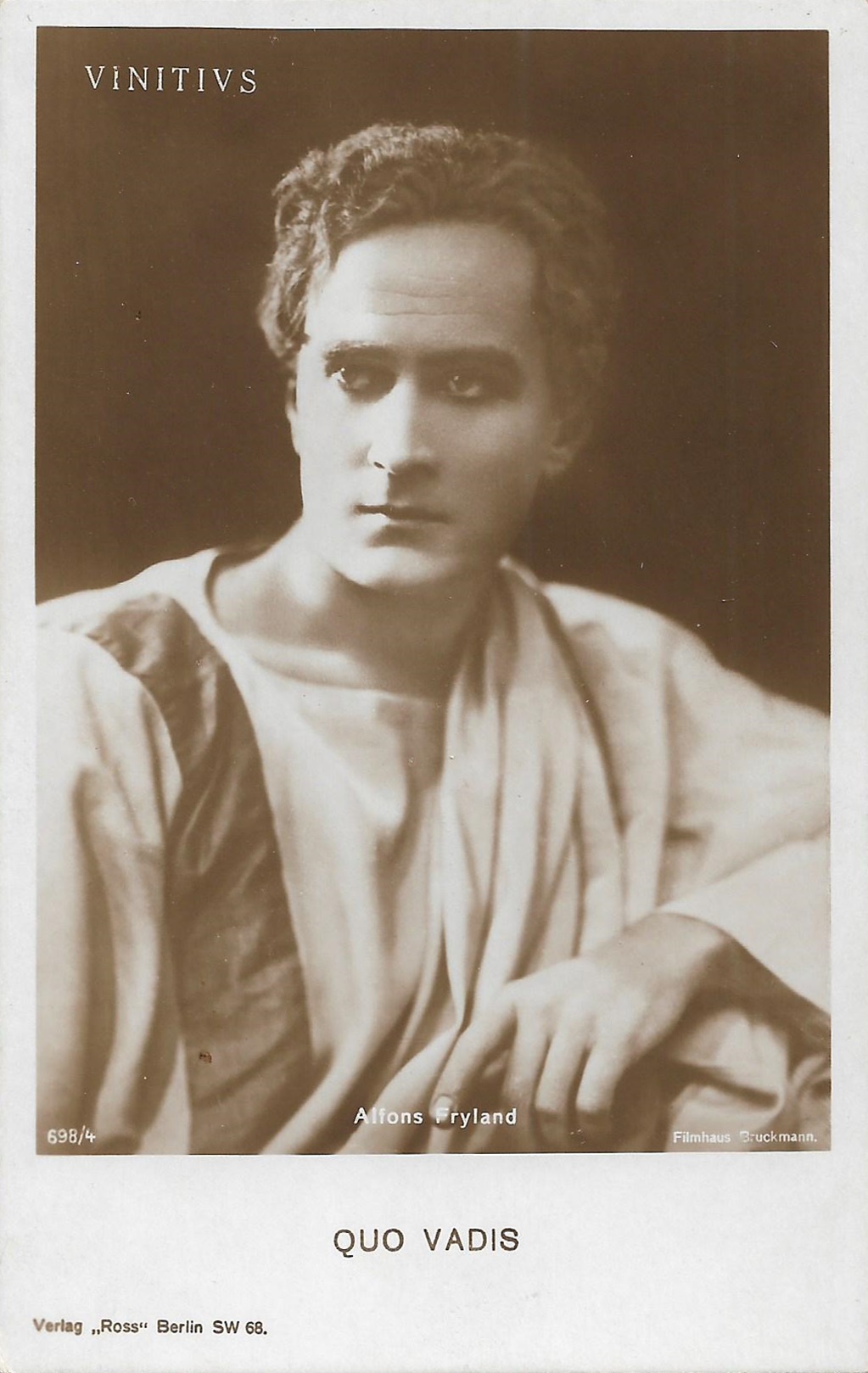
Alfons Fryland (Vinicius)
Lilian Hall-Davis (Licia)
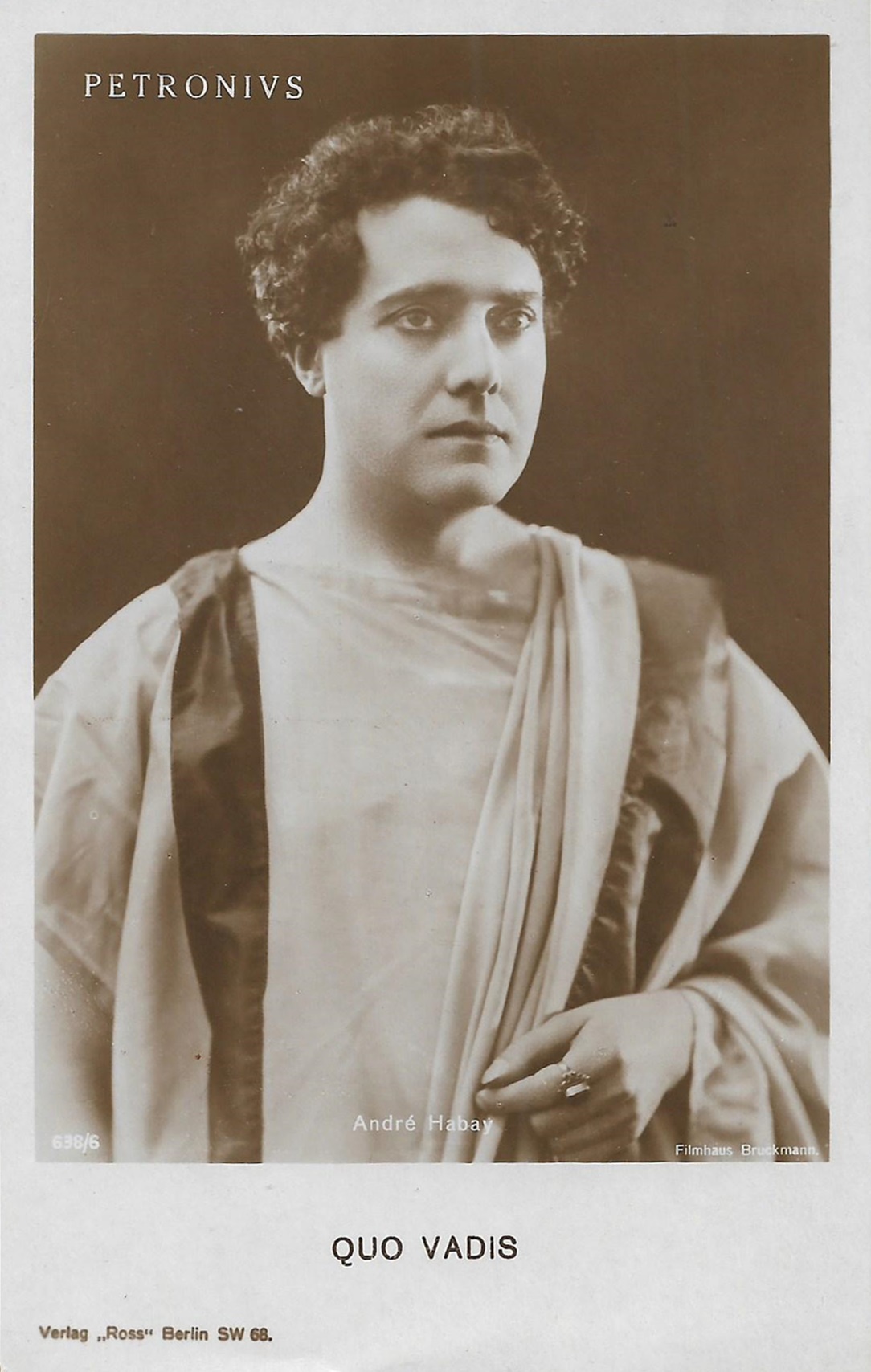
Andrea Habay (Petronius)
Raimondo Van Riel (Tigellino)
Rina de Liguoro (Eunica)
Bruto Castellani (Ursus)
Gino Viotti (Chilone Chilonide)
Gildo Bocci (Vitellio)
Lido Manetti (a guard)
Elga Brink (Domitilla)
Marcella Sabbatini (a child)
Credits
Director: Georg Jacoby, Gabriellino D'annunzio
Production Company: Unione Cinematografica Italiana
Screenplay: Georg Jacoby, Gabriellino D'annunzio
Based on the novel by: Henryk Sienkiewicz
Photography: Giovanni Vitrotti, Curt Courant, Alfredo Donelli
Set Designer: R. Ferro, G. Spellani
Construction: Armando Brasini
Film Technical Information
- Original Length: 3308 m.
- Length of BFI Viewing Print: N/A
- Support: Viewable
- Colour
- Format: 35 mm , Digital Betacam, VHS cassette
Comments on the print:
The BFI currently has only a black & white video copy that is accessible. Its runtime is around 83 minutes, with sections clearly missing, especially from reel 3. For all the elements the BFI possesses, see here.
A tinted version of the film was restored in 2002 by the Eye Filmmuseum (Amsterdam) in collaboration with Fondazione Cineteca Italiana (Milan) and Fondazione Scuola Nazionale di Cinema – Cineteca Nazionale (Rome), with a runtime of 134 minutes and English intertitles. The original length was 3308 m., according to V. Martinelli, Il cinema muto italiano. I film degli anni venti. 1924-1931. Bianco & Nero. Rome: Centro sperimentale di cinematografia, 1996: 58.
Visual Resources