
1926- The Last Silent Epic of Pompeii: Architecture, spectacle, and cinematic reconstruction in Gli ultimi giorni di Pompei
By AYLIN ATACAN
The narration of Pompeii developed in three phases. The first phase corresponds to the rebirth of the site by its discovery. All sorts of endeavours to unearth the city, which stayed buried for centuries under the material that had erupted out of Vesuvius, first presented Pompeii to the public - from random digging and unsystematic recording to archaeological excavations and scientific accounts. The second phase was created by members of the public themselves, by visitors who were keenly interested in engaging with antiquity and who produced multiple types of documentation from travel accounts, letters and travelogues to photographs. They not only documented their first-hand experience of the site but also directly represented the site of Pompeii. The third phase corresponds to a period of systematic documentation produced in the form of the presentation of facts by such means as guides and illustrated books, facts that were often intriguingly combined with fiction. The cinematic field also interleaved fiction and fact, while reanimating Pompeii and turning it into images that moved.
In the first phase of the site’s narration, the explorer or discoverer of the site was its author. In the second phase, the tourist became the author, as a real traveller producing personalized representations, while in the third phase the beholder, as a form of time traveller became the author. The beholder, though not literally visiting the site, took up the perspective of a traveller via images that created an opportunity to experience the ancient site virtually. In line with the idea of becoming a pseudo-traveller, Giuliana Bruno (1997) sees cinema as a ‘haptic’ experience that produces time travel. She claims that ‘cinema makes a psycho-geographic appeal to tactility and other senses through an array of sensual encounters through which we encounter cinema, including film itself, architecture and travel’ (Williams, 2012: 100) and, according to her, the city of Naples was ‘toured, represented, and pictured’ many times before the emergence of the new technology, and ‘cinema has continued this type of journey, producing its own grand tour’ (Bruno, 1997: 47).
At the very beginning of the twentieth century, when films about the last days of Pompeii began to appear, audiences in Britain and America were already familiar with well-established pre-cinematic reconstructions of the ancient city. Chief among these were Edward Bulwer-Lytton’s novel The Last Days of Pompeii (1834) and antiquarian paintings by artists such as Lawrence Alma-Tadema. Both the novel and these paintings formed part of a broader nineteenth-century culture that used ancient Rome to interpret and critique the modern world. Drawing on archaeological discoveries and documentation from Pompeii, Bulwer-Lytton and Alma-Tadema sought to recreate the ancient city with a degree of historical detail, while also shaping it according to contemporary tastes and moral concerns. As Wyke (1997: 275-6) notes, audiences, particularly in Britain and America, were already equipped with a range of reconstructions of Pompeii and conventions of “presentist” interpretation, which shaped their expectations of how the city should appear on screen. Early cinematic representations were therefore received in relation to these established models. In turn, as Morcillo, Hanesworth and Marchena (2015: 3) argue, such films became sites for the exploration and critique of historical authenticity, especially in relation to set design and the construction of mise-en-scène, which was often judged as inaccurate when compared with these earlier literary and visual traditions.
In the early years of cinema, audiences favoured films that featured melancholy, drama, and loss, elements that were comparable to modern daily life. Pompeii, in this respect, was a potent agent; because it was destroyed by a devastating volcanic explosion, it could add a powerful ingredient of melancholy to the representation of antiquity on screen. The tragic Pompeian narrative of disaster, destruction and death related all too well to the human condition and became a very popular theme throughout cinema’s silent era. There are four silent films based on the 1834 novel The Last Days of Pompeii by Bulwer Lytton:Gli ultimi giorni di Pompei (Società Anonima Ambrosio Film, directed by Arturo Ambrosio and Luigi Maggi, 1908); Gli ultimi giorni di Pompei (Ambrosio Film, directed by Eleuterio Rodolfi, 1913); Jone, ovvero Gli ultimi giorni di Pompei (Pasquali Film, directed by Giovanni Enrico Vidali, 1913); and Gli ultimi giorni di Pompei (Società Anonima Grandi Films, directed by Amleto Palermi and Carmine Gallone, 1926).
In eighteenth and nineteenth-century antiquarian paintings, tones of red and images of destroyed architectural elements were used to accentuate the eruption of Vesuvius and hence the drama of its consequences. The silent films of the twentieth century, likewise, often used red tinting as well as moving images of the collapse of architecture to highlight destruction, human tragedy and death.
By the 1920s, these layered traditions of archaeological discovery, touristic representation, and cinematic mobilisation had fully converged in Gli Ultimi Giorni di Pompei (The Last Days of Pompeii, 1926). Silent cinema, drawing simultaneously on scholarly reconstructions and popular visual conventions, had become an ideal medium through which Pompeii could be reanimated as both an archaeological site and a dramatic narrative space. The city’s ruins, already familiar to audiences through guidebooks, paintings, photographs, and earlier films, were no longer presented merely as static remnants of the past but as immersive environments populated by bodies, emotions, and movement. In this sense, Pompeii functioned as a cinematic palimpsest: beneath the surface of the film, one can trace the visual and intellectual traditions that had long shaped representations of the ancient site.
The film has been discussed within a broader body of scholarship that situates it in relation to industrial, political, and aesthetic concerns of the 1920s. Critics have explored, for instance, its status as an international co-production, its engagement with earlier Italian antiquity films of the 1910s during a period of crisis in the national film industry, and its possible connections to the emerging discourse of romanità under the Fascist regime. While these approaches highlight the film’s importance within wider debates about cinema, nationalism, and cultural identity, they are not the primary focus here.
Instead, this essay examines Gli Ultimi Giorni di Pompei (1926) as a culmination of silent Pompeii films, in which cinematic fiction draws on archaeological knowledge while also becoming a valuable document in its own right for understanding lost architectural and decorative elements of the site. It is within this mature phase of Pompeian representation—where the viewer assumes the role of a virtual time traveller—that the film emerges as one of the most ambitious silent reconstructions of classical antiquity.
Introduction
The 1926 production Gli Ultimi Giorni di Pompei was released by the Italian production house Società Anonima Grandi Films and directed by Amleto Palermi and Carmine Gallone. A notable feature about this long and ambitious film concerns the background of some of its production team - the Pompeian scenography was designed by the architect Vittorio Cafiero (Wyke, 1997) and the costumes were designed by Duilio Cambellotti, who ‘was a first-rate artist, the most outstanding representative of art nouveau in Italy’ (Pucci, 2013: 254). With over a thousand scenes and two hundred captions, the film was physically colossal: ‘with its playing time of more than three hours and a total of 1395 takes (many of them hand-coloured) it was not only one of the longest and most lavish, but also one of the most expensive (production costs totalled seven million lira) Italian movies realized to date’ (Stähli,2012: 82).
Like the previous versions of Pompeii’s last days the film follows the plotline of Bulwer-Lytton’s novel, and every scene is preceded by intertitles that provide brief information on it as well as some direct quotes from the novel. For this latest adaptation, much more accurate sets were designed that reconstructed the architectural layout of the city and its buildings in substantial detail while still using them as spaces through which the novel’s fictional characters moved. Pompeii’s Forum, Amphitheatre, streets, Temple of Isis, Temple of Jupiter, House of the Tragic Poet, Villa of Diomedes were among the architecturally prominent set decorations, as well as the Basilica and the Stabian Baths as newcomers to cinematic reproduction. [1] Unlike the earlier set designs, however, these elaborate sets were featured in close-up views that focused on interiors and even in the outdoor scenes, such as those taken in the Forum area in the opening sequences. Due to these more accurate set designs that were influenced by the currently available reconstructions of Pompeii and its daily life in various visual media, the film provides a framework for understanding how silent cinema progressed towards featuring Pompeian fiction within the realities of the original city.
The film itself celebrates its skills at archaeological reconstruction. In the opening scene, the camera tracks through the excavations at Pompeii as they would have appeared to tourists in the 1920s. Monumental public architecture and private dwellings that will form the canonic sites for the film's fictive narration appear first in fragmented ruins before the gaze of spectators in cinemas – in particular, the via dell'abbondanza, the Temple of Isis, the Forum, the Amphitheater, the Court House, the Street of Tombs, the Stabian baths, and the House of the Tragic Poet (owned in the novel by its protagonist Glaucus). The camera then returns to a long shot of the ruined Forum. Through a brief and progressive series of disjunctive cuts, the ruined forum is suddenly replaced by a reconstructed one and it, in turn, is immediately replaced by one alive with people. Spectators then see the Stabian Baths on screen, with the following description appearing in the preceding intertitle: ‘At the Stabian baths the youth, the manhood of Pompeii, found space to exercise their energies in healthful sport’. A feature that distinguishes this filmic version of Pompeii’s last days from earlier ones is that the exercise grounds of the Stabian Baths are shown as a set for the first time (fig. 1). The scene, which shows many people in the act of chatting, promenading, or engaged in sport, shows the importance of this place in the daily life of Pompeii. While also justifying its later presence opportunistically to display female nudity. After this opening bravura display of cinema’s capacity to reconstruct ruins, fill them with people and bring the past to mobile life, the camera focuses on the protagonist Glaucus and shows him in the act of throwing a discus (fig. 2). Glaucus’ bodily movement closely resembles the classical sculptures that present Greek athletes in the act of throwing a discus, for example, the Discobolus of Myron, which was completed at the beginning of the classical period around 460-450 BC (fig. 3). The ‘quotation’ of an ancient artwork is presumably designed to suggest that the bodily movements in the film, just as much as its architectural spaces, are authentic and, therefore, worth seeing.
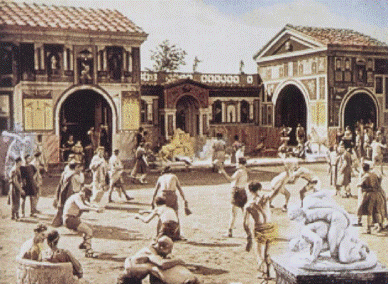
Figure 1. Scene showing the exercise ground of the Stabian Baths, (Pesando, 2006: 40)
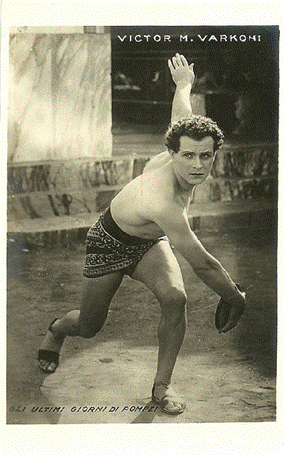
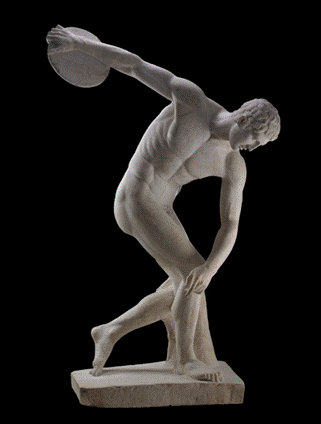
Figure 2. Italian postcard by C. Chierichetti, showing Glaucus training at the exercise ground of the Stabian Baths, Source: https://filmstarpostcards.blogspot.com/2015/10/gli-ultimi-giorni-di-pompei 1926.html)
Figure 3. The Discobolus of Myron, Source: https://www.britishmuseum.org
Reconstructing the city: Streets, the Forum, and public spaces
A well-designed street set, most likely replicating Mercury Street, one of the most well-known streets of ancient Pompeii, introduces to film audiences the urban atmosphere and two of the main actors, the blind girl Nidia and Glaucus (fig. 4). The scene also displays a public fountain in the foreground, and a shop and graffiti on the walls in the background, iconic features of the ancient city. The meticulous reproduction of original graffiti indicates that the directors aimed to reconstruct the streets realistically and with vividly authentic detail. The same décor is seen from a different angle in another street scene (fig. 5).
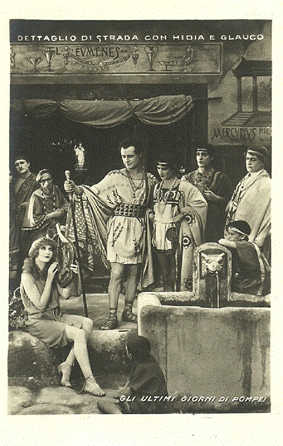
Figure 4. Italian postcard by C. Chierichetti depicting the street scene with fountain, wall paintings and graffities, Source: https://filmstarpostcards.blogspot.com/2015/10/gli-ultimi-giorni-di-pompei-1926.html
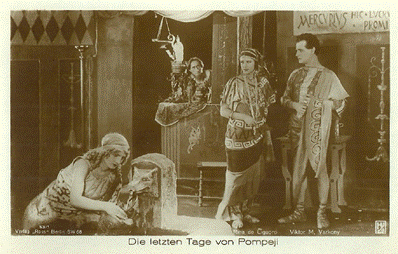
Figure 5. German postcard by Ross Verlag, showing the same street from a different angle, Source: https://www.flickr.com/photos/truusbobjantoo/29422603171/in/photostream/
The first appearance of the tavern of Burbo, which had featured in the 1913 film adaptation of the novel by the Italian studio Società Anonima Ambrosio, is staged as an outdoor scene in this production as well (fig. 6). The scene shows the tavern at the street corner, and a crowd of figures that includes children, animals, and adults in the act of working and walking by. The wall-painting here is a replica of the snake paintings found originally in the lararium of an unnamed excavated house which are displayed in the Naples Archaeological Museum today. In the original Pompeiian painting, the two lares, who were holding horns and dishes, were positioned on either side, and the head of the family who makes offerings to the gods between them (fig. 7).
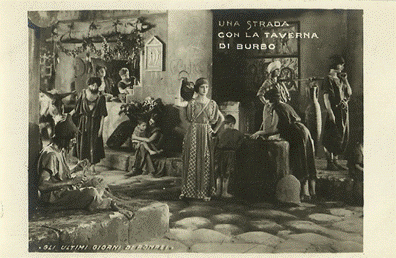
Figure 6. Italian postcard by C. Chierichetti showing the Tavern of Burbo with a view of the street, Source: https://filmstarpostcards.blogspot.com/2015/10/gli-ultimi-giorni-di-pompei-1926.html
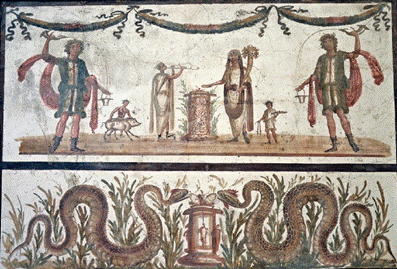
Figure 7. Lararium painting, found in an unnamed house in Pompeii, Source: https://www.ancient.eu/image/9711/pompeii-fresco-with-lares/
The Forum scene is among the most spectacular sets of the film. Although the frame is arranged to provide the conventional vista towards Vesuvius, the mountain is not displayed in the background; the scene instead features some of the public edifices in the Forum area, as well as a crowd massed in the foreground (fig. 8). The Temple of Jupiter, the Triumphal Arch of Augustus, and the Forum Olitorium (vegetable market) are reconstructed as key architectural features, and share features in common with the two-dimensional reconstructions published in illustrated books of the classical site. Both at Pompeii and in the film, the Temple stands on a podium and has rows of steps running along the whole façade, looking onto the Forum. It is a prostyle temple with six Corinthian columns at the front and five at the sides. Originally there were two triumphal arches located at each side of the temple; in the film, only the arch at the west side of the temple is shown, while the second arch is placed to form an impressive northern entrance to the Forum. The scene in Ultimi giorni even elaborates on the monumentality of Pompeii’s public spaces by means of its colossal columns, the statues by the side of the temple and on top of the arch as well as through use of a two-story colonnade on the left of the frame that provides a sense of depth. The temple is emblematic in terms of its location as we know that Mount Vesuvius looms behind it. Presenting so grand an edifice at the start appears to be a deliberate choice in order to contrast with its dramatic collapse towards the film’s close. The Forum Olitorium was a two-story open portico that faced the Forum square; in the film, it is depicted as having eight brick columns. As the details of all these reconstructed buildings on screen match the archaeological record, the scene comes close to reality and thus appeals to spectators to appreciate the film for its apparently authentic documentation of the ancient city’s dramatic end.
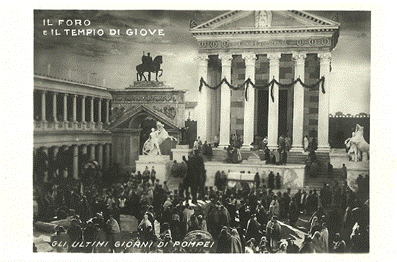
Figure 8. Italian postcard by C. Chierichetti showing the set design of The Temple of Jupiter in the Forum, Source: https://www.flickr.com/photos/truusbobjantoo/33140014871
Domestic architecture and the cinematic Roman house
Significant interior scenes are set at the house of the novel’s hero Glaucus (based on the House of the Tragic Poet), the house of his beloved Jone and the Stabian Baths. The interior set design of Glaucus’ house bears a strong resemblance to the reconstructed images of the Pompeian private dwelling that had appeared in artworks of earlier decades. However, this setting, in comparison to those in earlier film versions of the novel, is the most effective and accurate recreation of the House of the Tragic Poet in terms of its decoration and architectural features (fig. 9). The initial shot is composed in such a way that spectators in the cinema could behold the visual axis originally established for the villas of the Roman elite between the atrium (the central entrance hall), the tablinum (the principal reception or office space opening off the atrium), and the peristyle (a columned courtyard or garden at the rear of the house).This is made possible by the construction of a symmetrically organized frame and the placement as a focal point of the iconic lararium (a domestic household shrine dedicated to protective deities) displaying a small marble statue of a satyr bearing fruit. The scene contains various decorative elements such as masks, curtains, wall paintings and marble statues, tables and stools; the luxury of the interior is conveyed especially through the use of objects that look as if they are made of marble. Plants hanging down from vases and climbing around columns are also utilised to reproduce the ways in which nature had once been part of the ancient domestic environment. Such features also rendered the setting suitably romantic for the enactment of the fictive encounters between Glaucus and his beloved Ione and of the vain yearnings of Nidia for her master.
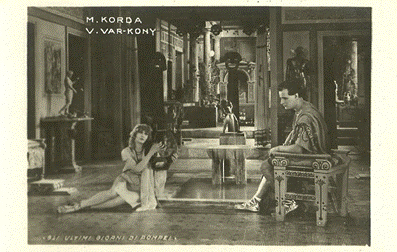
Figure 9. Italian postcard by C. Chierichetti showing the interior scene from the house of Glauco, Source: https://filmstarpostcards.blogspot.com/2015/10/gli-ultimi-giorni-di-pompei-1926.html
A comparison between the records for the ancient house and its set version makes it apparent that the wall painting seen on the left side of the film frame is not painted accurately. While the painting in the set displays a mythological scene, it was not the one found in the House of the Tragic Poet. There is a mythological panel on the original wall that depicts ‘the Wrath of Achilles which has been ignited by Agamemnon’s removal of his Briseis; this is the true subject of the Iliad’ (Bergmann, 1994: 237). This is another instance of how silent films that animate antiquity are often composites, merging fiction and fact and, therefore, cannot be securely approached as documentary evidence for the distant past. In the case of films about Pompeii, the fiction is usually borrowed from the novel, photographs, the illustrated press, paintings and drawings, while the ‘fact’ is gathered from archaeological data.
The interior scene constructed for Jone’s house also exhibits similarities with the original House of the Tragic Poet. In a similar vein, the scene is framed between two columns; this time, the focal point in the background is a sculpture, and the visual axis leading to the tablinum and the garden beyond is made perceivable to the beholder (fig. 10). The symmetrical arrangement of the setting and the column pairs that act as a frame differentiate clearly the spatial sequencing in the house: in the foreground is the atrium volume defined between two columns, and then through the opening at the wall, the film spectator looks through to the so-called tablinum which is located at the far back from the point of the camera. The wall-paintings, mosaic floor, statuary, the impluvium with a fountain, curtains at the entrance of the tablinum, and the elaborate stool on which Glaucus sits are the other charms of the atrium that brings the scene close to the depictions of Pompeian interiors by nineteenth-century antiquarian painters like Alma Tadema.
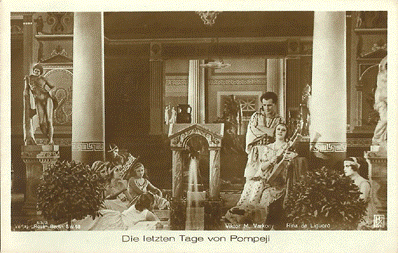
Figure 10. German postcard by Ross Verlag showing the interior scene from the house of Jone, Source: https://www.flickr.com/photos/truusbobjantoo/28880466543)
Baths and amphitheatre
The scenes of men and women bathing have some of the most elaborate interiors of the 1926 film (figure 11). A woman bathing also features in one of the adaptations of the novel produced in 1913 (Ambrosio Film, directed by Eleuterio Rodolfi), where Jone is shown at her bath helped by her slaves; curtains are used to provide privacy, separate the bath from the other parts of the house, and to tease the audience in the cinema. Unlike that 1913 version, which showed a private bath, the bathing scene in the film of 1926 takes place in the city’s Stabian Baths. The reconstruction of the baths to include both male and female sections is based on the published plan and archaeological description of the Stabian Baths. For this later film, the architect Vittorio Cafiero[2] reconstructed the richly decorated exteriors and interiors according to published documents: in antiquity, the open-air bath (natatio) located on one side of the gym was surrounded on three sides by a portico; the female calidarium, covered with a barrel vault had stucco decorations and frescoes on the walls, small niches in one wall to store clothes, on one side a bathtub (alveus) and on the other an ablution bath from which spurted lukewarm water (labrum). The bathing sequences demonstrate Cafiero’s success in set design. The ambience created in the sequence is very similar to that created in nineteenth-century paintings which represented nude and sensual Roman women bathing in order to create erotic atmospheres. By focusing on female nudity, ‘the film appeals to its spectators with overwhelming visual and voyeuristic pleasures’ (Stähli, 2012: 83). The hairstyles, the fluid texture of the costumes of the figures, their gestures and their poses provide an insight into the director’s response to the life of Pompeii. Encapsulated in one of the most eccentric places of ancient socializing – the baths – this female eroticism was exploited in German publicity posters to attract interest in the film (fig. 12).
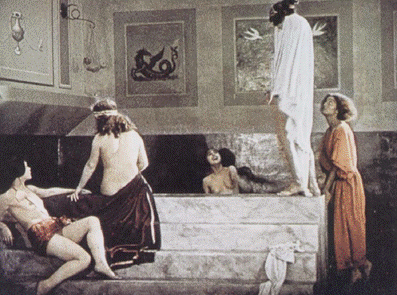
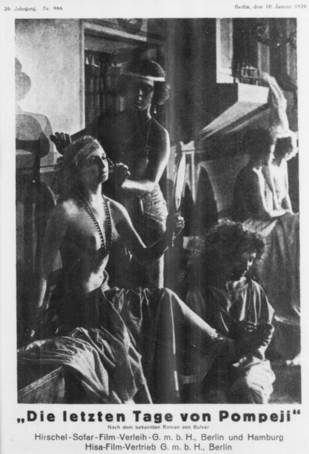
Figure 11. Bathing Scene, Stabian Baths (Pesando, 2006: 40)
Figure 12. Film still published in Der Kinematograph (1926), no. 986, Berlin, 10 January, p. 1.
The most impressive feature of the 1926 film is the authenticity of its representations of buildings, costumes, and elements of the daily life of Pompeii. The set used for the amphitheatre scenes was likewise designed to refer to the documented architectural features of the original amphitheatre in Pompeii (fig. 13). As in the earlier 1913 adaptations of the novel to screen, the method used to convey to film spectators a realistic representation of the atmosphere in this public edifice was to fill the scene with crowds. In the 1926 film, the crowd of ancient spectators at the arena are shown escaping towards the end, a sequence that conveyed with considerable effect the mass fear created by the eruption of Vesuvius.
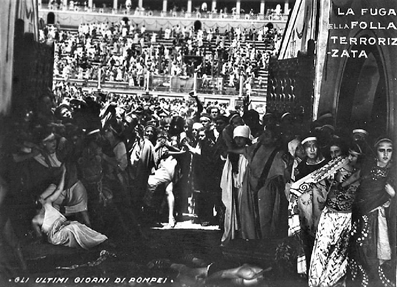
Figure 13. Amphitheatre Scene, Source: https://muromaestro.files.wordpress.com/2020/01/1926-5.jpg

In line with previous adaptations of the novel to screen, the catastrophic demise of Pompeii is displayed to modern spectators through the destruction of architectural elements - columns fall and roofs collapse. The sequence at the house of Glaucus is remarkable for reanimating not only the destruction of human life in the ancient city but also the destruction of its architecture (fig. 14). In another scene, the Temple of Jupiter and the Basilica, likewise, are shown collapsing into pieces as a result of the volcanic eruption.
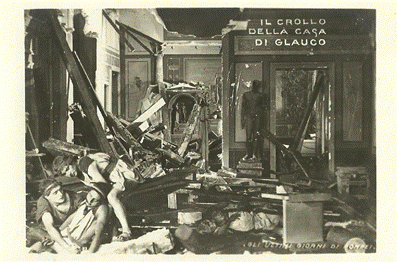
Figure 14. Italian postcard by C. Chierichetti showing the destruction in the house of Glauco, Source: https://filmstarpostcards.blogspot.com/2015/10/gli-ultimi-giorni-di-pompei-1926.html
Conclusion
Compared to earlier screen adaptations of Bulwer-Lytton’s novel, this version from 1926 stands out in terms of its ambitious close-to-accurate set designs. The scene displaying the interior of the house of Glaucus bears considerable visual continuity with that of the House of the Tragic Poet; the camera angles chosen enable cinema audiences to see the visual axis that once connected the Roman atrium to the garden at the back. The film sets itself apart from the versions of 1913 and earlier in presenting public architecture ever more accurately. The fact that some of the opening scenes, including the Terme Stabiane (Stabian Baths), were shot in real locations at the site of Pompeii thus accidentally documenting paintings that are lost today, also distinguishes the film. In this regard, for the first time, a silent film on
Pompeii turned into a source of archaeological knowledge (Guardiola, 2015: 187). Despite all the realistic set designs and the casting of stars, however, the film did not gain success in Italy and abroad and was even referred to as ‘the last days of the Italian cinema’ (Ventura, 2015: 340). Maria Wyke (2019: 460) has emphasised that one underlying cause of the film's failure was ideological because its plotline inherited from the British novel did not fit in easily with the rhetoric of romanità being developed by Mussolini, despite the attempt of its publicity to strike a fascist tone. She stated that ‘its representation of the nation’s heritage was further compromised, in the view of one indignant fascist critic, because the necessity of finding co-funding abroad had obliged the production’s employment of German and Austrian actors in some of the lead roles’ (Wyke, 2019: 460). With this last example released in 1926, the silent films under the title of Gli ultimi giorni di Pompeii came to an end. The same title would be used again for the first feature-length film produced with sound in 1935, but that Depression-era Hollywood film showed little interest in archaeological accuracy.
Note: On this site, you can also find the article titled “A City Reborn on Screen: Rediscovering the Sets of Jone, ovvero Gli ultimi giorni di Pompei (1913).” Since the architecture of public and domestic buildings, particularly the layout of the domus, has already been discussed in detail in that article, it may be helpful to consult it to better understand the architectural terminology used here.
Aylin Atacan
Footnotes
- ^ The Stabian Baths, dating back to the 2nd century BC, are among the oldest known bathing complexes in the Roman world and were excavated between 1853 and 1857, with further work carried out in 1865.
- ^ The Italian architect and scenographer Vittorio Cafiero had designed several stages for theatres before his collaboration with Amleto Palermi.
Jone o Gli ultimi giorni di Pompei (original)
1913
Set in Pompeii and featuring the eruption of AD79. Based on the novel by Edward Bulwer-Lytton. Rl.1. Ione and Glaucus, who are in love, buy flowers f…
Ultimi Giorni di Pompei, Gli (original)
1926
Set in Pompeii and based on the novel by Edward Bulwer- Lytton. Rl.1. Various shots of the ruins of Pompeii and Vesuvius (137). A reconstruction of l…
Bergmann, B. (1994) 'The Roman house as memory theatre: The House of the Tragic Poet in Pompeii', The Art Bulletin, 76(2), pp. 225-256.
Bruno, G. (1997) 'City views: The voyage of film images', in Clarke, D. B. (ed.), The Cinematic City. London: Routledge, pp. 46-58.
Guardiola, R.R. (2015) ‘“It Is like Soho, only bigger”: Doctor Who and modern interpretations of Pompeii’, in: M.G. Morcillo, P. Hanesworth & Ó.L. Marchena (eds.), Imagining Ancient Cities on Film: From Babylon to Cinecittà. New York/ Abingdon: Routledge, pp. 184–201.
Morcillo, M.G., Hanesworth, P. and Marchena, Ó.L. (eds.) (2015) Imagining Ancient Cities in Film. New York/ Abingdon: Routledge.
Pesando, F. (2006) 'Shadows of light: Cinema, peplum, and Pompeii', in Guzzo, P. G., (ed.). Stories from an Eruption: Pompeii, Herculaneum, Oplontis: A Guide to the Exhibition. Milan: Electa, pp. 34- 43.
Pucci, G. (2013) 'Peplum, melodrama and musicality: Giuliano L’Apostata (1919)', in P., Michelakis and M., Wyke (eds.). The Ancient World in Silent Cinema. Cambridge: Cambridge University Press, pp. 247-261.
Stähli, A. (2012) 'Screening Pompeii: The last days of Pompeii in cinema', in Kenneth, L., Seydl J. L. ,& Coates, V. (eds.). The Last Days of Pompeii: Decadence, Apocalypse, Resurrection. Los Angeles: Getty Publications, pp. 78-88.
Ventura, F. S. (2015) 'Pompeii in film', in M., Osanna, M. T., Caracciolo, & L., Gallo (eds.). Pompeii and Europe, 1748, 1943. Milano: Electa, pp. 336-343.
Williams, M. (2012) Film Stardom, Myth and Classicism: The Rise of Hollywood’s Gods. Houndmills/New York: Palgrave Macmillan.
Wyke, M. (1997) Projecting the Past: Ancient Rome, Cinema and History. New York: Routledge.
Wyke, M. (2019) ‘Mobilising Pompeii for Italian silent cinema’, Classical Receptions Journal, 11(4), pp. 453–475.