
1910 - San Paolo (Milano Film)
By MARIA ASSUNTA PIMPINELLI
(Head of Film Collections - Centro Sperimentale di Cinematografia/Cineteca Nazionale, Rome)
San Paolo (Giuseppe De Liguoro, Rodolfo Kanzler, Milano Film, 1910) narrates the highlights of the life of Saint Paul, a religious subject based on the Acts of the Apostles.[1] In its settings, it intersects with the representation of the classical world in the first century CE, tracing a geographical and historical arc from an imaginatively conceived Asia Minor (Tarsus) and Syria (Damascus) to Neronian Rome during the Great Fire of 64 CE. First I will explore the complex relationship between the various surviving prints of the film and how they help trace the ways in which the film’s plotline engages with or diverges from the hagiographic record. I then consider its production, distribution and reception, noting in particular the involvement of a senior member of Vatican staff. In the third section I then analyse the two rather different halves of the film, paying particular attention to its innovative use of on-location settings and colour in order to reinforce the authenticity of Paul’s presence in Rome and its religious resonance.
Plot Structure and Preserved Film Materials
The film’s plot divides sharply into two sections. In the first part, Paul, still called Saul, is presented as the cruel persecutor of the Christians. Paul, a merchant in Tarsus, hears of a Christian gathering in a pine forest, their place of refuge. With a group of followers, he surprises Jacob the Younger and causes him to be stoned. Paul leaves Tarsus with a few companions, heading for Damascus and on the road to Damascus, a sudden light from heaven blinds him and he hears the voice of the Lord asking why Paul persecutes Him. He is converted to Christianity and his sight is restored. Afterwards, the film makes a big temporal and geographic jump. We are now, years later, in Rome. Paul enters the Christian catacombs on the Via Appia. Here he converts and baptizes a slave of Nero and a Roman soldier. Paul and the Christians watch Rome burning in the Great Fire instigated by Nero; then, outside the catacombs, Paul is arrested and put to death by Roman soldiers. After his execution, the faithful bring flowers and palm leaves to the site in his honour.
The original film materials are held at the BFI National Archive, having arrived there, either directly or indirectly, from within the massive Joye Collection of nearly 2,000 silent films that were produced in Europe or the USA and assembled in Basel (Switzerland) by the Jesuit priest Joseph Joye between 1896 and 1911. The Joye Collection was acquired by the BFI in 1977.[2] The collection of films was intended by Father Joye for educational screenings within the Borromäum Jesuit College in Basel, an institution he founded and to which he remained dedicated until his death in 1919 (on the Joye Collection, see Cosandey, 1993 and Zoppis, 2025. The BFI nitrate film materials consist of a 450-foot (137 m) tinted nitrate print, whose stock dates to 1920, and has only flash titles; in addition there is a 100-foot (30 m) rose-tinted fragment of separate German intertitles, whose stock dates back to 1910, probably cut from the other print in the past. Both bear the title San Paolo dramma biblico in the BFI catalogue. The BFI National Archive also holds safety duplicate negatives and black-and-white viewing prints of the same film, as well as digital files. The original German main title on the film was Der Heilige Paulus.[3]
A black-and-white safety print of San Paolo is also preserved in the collection of AIRSC (the Italian Association for Research in Cinema History) and is deposited at the CSC – Cineteca Nazionale in Rome. The AIRSC Collection is itself the result of a preservation project undertaken by film historian Davide Turconi (1911–2005) between the 1960s and 1970s, before the definitive acquisition of the Joye films by the BFI. At the time Turconi focused specifically on this collection, which at the time had been moved to Zurich as the films were beginning to show worrying signs of decay. With the vital support of AIRSC, he succeeded in preserving approximately 200 titles in Italy on safety stock; these reprints, consisting of new masters and positive prints, now form the core of the AIRSC film collection, and include, as already mentioned, the preservation on safety black and white stock of the San Paolo nitrate print.[4]
In addition to this, realizing that it would be impossible to preserve the entire Joye Collection, Turconi decided to rescue and document as much as possible of the films that were most deteriorated by cutting out frames to preserve the essential images of each title. Today, this invaluable collection—comprising thousands of tinted and toned nitrate film clippings—has been reorganized and digitized as part of the Turconi Project. This initiative, born from a collaboration between the Cineteca del Friuli, the George Eastman Museum, and the Pordenone Silent Film Festival (Le Giornate del Cinema Muto), was undertaken between 2005 and 2011, and is now available for online consultation.[5] A significant selection of fragments from San Paolo has been preserved by the Turconi Project, providing almost complete documentation of the film in its version with German intertitles. These fragments constitute a fundamental source for an in-depth study of the film's original characteristics, particularly regarding its applied colours.
None of the preserved film materials match the original length of 293 metres reported in the filmographic record compiled by Aldo Bernardini. The AIRSC print, at 208 metres long, represents the longest surviving element. This safety print, struck in black and white from the nitrate materials of the Joye Collection, features Italian intertitles which are clearly a translation of the German intertitles found in the Joye materials and, therefore, do not reflect the texts of the original Italian version. Indeed, the first AIRSC collection catalogue (1996), as well as subsequent editions, lists the text of the German intertitles, indicating that the catalogue editors (Redi, Vittorio, 1996) had access to the original Joye print but subsequently took the initiative to prepare new Italian intertitles for the film's presentation in Italy. A comparison of the AIRSC copy with the BFI materials confirms that, despite differences in footage (the two BFI nitrate elements total approximately 170 metres), both contain identical imagery, the same editing, and a comparable order of intertitles. The only exception lies in the final two shots depicting the martyrdom of St. Paul and the subsequent honours given him; these are completely missing from the BFI materials, likely due to deterioration issues that arose at the time of acquisition in 1977.
The notes in the AIRSC catalogue state that in its copy an inscription on the tail end indicates that an entire sequence is missing due to deterioration. This explains that the last part of the original Joye nitrate must already have been in poor condition when the AIRSC copy was printed. At the time, it was possible to preserve the final section but, perhaps, not completely, since the images of the decapitation of St Paul are missing in the AIRSC copy as well. In this last case, the absence of the decapitation could have been an act of censorship decided by Joye himself to hide a particularly gruesome scene during his educational screenings in Basel. The absence of some of the ending aligns with the discrepancy of approximately 85 metres between the AIRSC print (208 metres, the longest currently preserved) and the original length of 293 metres reported by contemporary sources. However, a direct comparison remains impossible, since the AIRSC copy features new Italian intertitles whose duration does not necessarily correspond to the original, but may have been lengthened to facilitate reading. In fact, as will be evident later during the analysis of the preserved images, the lacunae appear to be concentrated in the second part of the film, the content of which can, however, be reconstructed using non-filmic sources.
Production, Distribution and Reception
The production company Milano Film was founded in December 1909 following the transformation of the pre-existing S.A.F.F.I. – Comerio (which had already been extensively active since the previous year, producing over thirty films including short fiction and actualities). This was thanks to the investment of new financiers from the Milanese nobility, including Giovanni Visconti di Modrone, uncle of the future director Luchino Visconti.[6] Among the key figures in the transition from S.A.F.F.I. to Milano Film, besides the essential Luca Comerio in his role as producer, expert cameraman, and cinematographer, was the Neapolitan actor Giuseppe De Liguoro (1869–1944), who, following his experience as a stage actor, undertook a career as artistic director at Milano Film, specializing in films based on historical literature, such as Il conte Ugolino (1908), Re Lear (1910), and Edipo re (1910).
San Paolo was among De Liguoro’s early achievements, in which he also starred in the leading role of the former hunter of Christians, holy apostle and martyr. The screenplay, meanwhile, was written by Adolfo Padovan (1869–1930), a writer, scholar, and collaborator with the Milanese publishing house Hoepli. In this context, Padovan represents the trait d’union between cinema, literature, and editorial illustration. His partnership with De Liguoro would soon find its full expression in the production of the monumental Inferno (1911), the work that would mark the transition from short to feature-length film in Italian silent cinema, visually inspired by Gustave Doré’s illustrations of the Divine Comedy by Dante Alighieri (see Lasi & Davide, 2007). The painter Sandro Properzi (1883–1920) was also part of the same creative team for San Paolo. A few months later, he would serve as set designer for the imaginative creation of Milano Film’s Inferno. Luca Comerio must also have played a part in the film's production. Although he is not officially listed in the film credits or period sources, both his active role within Milano Film at the time and, as will be discussed later, the special effects used in the film’s two pivotal moments (the light that blinds Paul on the road to Damascus and the burning of Rome seen by Paul and his Christian followers as if it were in a painting) lead to the likely hypothesis that Comerio worked actively on the film as camera operator and cinematographer.
Moreover, according to a more recent source, an account reported by the film historian Fiorello Zangrando in the 1970s and included in Aldo Bernardini’s filmographic record (Bernardini, 1996: 357-358), the film had a second director, one entirely outside the Milano Film creative circle. This was Rodolfo Kanzler (1861-1924), historian, archaeologist, and scholar, son of the German Hermann von Kanzler, commander of the papal army during the Capture of Rome in 1870. Born and educated in Rome, he held prominent positions in the Vatican and Roman institutions of the time, notably as secretary of the Pontifical Commission for Sacred Art (1902 -1918), curator of the Christian Museum of the Vatican Apostolic Library and professor of sacred music at the Accademia di Santa Cecilia. Kanzler’s involvement thus shifts the focus to the Catholic and Roman context of the film. Indeed, we known that he maintained a special relationship between his religious responsibilities and the precursor to the moving image, using magic lanterns during his lectures and conferences on Roman sacred archaeology. More importantly, according to Zangrando, in 1903 he acted as a true cinema pioneer by producing a short film to document the funeral rituals of the early martyrs in the Roman catacombs, Deposizione del corpo di un martire (1903), strictly based on historical and archaeological sources (Bernardini, 2002: 52). Kanzler was also certainly close to Roman filmmaking circles, as evidenced by the recently studied case of his collaboration with Enrico Guazzoni on another film about Christian martyrs, Fabiola (1919), filmed on location in the Roman catacombs and countryside (see Cracolici, 2018).
Again, according to Zangrando, Kanzler was actually the sole director of San Paolo, producing the film in 1909, with De Liguoro only participating as an actor and Luca Comerio serving as the camera operator. However, Joseph Albert North, in his research on the representation of martyrs in Italian silent cinema (North, 2015: 112-119), goes so far as to question Kanzler's actual contribution compared to the Milano Film authors; indeed, both period sources and modern studies, with the exception of Zangrando, consistently and exclusively mention De Liguoro and the Milano Film group as the authors of San Paolo. Somewhere between these extreme interpretations, it remains probable that Kanzler played a tangible role in the film's production, at least regarding the location shooting in Rome and the antiquarian reconstruction of Early Christian practices. Thus, two cultural worlds converge in San Paolo: the Milanese studio and the Roman historical-archaeological milieu. In addition, the encounter between director and actor De Liguoro (of Neapolitan origin), the intellectual and philologist Padovan (from the province of Varese, in Lombardy) and the painter and set designer Properzi (born in L’Aquila, in Abruzzo) gives shape to the narrative and its imagery, while the historical and archaeological expertise of Kanzler (of German descent, but Roman by birth) grounds the story within the antiquarian context of Roman sacred archaeology.
In October 1910, San Paolo was awarded the prize for best film on a religious theme, the ‘Gold Cup of His Eminence the Cardinal Archbishop of Milan, at the first ‘World Cinematography Competition’. News of this prestigious award was promptly included in the opening titles, as evidenced by the opening intertitle of the nitrate Joye Collection print (figure 1). In fact, according to recent studies (Lasi, 2012, North, 2015), it is highly probable that Milano Film, founded only at the end of December 1909, undertook the production of San Paolo specifically to participate in the competition and thus display the high artistic quality of its works.

Fig. 1. Opening intertitle, San Paolo (1910). 35mm nitrate film clipping. Courtesy George Eastman Collections: San Paolo | Results | Search Objects | George Eastman Museum, Rochester, 2004.1239.0001.
The film's release and distribution in Italy took place primarily in the following two months, between November and December 1910. According to contemporary Italian sources, the film was highly acclaimed: ‘St. Paul […] is an inimitable masterpiece that surpasses the golden age of Italian cinema.’[7] Furthermore, its international distribution is also well-documented: as previously noted, the nitrate materials in the Joye Collection attest to a version with German intertitles intended for German-speaking countries, including Switzerland. Meanwhile, contemporary sources also confirm its distribution in the United Kingdom, where, in December 1910, San Paolo was launched as a Christmas film: ‘A film of surpassing quality and undoubted excellence. Particularly suitable for Xmas.’[8] In many European nations, the film was similarly launched in December 1910.
Description, Interpretation, and Reconstruction
This analysis of the film focuses specifically on the AIRSC print, of which the CSC - Cineteca Nazionale produced a digital scan in 2025. However, it also examines the known data regarding the film materials held at the BFI National Archive in London, as well as the numerous and significant frames taken from the original Joye nitrate prints by Davide Turconi. These frames, accessible via the Turconi Project online database and the George Eastman Museum Online Collections, provide crucial information about the film, particularly regarding the applied colours and their significance within the context of the narrative, demonstrating that the use of colour possesses its own rigorous narrative consistency. These materials involve forty-six clippings that document most of the German intertitles which are tinted red (as in Pathé films, but with a very different typeface of narrow, tall letters), as well as all the film's various scenes. Apart from the amber-yellow tinting used for daytime exteriors, the film employs, for instance, blue for the preaching scenes in the second part (exteriors filmed along the Appian Way, the interior of the catacombs, and St. Paul’s arrest just outside the catacombs) and pink for the martyrdom scenes; in all these instances, the blue signifies that these scenes take place at night, whereas pink indicates a particular form of daylight, probably around dawn.
Part One: The Near East in Italy
The film opens with Saul, merchant of Tarsus, as he shows textiles to a group of women on the shore of a lake: he is an imposing figure with a long beard, Oriental headdress and a wide-striped cloak. Some others join him, and together they plan an assault against the Christians (figure 2). Then the group crosses the woods, moving towards the camera (figure 3). Paul speaks to his companions with wide gestures, making his way through the trees, while in the background he is followed by soldiers armed with spears, their heads covered by improbable and anachronistic spiked helmets.
The setting is entirely outdoors, in a typically Italian hilly and lakeside landscape. While the pine forest mentioned in the intertitle (Paulus begibt sich in den Pinienhain, der Zufluchtsstatte der Christen, that is, Paul goes to the pine grove, the Christians' refuge)[9] derived from the hagiographic tradition, is intended to suggest the Near East and a Mediterranean landscape, the trees (whose canopies are cut off by the frame) are instead beeches, more typical of Italian high-hill or mountain environments. Thus, the Roman-Oriental dimension relies essentially on the costumes, rich and varied, featuring turbans, fringed cloaks, and geometric patterns, which characterize the figures as belonging to an imaginary Orient.
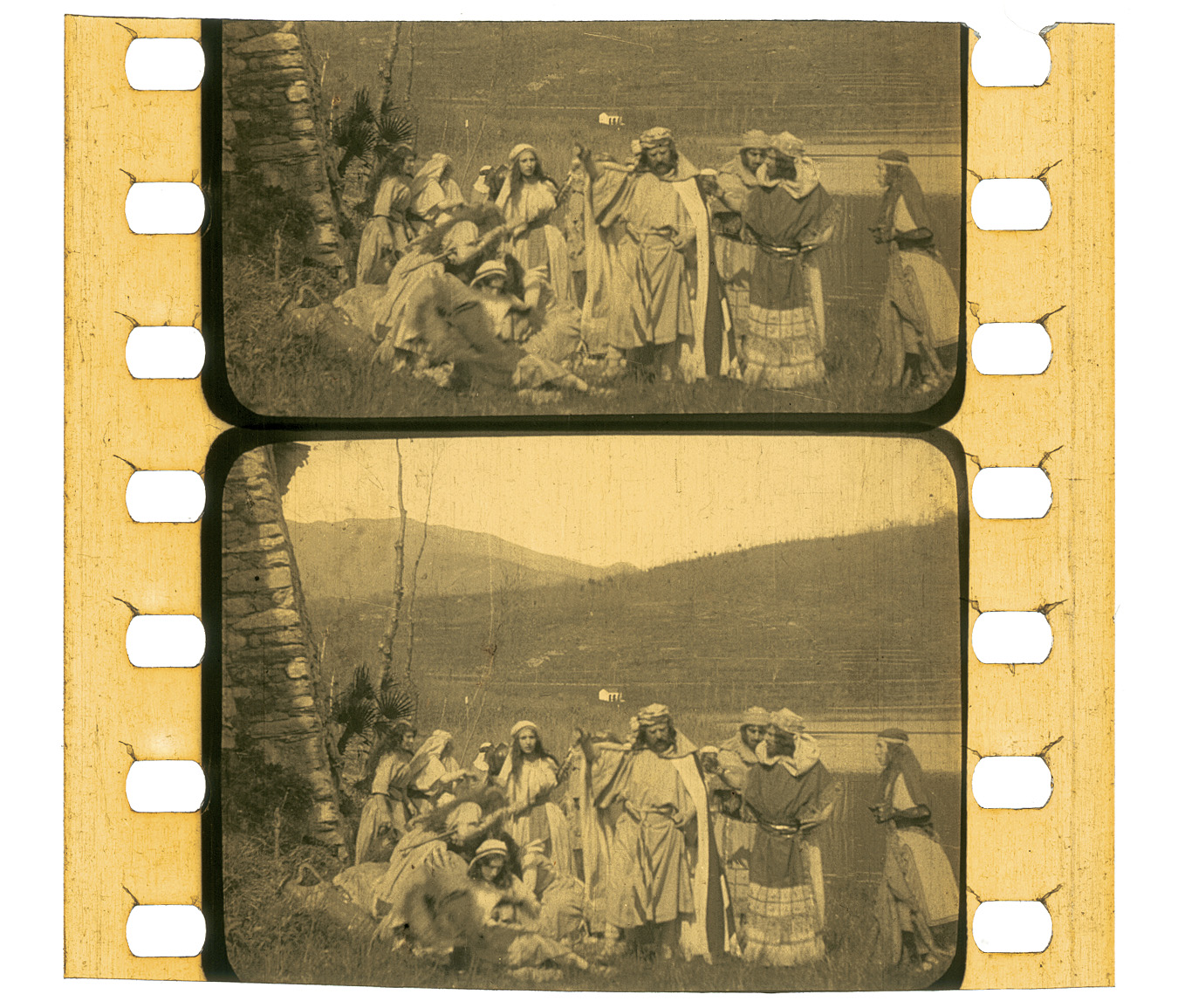
Fig. 2. Saul of Tarsus and his companions plan an assault against the Christians, San Paolo (1910). 35mm nitrate film clipping. Courtesy of George Eastman Collections: San Paolo | Results | Search Objects | George Eastman Museum, Rochester, 2004.1239.0012.
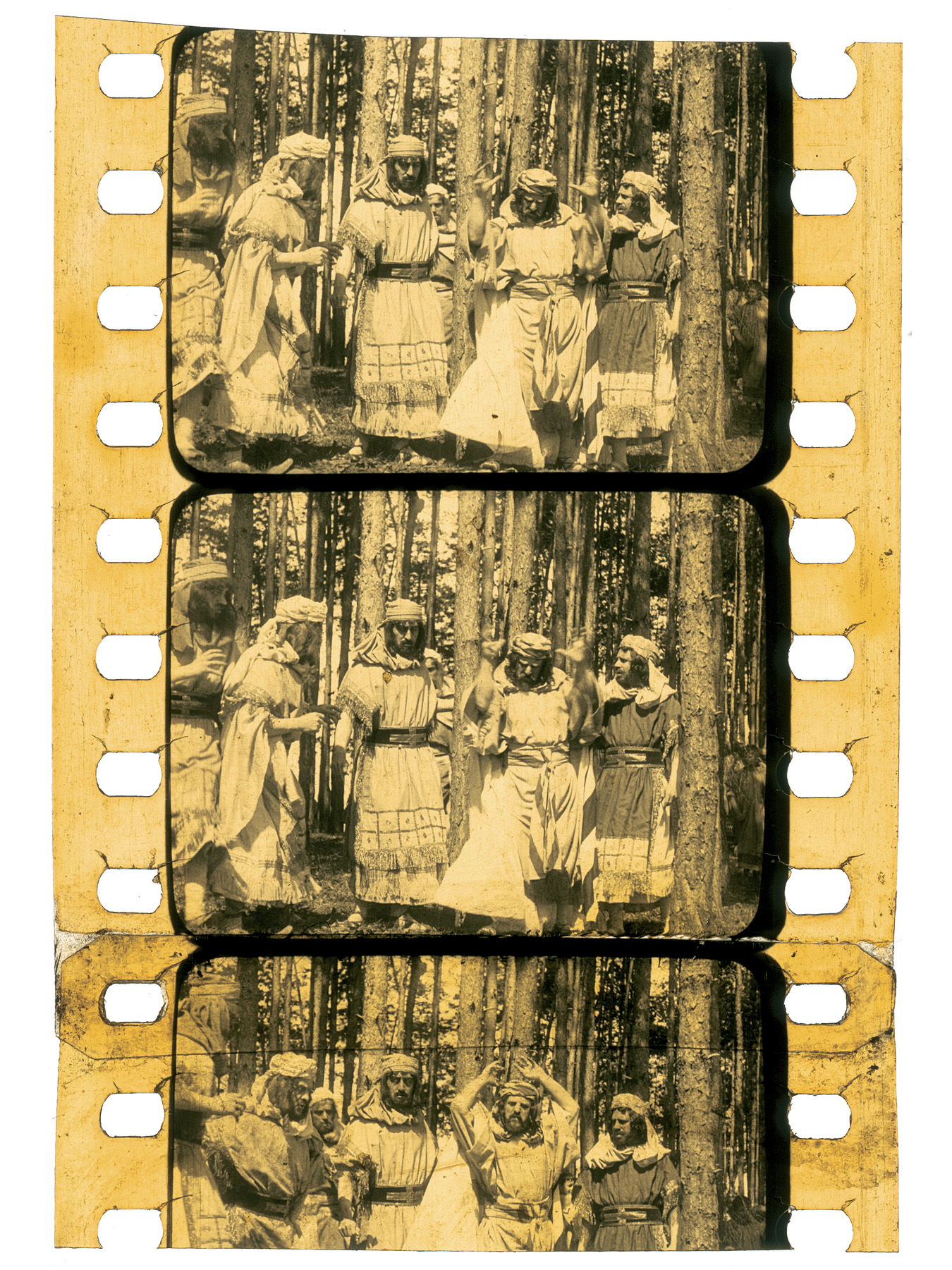
Fig. 3. Saul of Tarsus speaks to his companions, making his way through the trees, San Paolo (1910). 35mm nitrate film clipping. Courtesy of George Eastman Collections: San Paolo | Results | Search Objects | George Eastman Museum , Rochester, 2004.1239.0013.
The following scene takes place in a clearing and shows a bearded man, indicated by the intertitle as the Apostle James the Younger, preaching inspirationally, looking up towards heaven, while his followers are seated all around him (figure 4). Paul and his partners, arriving furtively, attack the Christians from behind and from the left. The Christians scatter and the preacher is captured, knocked to the ground, beaten, and insulted with broad gestures by the men and women who have arrived in the meantime, before being dragged, lifted, and carried away by force. The simple, long robe worn by the actor playing James the Younger contrasts with the rich costumes of the men who assault him and the women who joined in with them. The subsequent scene shows a procession moving quickly along a stream, led by Paul himself (easily recognizable by his wide horizontal-striped cloak), as he, aided by an accomplice, drags James the Younger away. The capture of James the Younger is somewhat peculiar, since according to the canonical narrative of the Acts of the Apostles (New Revised Standard Version [NRSV]), the martyr stoned by Paul was actually Stephen (7:58-60; 8:1) or unnamed (8:3; 9:1–2). The moment then arrives for Paul to set out for Damascus. He takes leave of his friends and sets off accompanied by three of his associates, walking with a slow, theatrical pace toward the camera.
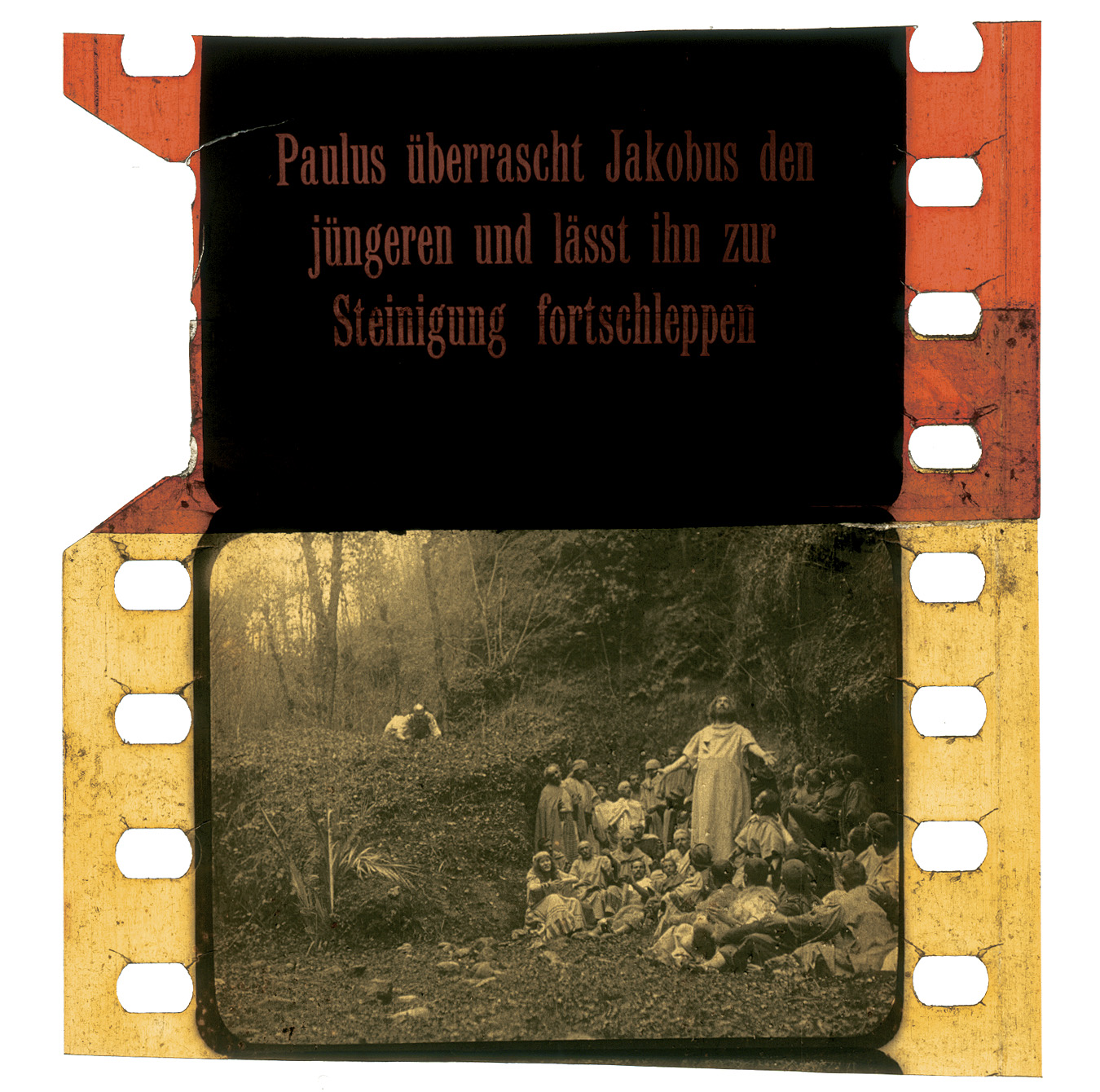
Fig. 4. Apostle James the Younger preaching, while his followers are seated all around him. Saul and his companions are arriving furtively, San Paolo (1910). 35mm nitrate film clipping. Courtesy of George Eastman Collections: San Paolo | Results | Search Objects | George Eastman Museum , Rochester, 2004.1239.0010.
The crucial moment arrives, announced by the intertitle On the road to Damascus. The voice of the Lord (Auf den Wege nach Damaskus. Die Stimme des Herrn!).[10] Lines of light radiate over Paul as he walks, flooding the image: this is a special effect, likely achieved through double exposure, inserted to evoke the lightning bolt of God. Paul stops and looks up towards heaven and, in the next shot, which is very brief and certainly incomplete, a sort of flash appears. Immediately after the flash, the intertitle follows: Saul, Saul, why do you persecute me? (Saul Saul, was verfolgest du mich?),[11] introducing the thundering voice of Jesus addressing Paul by his Hebrew name, according to biblical tradition (Acts 9:1–9). In this instance, while the Italian intertitle in the AIRSC print (remade during the duplication onto safety film) features a plain black background, in the Turconi frame, the title appears against a background of clouds of smoke (figure 5). This serves to emphasize graphically the mystery and majesty of the Word of Jesus. In addition, it has amber-yellow tinting, and this means that it is not conceived as an intertitle (in which case it should have been red) but as the tangible visualization of the voice and word of Jesus, conceived of as a real presence beyond the clouds.
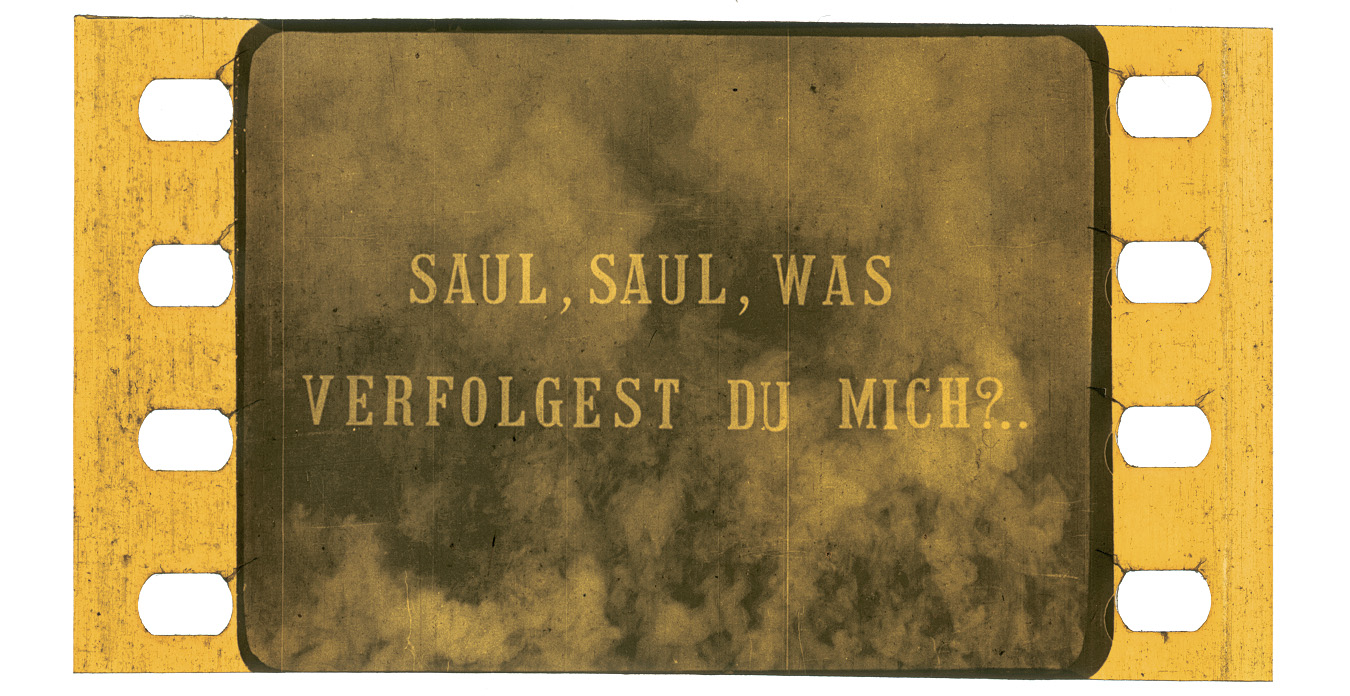
Fig. 5. The Voice of Jesus, against a background of clouds of smoke, San Paolo (1910). 35mm nitrate film clipping. Courtesy of George Eastman Collections: San Paolo | Results | Search Objects | George Eastman Museum , Rochester, 2004.1239.0007.
It appears that in the film (or perhaps only in the surviving prints) the subsequent dialogue between Paul and Jesus is missing. This exchange, present in the Acts of the Apostles, gives meaning to the all the events of Paul’s life that follow: “He asked, 'Who are you, Lord?' The reply came, 'I am Jesus, whom you are persecuting. But get up and enter the city, and you will be told what you are to do.’” (Acts of the Apostles, 9:5–6)
At this point, analysis of the original images from the Turconi frames reveals an intertitle not present in the AIRSC print (figure 6), which reads: Paulus, vom Blitzschlage getroffen, wird blind (Paul, struck by lightning, becomes blind). This proves that the AIRSC print is indeed missing an intertitle and several frames at this juncture, likely because this section of the Joye nitrate print was already compromised when it was duplicated onto safety film. Furthermore, this Turconi fragment contains a particularly significant chromatic detail: while the whole of the first part of the film, shot entirely outdoors, is characterized by amber tinting, the scene of the blinding on the road to Damascus features, in addition to the superimposed rays, a unique combination of amber tinting with blue-green toning (figure 7). This further emphasizes the scene’s importance and provides additional evidence of the technical and formal precision of the film. This, once again, suggests the handiwork of Luca Comerio.
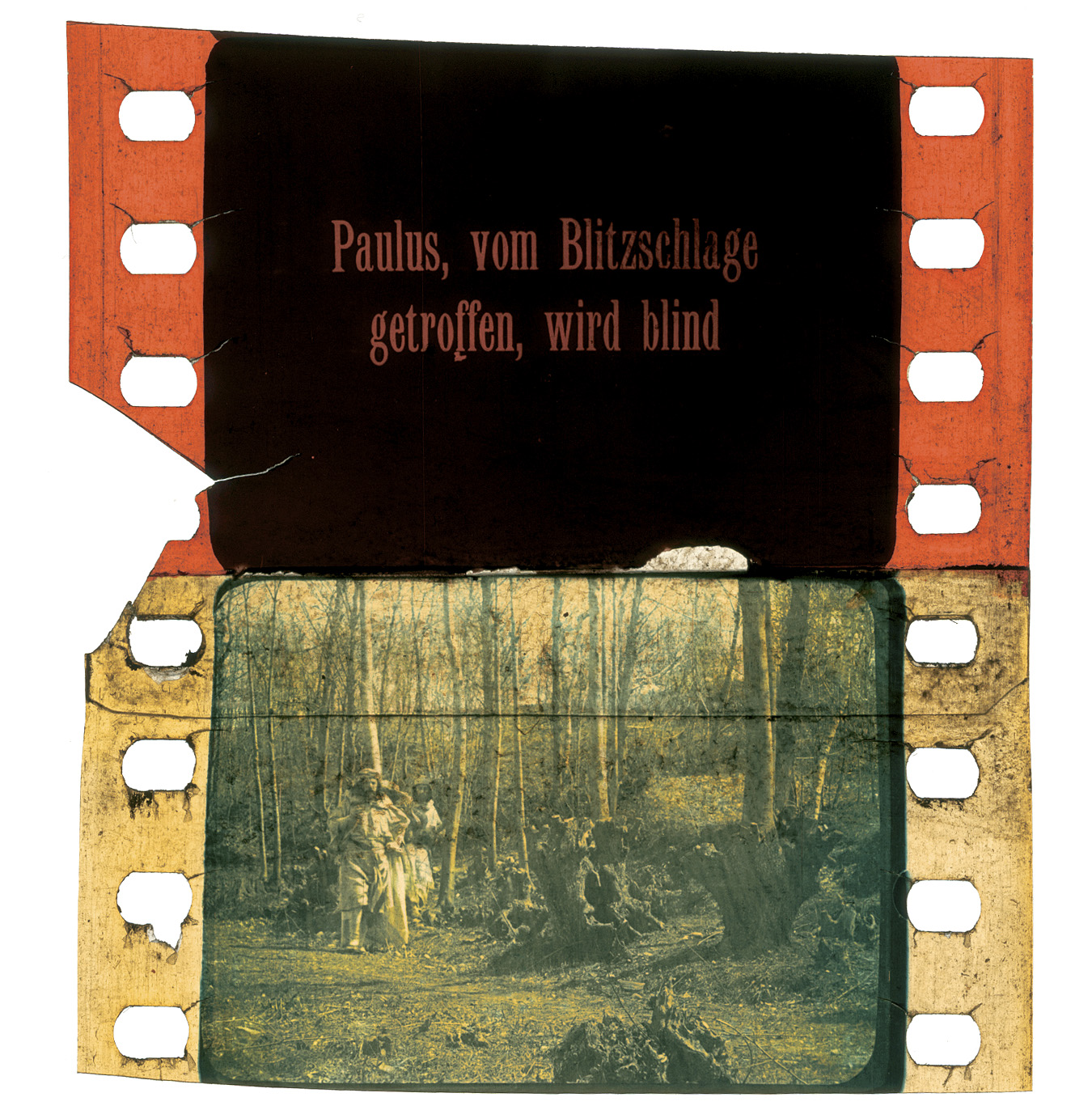
Fig. 6. Paul on the road to Damascus is about to be struck by lightning, San Paolo (1910). 35mm nitrate film clipping. Courtesy of George Eastman Collections: San Paolo | Results | Search Objects | George Eastman Museum, Rochester, 2004.1239.0014.
It is also important to note that the film depicts Paul being struck on the road to Damascus while traveling on foot, rather than following the iconographic tradition, in which he is shown falling from a horse. The most prominent examples of this tradition are certainly Michelangelo's fresco in the Pauline Chapel in the Vatican, The Conversion of Saul (1542–1550), and Caravaggio’s painting in the Cerasi Chapel of the Basilica of Santa Maria del Popolo in Rome (1601). However, the Acts of the Apostles state more simply that Paul ‘was on his journey and was approaching Damascus’ (Acts 9:3 and 22:3-16), without ever mentioning a horse; it is therefore clear that the filmmakers here deliberately chose to adhere to the biblical tradition. Given the fragmentary nature of the preserved film materials, it is therefore possible that a short passage has been lost at this point. Alternatively, the filmmakers may have intentionally omitted the words between Saul and Jesus, as the conversion of Saint Paul was a widely known biblical episode. In the film, following the question posed by Jesus, Paul falls to the ground lifeless (figure 7). He is gathered up by his companions, but gestures dramatically that he can no longer see and continues his journey only with their support.
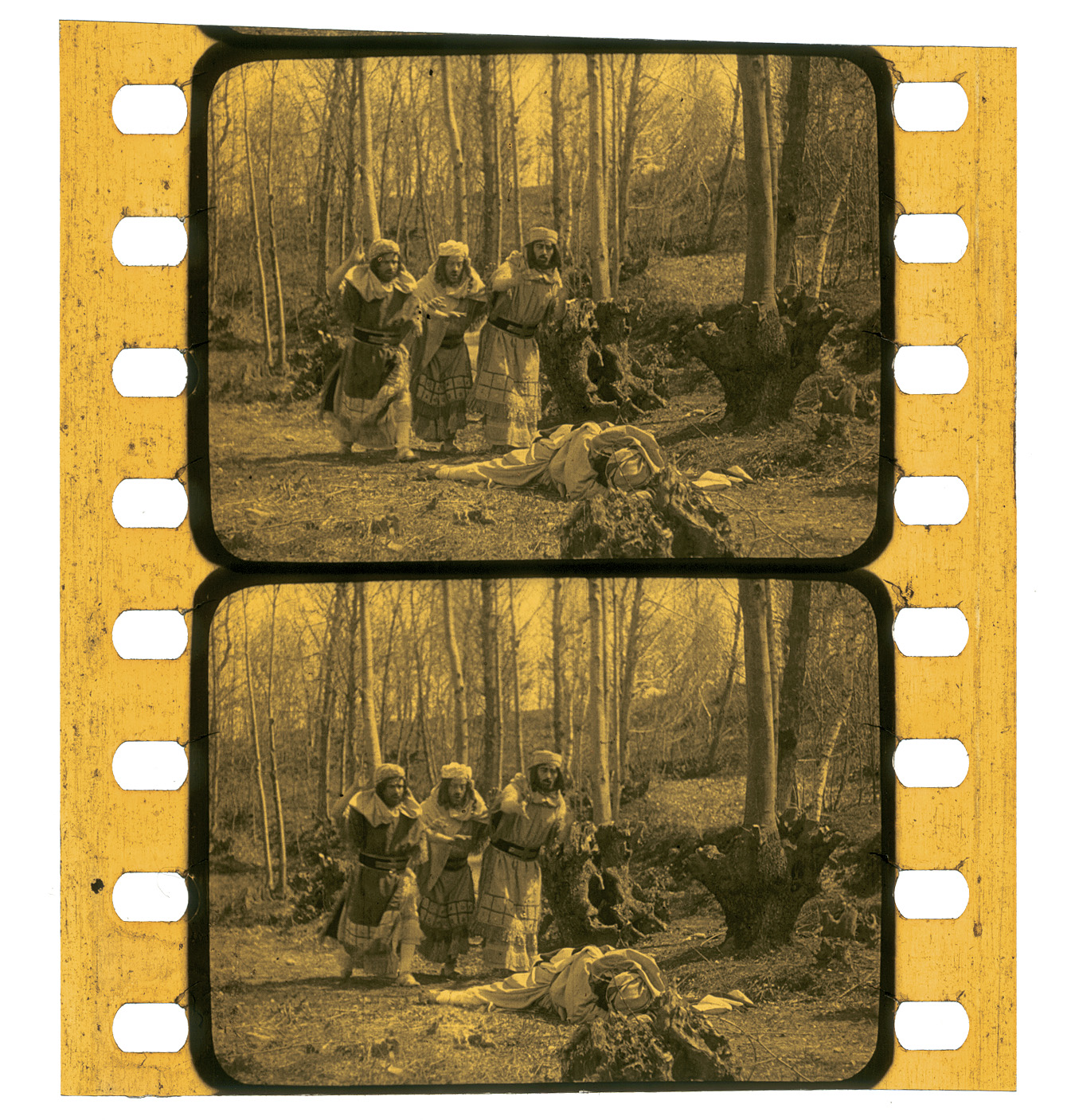
Fig. 7. Saul (Paul), struck by lightning, falls to the ground lifeless, San Paolo (1910). 35mm nitrate film clipping. Courtesy of George Eastman Collections: San Paolo | Results | Search Objects | George Eastman Museum , Rochester, 2004.1239.0006.
The first part of the film concludes with Paul now having regained his sight and become a Christian. Still blind, he walks with his companions along a paved road next to a high wall (figure 8): an elderly man with a white beard and a simple dark robe trimmed in white restores his sight by placing his hands over Paul’s eyes. According to the biblical tradition (Acts 9:10–30), this should be Ananias, the man chosen by Jesus to heal Paul’s blindness. He responds to Saul: ‘Brother Saul, the Lord Jesus, who appeared to you on your way here, has sent me so that you may regain your sight and be filled with the Holy Spirit.’ (Acts, 9:17). Paul prostrates himself before the old man, while his three companions flee.
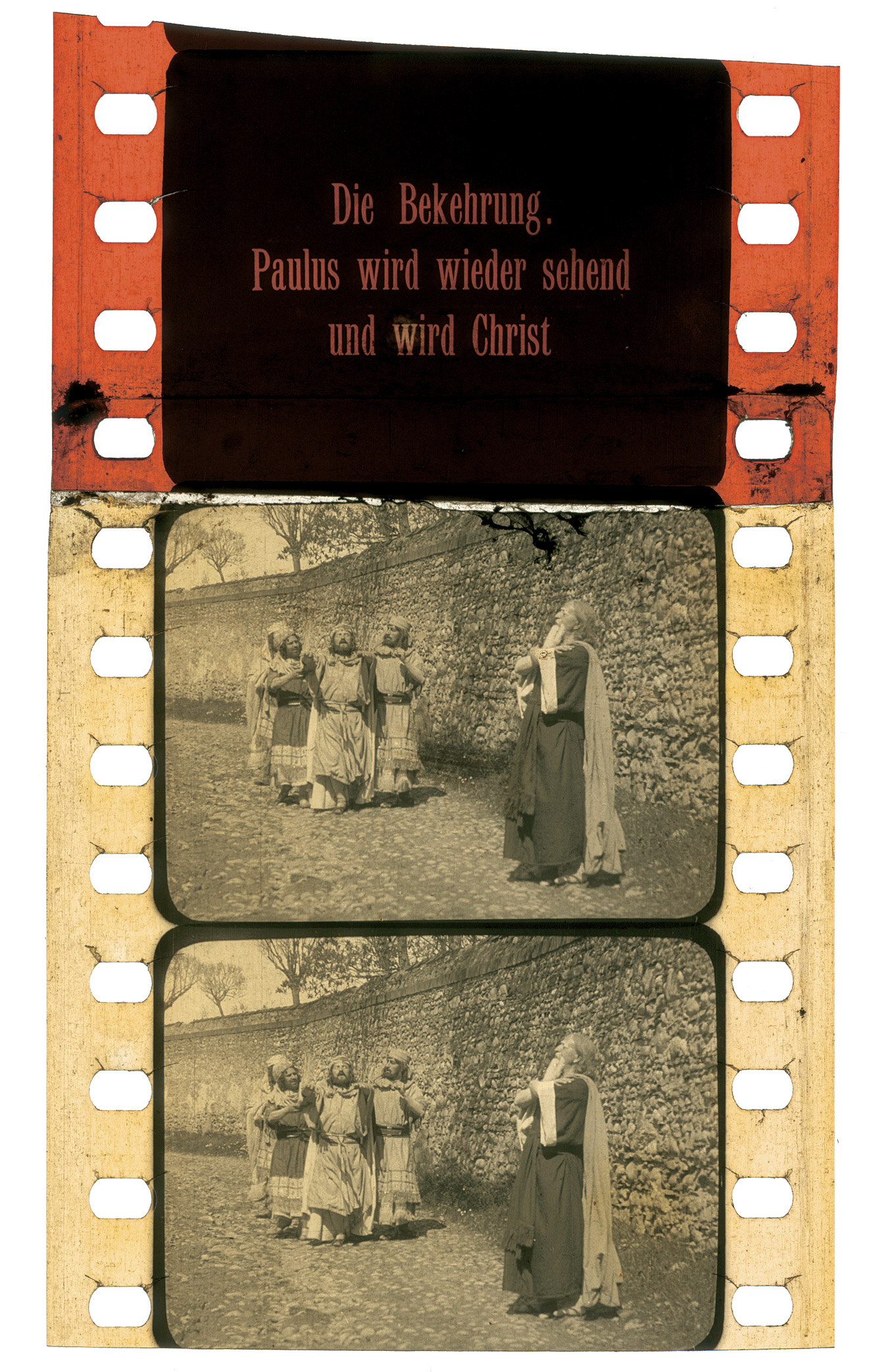
Fig. 8. Arrived in Damascus, Paul walks with his companions towards an elderly man (Anania), who is going to heal his blindness, San Paolo (1910). 35mm nitrate film clipping. Courtesy of George Eastman Collections: San Paolo | Results | Search Objects | George Eastman Museum , Rochester, 2004.1239.0005.
Here too, the film’s proceeds by ellipsis. The first part of the film ends directly at the moment Paul regains his sight, implying that his conversion and new life as an apostle follow on from this event. He is also cured from a figurative blindness, that is in relation to the True Faith. The Acts of the Apostles recount these events in more detail: ‘And immediately something like scales fell from his eyes, and his sight was restored. Then he got up and was baptized, and after taking some food, he regained his strength. For several days he was with the disciples in Damascus, and immediately he began to proclaim Jesus in the synagogues, saying, “He is the Son of God”.’ (Acts, 9: 18-20).
Part Two: Imperial and Apostolic Rome
The second part of San Paolo is set in Rome during the reign of Nero, in 64 CE. According to the hagiographic tradition, the apostle arrived there after extensive travels through the provinces of the Roman Empire, across Asia Minor, Syria, and Greece, to continue his preaching and spread the Christian faith. The film, however, makes no mention of the fact that, according to the Acts of the Apostles (Acts, 21-28), Paul was taken to Rome as a prisoner after being captured in Jerusalem, because, as a Roman citizen, he had the right to appeal to the emperor. Upon arriving in Rome, he was supposed to have continued his preaching for two years despite being under arrest (Acts 28, 30-31), but the account in the Acts of the Apostles breaks off before Paul's death, which, according to tradition, occurred by decapitation between 64 and 67 CE.
According to the first intertitle in the film’s second part, On the Appian Way, Paul enters the Christian catacombs (Joye: Auf der via Appia tritt Paulus in die Katakomben der Christen ein),[12] the images show an elderly Paul with a white beard and a simple dark robe speaking with a young man who is possibly his aid (figure 9). They advance toward the camera along a wide road. In the background, to the left, the real Mausoleum of Cecilia Metella stands out, unmistakably indicating that the scene takes place at Rome on the Appian Way. In the following shot, the setting changes: Paul continues his conversation with the young man, but the background now features another real monument: one of the two towers of the carceres (the starting gates) of the Circus of Maxentius, a monumental building that was part of the villa complex constructed by Emperor Maxentius at the beginning of the fourth century CE. The camera, with a slight panning motion from left to right, follows Paul and the young man as they arrive at a breach in the base of the tower (figure 10). The two go inside. The subsequent scene reveals that this passage serves in the film as the entrance to the catacombs.
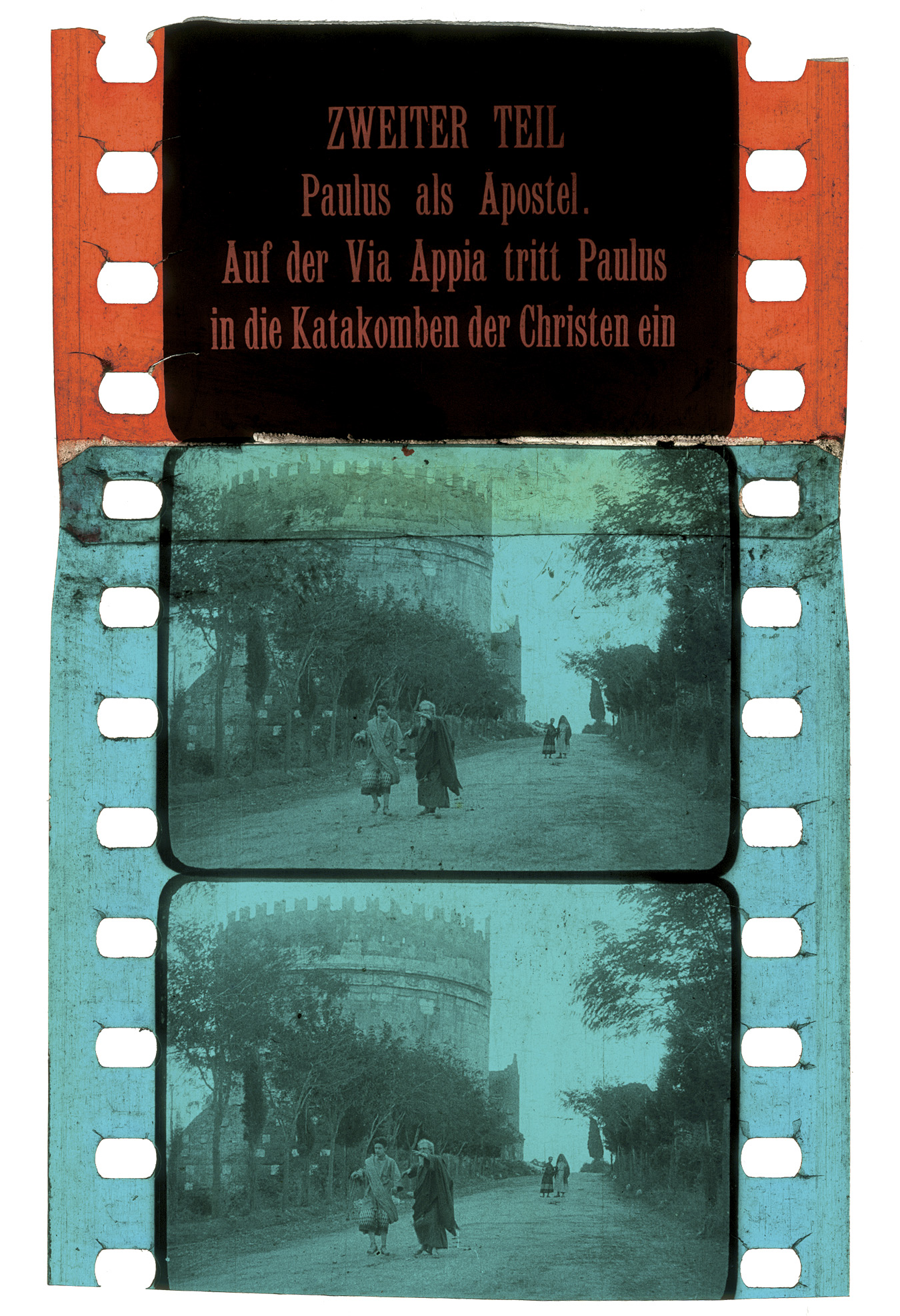
Fig. 9. Paul in Rome on the Appian Way. In the background the Mausoleum of Cecilia Metella, San Paolo (1910). 35mm nitrate film clipping. Courtesy of George Eastman Collections: San Paolo | Results | Search Objects | George Eastman Museum, Rochester, 2004.1239.0016.
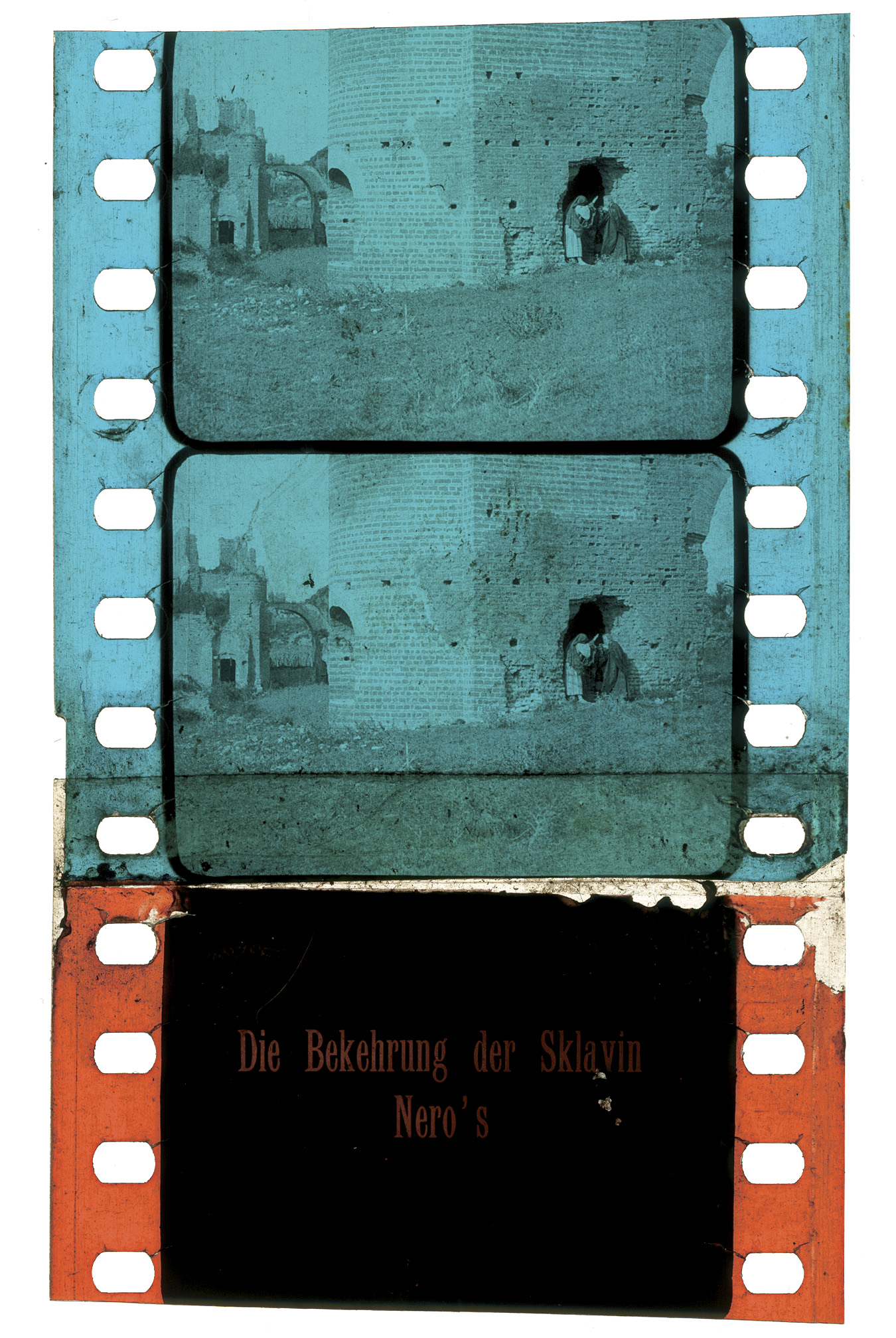
Fig. 10. Paul and a young man at the entrance of the catacombs (the real location is the Circus of Maxentius, on the Appian Way), San Paolo (1910). 35mm nitrate film clipping. Courtesy of George Eastman Collections: San Paolo | Results | Search Objects | George Eastman Museum, Rochester, 2004.1239.0021.
On-site filming at authentic monuments of ancient Rome permeates the scene with a powerful symbolic value, condensing the significance of Saint Paul’s presence in the City of Rome (Urbe), without being too concerned with spatio-temporal coherence. In fact, while the topographical proximity of the Mausoleum of Cecilia Metella to the Circus of Maxentius might suggest a consistent spatiality and, although the Mausoleum is chronologically compatible with Paul’s era, dating back to the first century BCE, the choice of the Circus of Maxentius remains allusive rather than precise. This is because the Circus is a much later monument (early fourth century CE) and does not sit above any catacombs, as the nearest one along the Appian Way (that of Saint Sebastian) is located some hundred metres away from that spot. Evidently, the creators at Milano Films had already fully mastered one of the primary prerogatives of fiction film: the total freedom to evoke, transfigure, and combine real or presumed references and settings without the need to be strictly descriptive or realistic. However, it remains significant that a Milan-based production chose to move to Rome to film St Paul’s experiences in the city among authentic, well-known ancient Roman landmarks, a choice that prioritizes iconic impact over strictly historical or philological accuracy.
The next scene, preceded by the intertitle The conversion of Nero’s slave (Joye: Die Bekehrung der Sklavin Nero’s)[13] is the only one filmed in a studio. Paul is inside a catacomb, welcomed on both sides by the faithful, men and women, who pray, kneel, and kiss his cloak (figure 11). Shortly after, the Apostle, with hieratic gestures of prayer and invocation to heaven, baptizes a soldier and a woman, the slave of Nero mentioned in the intertitle (most likely alluding to an apocryphal character possibly from a lost scene of the film), and finally takes his leave.
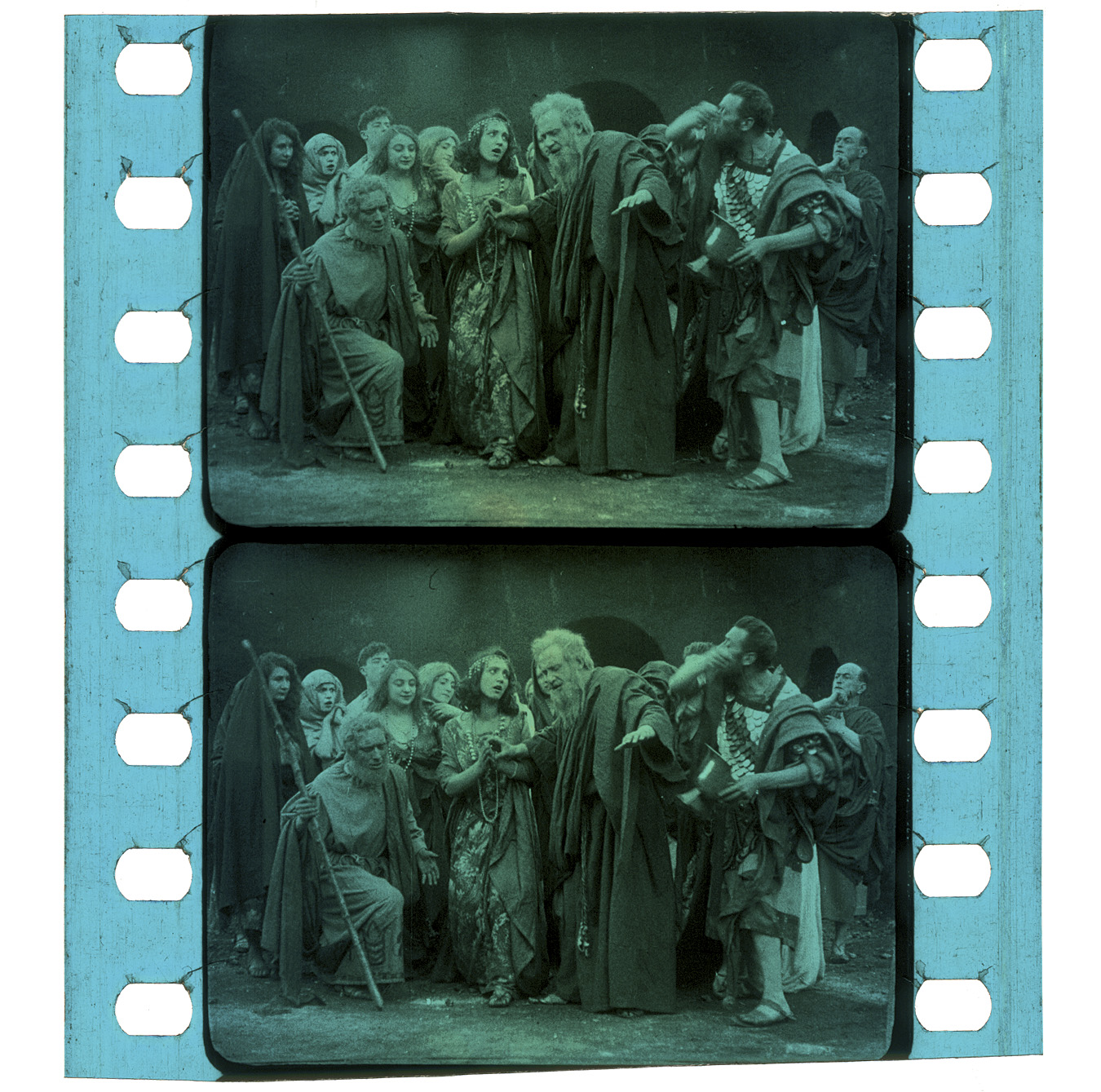
Fig. 11. Paul, inside a catacomb, is going to baptize a soldier and the slave of Nero, San Paolo (1910). 35mm nitrate film clipping. Courtesy of George Eastman Collections: San Paolo | Results | Search Objects | George Eastman Museum, Rochester, 2004.1239.0019.
The intertitle The Great Fire of Rome. Paul is imprisoned (Der Brand Rom’s und die Gefangennahme des Paulus)[14] introduces the scene where Paul watches the Great Fire of 64 CE along with a small group of followers gathered at a vast lookout (figure 12). This same event lies at the heart of the narrative in Henryk Sienkiewicz’s novel Quo Vadis? (1896, first Italian edition 1899), where it is Nero himself who watches Rome burn from the heights of his palace tower, singing to his lyre. This scene is staged in a similar manner in Ambrosio’s Nerone (1909, figure 13) but, in San Paolo, the burning of Rome is framed within a large window simulating a lookout from which the Apostle observes the fire with his followers. The detailed panorama is created with scale models and added using a double-exposure special effect. As the Turconi frames show, it has red tinting, typical of fire scenes, and includes a triumphal arch (evocative of the Arch of Septimius Severus) and a large column which likely corresponds to the one dedicated to the Byzantine Emperor Phocas in 608 CE in the Roman Forum, considered the last monument of ancient Rome, while a Colosseum is recognizable in the background.[15] It should be noted that this scene, of literary origin, had a major influence on cinematic imagery, if we consider the first Quo Vadis? (Lucien Nouguet and Ferdinand Zecca) dates to 1901, followed by the two other cinematic adaptations by Enrico Guazzoni (1913) and Gabriellino d’Annunzio and Georg Jacoby (1924). It was, however, the two small films produced in Italy between 1909 and 1910, Ambrosio’s Nerone and Milano Film’s San Paolo, that introduced the topos of Nero's Great Fire of Rome to Italian silent cinema, reflecting its vast popularity and spectacular impact within historical and religious narratives.[16]
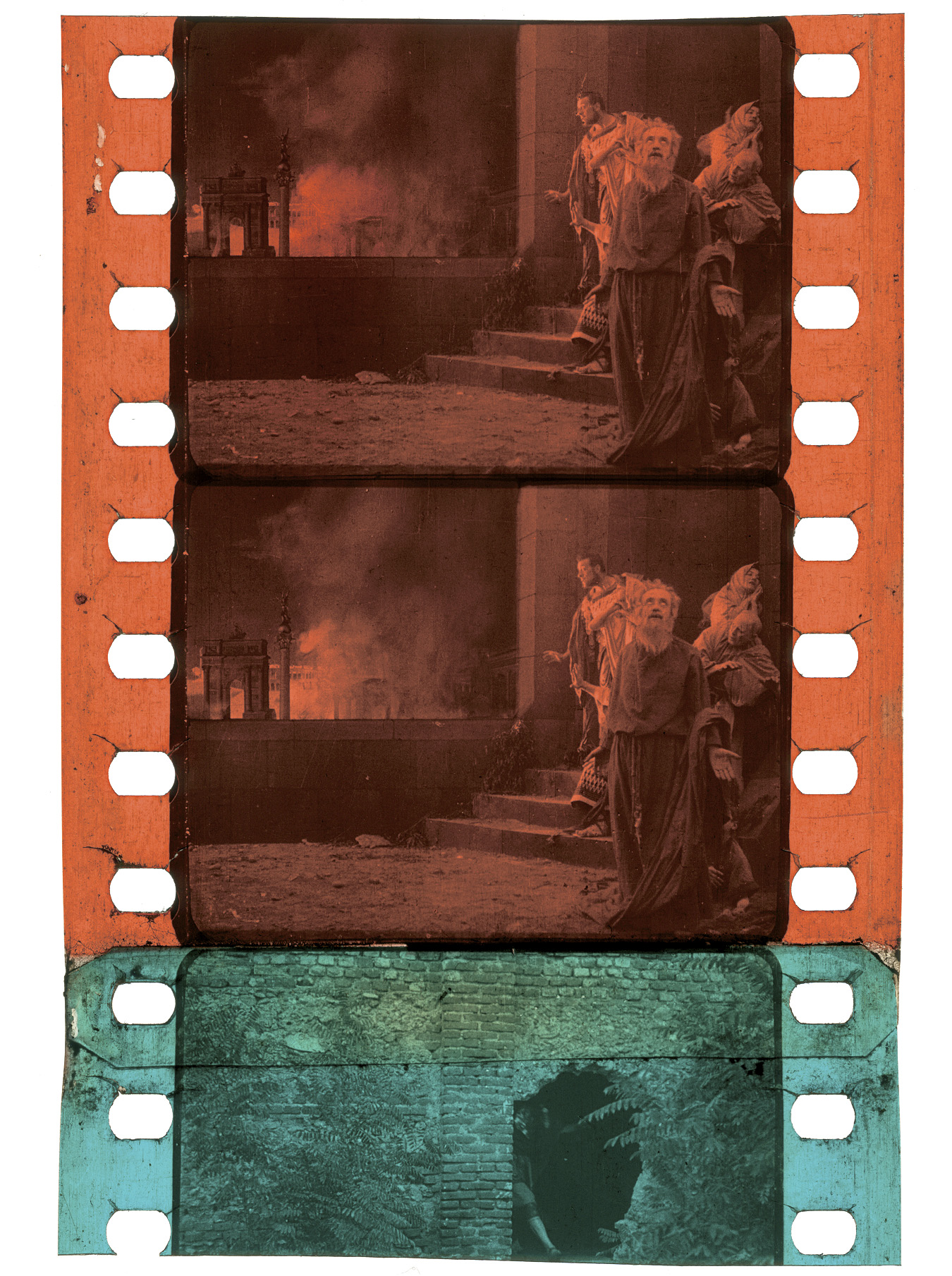
Fig. 12. Paul watches the Great Fire of 64 CE along with some followers, San Paolo (1910). 35mm nitrate film clipping. Courtesy of George Eastman Collections: San Paolo | Results | Search Objects | George Eastman Museum Rochester, 2004.1239.0018.
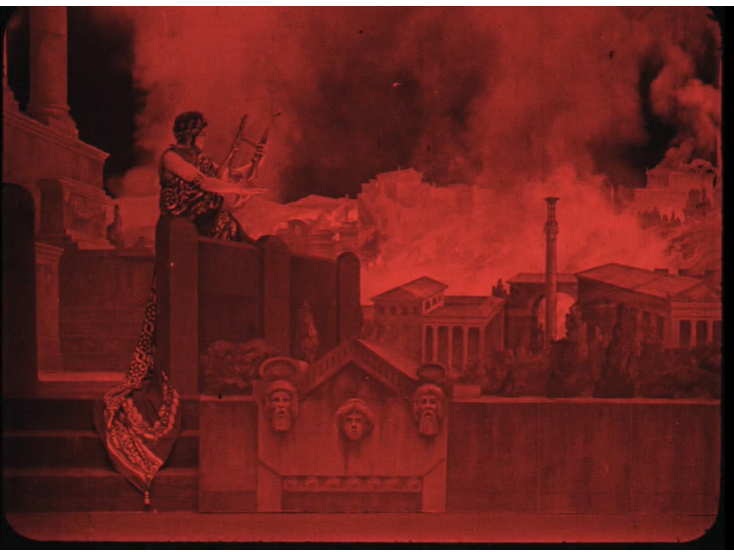
Fig. 13. Nero watches the Great Fire of 64 CE while playing the lyre and singing about the Fall of Troy. Nerone (Luigi Maggi, 1909), restored version (2018). Courtesy of Museo del Cinema di Torino (http://www2.museocinema.it/restauri/muti_restaurati.php?id=193&l=it ).
In San Paolo, the fire scene, marked by the shock of the onscreen spectators and by Paul’s gaze directed toward the heavens in total abandonment to Divine Providence, serves as a prelude to the arrest of the Apostle and his followers. The group is, in fact, surprised by soldiers as they exit through a breach in a wall (it should be noted that this is not the same entrance as the one at the base of the tower of the Circus of Maxentius, but appears rather to be an anonymous wall). First the the converted slave is captured, then Paul himself and the others.
The BFI copy breaks off here, possibly because of deterioration of the nitrate print, while the earlier AIRSC version (as well as the Turconi frames) continues with the actual finale, announced by the intertitle The Death of the Apostle (Die (sic!) Tod des Apostel).[17] The scene takes place in a desolate, anonymous space, amid grass, brambles, and a rocky ledge, where a group of people advances toward the camera (figure 14). Leading them is Paul, accompanied by a centurion and the executioner, followed by a veritable procession of people, including crying women covering their faces. The executioner places his hand on the apostle's shoulder, ready to strike and force him down. Paul pronounces his final prayer, speaking and responding to his persecutors with broad, hieratic gestures, then kneels, fixing his gaze upon the heavens. The scene is interrupted, suggesting a break in the film, before resuming later in the same setting: the followers of Paul, although he is no longer present, gather in a sorrowful mood, bringing palms and flowers to the spot in order to venerate him.
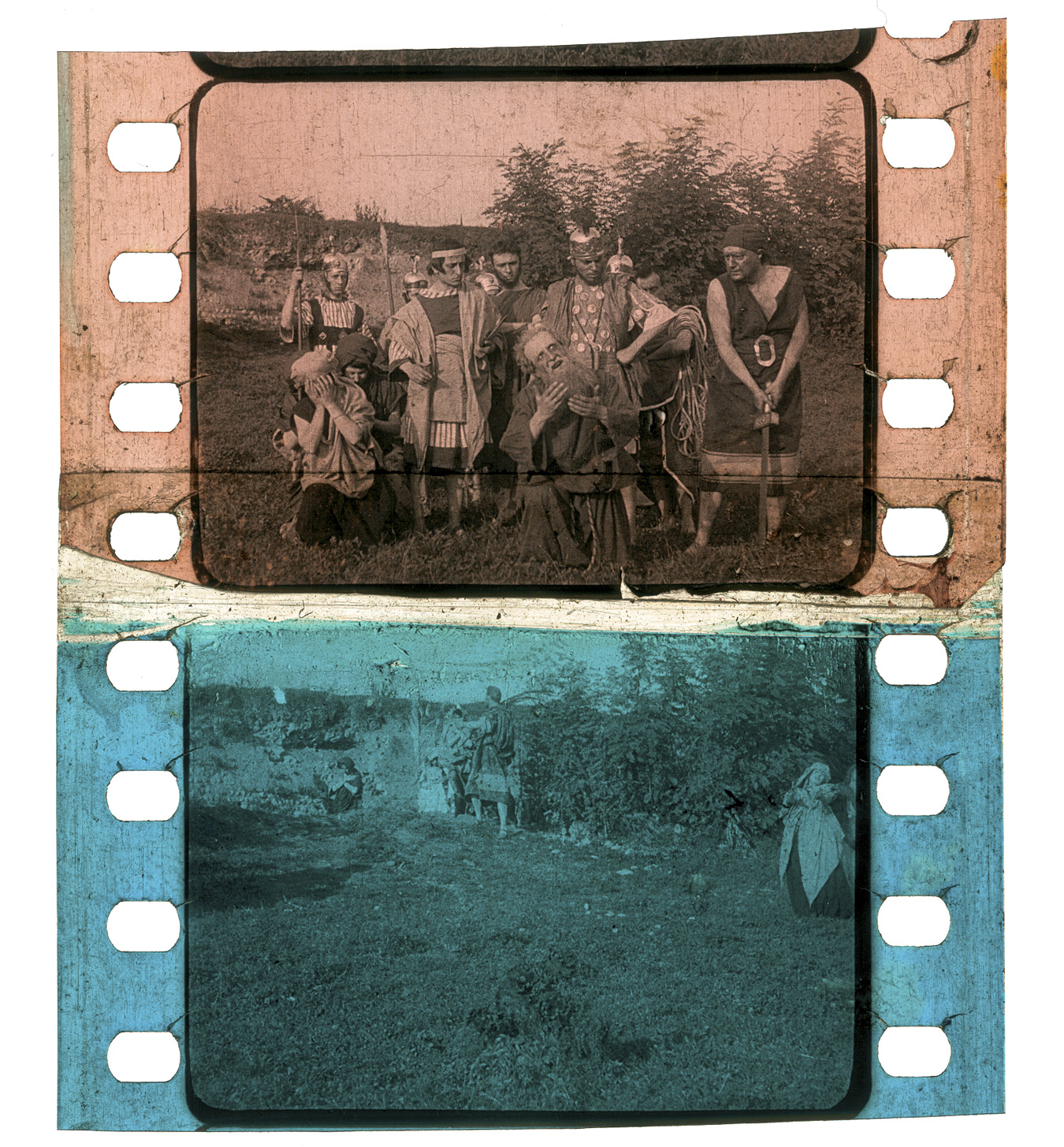
Fig. 14. The moment immediately preceding the execution of St. Paul and the faithful bring flowers and palms to the place of Paul’s martyrdom, San Paolo (1910). 35mm nitrate film clipping. Courtesy of George Eastman Collections: San Paolo | Objects | George Eastman Museum, Rochester, 2004.1239.0017).
The absence of the martyrdom scene provides an opportunity to examine other lacunae within the second half of the film. Indeed, a contemporary source, an advertisement in the Italian trade paper Lux from December 1910, permits an approximate reconstruction of the missing content, since it provides the following synopsis of the film's closing scenes: ’In the arena, Nero inspects the Christians destined to be killed, hung as human torches from crosses. Paul is brought out of the underground dungeon where he had been imprisoned, as the Romans fear he might bring the wrath of the Christian God upon them; yet, he is eventually put to death. The faithful bring flowers and palms to his tomb at the roadside. Saint Paul has given his name to one of the most beautiful Roman basilicas.’[18] Consequently, we can deduce that, compared to the surviving images and intertitles, several elements are missing: the scene of Nero in the arena (where the slave later baptized by Saint Paul may have featured), the prison scene, and, finally, the closing remark about the origins of the Basilica of Saint Paul in Rome, to which the veneration at the site of his martyrdom may have served as a direct allusion.
In the AIRSC copy, the reference to the holy site remains implicit; however, the fact that the synopsis from the periodical Lux concludes by mentioning the Basilica of Saint Paul adds emphasis to the Roman dimension of the narrative, symbolically linking the construction of the Christian Basilica to the other ancient Roman monuments filmed during the production. In this regard, North (2015: 115) asserts that it is impossible to determine whether the description in Lux constitutes a faithful record of the lost footage or simply a promotional hyperbole. Nevertheless, the allusion to the Basilica of St Paul is coherent with the final scene of veneration at the site of the martyrdom, aligning perfectly with the general emphasis on Rome in this production. Moreover, the Lux synopsis, in detailing the martyrdom of the Christians, introduces the image of victims ‘killed as human torches on crosses’. This visual suggestion aligns with a recurring iconographic topos in early martyrdom films, captured in Henryk Siemiradzki’s 1876 painting, Nero’s Torches (Blom, 2023: 56-57).
This analysis of the film has focused thus far specifically on the AIRSC copy, digitized by the CSC – Cineteca Nazionale in 2025, and has also examined known data regarding film materials held at the BFI National Archive in London. Not yet fully examined are the numerous significant frames taken from the original nitrate copies by Davide Turconi, accessible in the Turconi Project online database. Their analysis provides crucial information about the film, particularly regarding the tints and their significance relative to the setting and narrative, proving that the use of colour possesses its own rigorous narrative coherence. Beyond the amber-yellow tinting used for daytime exteriors, the blue used for the preaching scenes and the red for the Great Fire of Rome, the scenes leading up to the martyrdom are tinted pink: a specific type of daytime exterior, likely suggesting the light of dawn. The colour thus evokes a sense of holiness. It is significant, however, that the clip containing the final frame of the scene preceding the martyrdom and the first frame of the subsequent veneration, joined together by a splice that looks clumsy and heavy-handed, shows a transition from pink to blue. This indicates that the veneration by the faithful occurs at a later moment, at the onset of evening. This is an important narrative detail that also explains why, in the finale of the AIRSC black and white copy derived from the tinted nitrate, the photographic tone of the black and white changes dramatically at this same cut between the two scenes.
Conclusion
In conclusion, this analysis of Milano Films’ San Paolo reveals a pioneering work, where the historical-religious narrative meets the emerging grammar of silent cinema. The decision to film among the authentic monuments of ancient Rome, despite certain chronological inconsistencies, marks a shift toward a more iconic and symbolic use of urban space, elevating the city itself to a central protagonist of the drama. Furthermore, the study of the Turconi frames and the AIRSC copy proves that the film was far more sophisticated than the surviving fragments might suggest. The rigorous use of tinting, transitioning from the pink of the martyrdom to the nocturnal blue of the final veneration, demonstrates a clear narrative intent to manipulate time and emotion through colour. Significant gaps remain, particularly regarding the lost sequence of ‘Nero in the arena’. The link to the Basilica of Saint Paul, in particular, reinforces the film’s goal to bridge the gap between Imperial Rome and the Christian capital, transforming a cinematic account into a piece of visual hagiography that was highly innovative for its time.
Analysis of San Paolo highlights a profound dialogue between biblical narrative and the Roman world, positioning the film as a visual bridge between Imperial Rome and Christian Rome. By filming on location among the ruins of the Appian Way and the Circus of Maxentius, the production did not merely seek historical realism. Rather, it aimed to provide a visual and literal account of the spaces of the Roman Empire, transforming them into the foundational sites of a new spiritual era. The transition from the pink of the martyrdom to the nocturnal blue of the final veneration can be seen as a symbol of this transformation: the sunset of the pagan era takes place because of the dawn of Christian devotion. Despite the missing fragments, the link to the Basilica of Saint Paul remains the film's ultimate ideological goal. It serves to demonstrate how the ‘City of Nero’ was being reshaped into the ‘City of Paul’. In this sense, the film attests to the transition from the Rome of the Emperors to the eternal capital of the Christian faith, where the monuments of the past become the holy places of a new history.
Maria Assunta Pimpinelli
Footnotes
- ^ The film was also entitled San Paolo dramma biblico and, in its Germanophone distribution, Heilige Paulus. For some useful comments on the film, see Gailleurd, 2026, 143-153.
- ^ See the essay by Bryony Dixon on the antiquity prints in the BFI National Archive on this website.
- ^ https://collections-search.bfi.org.uk/web/Details/ChoiceFilmWorks/150220421
- ^ See the entries in Striuli, 2012, pp. 282-3 and Canosa, 2024, p. 154. On the AIRSC Collection, see https://www.airsc.org/catalogo-airsc/
- ^ George Eastman Museum Online Collections: https://www.eastman.org/collections-online. On the Turconi Project, see also Fletcher & Yumibe, 2013.
- ^ On Milano Film, see De Berti & Bertellini, 2000, Lasi, 2012, and Bernardini, 2015.
- ^ ‘Il S. Paolo […] è riuscito un inimitabile capolavoro che supera l’apogeo della cinematografia italiana.’ La CineFono e la Rivista Fono-Cinematografica, Napoli, n. 131, 5 November 1910.
- ^ The Bioscope, London, 22 December 1910, p. 35.
- ^ Translated in Italian in the AIRSC print as Paolo si reca al bosco dei pini rifugio dei Cristiani.
- ^ Translated in Italian in the AIRSC print Sulla via di Damasco. La voce del Signore!
- ^ Translated in Italian in the AIRSC print Saul, Saul, perché mi perseguiti?
- ^ Translated in Italian, in the AIRSC print Sulla via Appia Paolo entra nelle catacombe dei Cristiani.
- ^ Translated in Italian in the AIRSC print La conversione della schiava di Nerone.
- ^ Translated in Italian in the AIRSC print L’incendio di Roma. Paolo viene imprigionato.
- ^ These monuments represent an anachronistic reference in the film as they were constructed only after Nero’s death.
- ^ See the essay on Nerone on this website by Stella Dagna and Andrea Meneghelli, as well as that by Maria Wyke on silent films about Nero.
- ^ Translated in Italian in the AIRSC print as La morte dell’apostolo.
- ^ ‘Nell’arena, Nerone ispeziona i cristiani destinati a essere uccisi appresi come torce umane alle croci. Paolo è portato fuori dalla prigione sotterranea in cui era stato rinchiuso, perché i Romani temono che egli possa far ricadere su di loro l’ira del Dio cristiano; ma poi viene ucciso. I cristiani portano fiori e palme sulla sua tomba ai margini della strada. San Paolo ha dato il nome a una delle più belle basiliche romane.’ Lux, Napoli, n. 75 11/12/1910, pp. 12-13.
Bernardini, A. (1996). Il cinema muto italiano, 1905-1909. Rome: Centro Sperimentale di Cinematografia/La Nuova ERI.
Bernardini, A. (2002) Cinema muto italiano. I film “dal vero”, 1895-1914. Gemona, La Cineteca del Friuli.
Bernardini, A. (2015) Le imprese di produzione del cinema muto italiano. Bologna: Persiani.
Blom, I. (2023) Quo vadis?, Cabiria and the ‘Archaeologists’: Early Italian Cinema’s Appropriation of Art and Archaeology. Turin: Kaplan.
Canosa, M. (2024) Catalogo AIRSC - Associazione Italiana per le Ricerche di Storia del Cinema:
https://www.airsc.org/wp-content/uploads/2024/09/Film-identificati.pdf;
https://www.airsc.org/wp-content/uploads/2024/09/Film-da-id-o-incerti.pdf
Cosandey, R. (1993). Welcome Home, Joye! Film um 1910. Aus der Sammlung Joseph Joye (London). KINtop Schriften 1. Basel: Stadtkino; Basel/ Frankfurt: Stroemfeld/Roter Stern.
Cracolici, S. (2018) ‘Fabiola in cartolina: un percorso a ritroso da Guazzoni a Kanzler’, in I. Foletti, M. Gianandrea, S. Romano, & E. Scirocco (eds.), Re-thinking, Re-making, Re-living Christian origins, Lausanne: Viella, pp. 253-279.
De Berti, Raffaele, Giorgio Bertellini (2000), ‘Milano Films: The exemplary history of a film company of the 1910s’, Film History, 3, 2000, pp. 276-287.
Fletcher, A. and Yumibe, J. (2013) ‘From nitrate to digital archive: The Davide Turconi project’, The Moving Image: The Journal of the Association of Moving Image Archivists, 13(1), pp. 1–32. https://doi.org/10.5749/movingimage.13.1.0001
Gailleurd, C. (2026) Rome dans le cinéma muet italien : paysages et monuments (1896-1930). Inédit d’habilitation à diriger des recherches, Université Paris 8 (6 February 2026, Galerie Colbert, INHA).
Lasi, G. (2012) La produzione cinematografica nel sistema economico-industriale italiano tra il 1908 e il 1914. Il caso della Milano Films. Doctoral thesis, Università di Bologna,
Lasi, G., Davide G. (2007) ‘”Inferno”. Grandioso Film d’Arte della Milano Films’, Cinegrafie, 20, 2007, pp. 313-330.
North, J. A. (2015) Martyrs on the Silver Screen: Early Church Martyrdom in Italian Silent Cinema (1898-1930). Doctoral thesis, Durham University,
Redi, R., Martinelli, M. (1996) Catalogo della cineteca, Roma, Associazione italiana per le ricerche di storia del cinema.
Striuli, F. (2012) Catalogo della Cineteca AIRSC. Roma: Mostra Internazionale del Nuovo Cinema/ Pesaro Film Festival. https://www.airsc.org/wp-content/uploads/2024/05/AIRSC_Catalogo-della-Cineteca-AIRSC-1.pdf
Zangrando, F. (1973) ‘Rodolfo Kanzler. Uno sconosciuto pioniere del cinema’, Lazio ieri e oggi, Rome, 9 (12), December 1973, pp. 280-281.
Zoppis, S. (2025) ‘Riconfigurare il passato. La collezione Joye e il ruolo della selezione nella memoria del cinema muto’, La valle dell’Eden, 45, 2025, pp. 149-156.