By MARIA WYKE
June 2026
Introduction to the Museum of Dreamworlds website and project
Many films about ancient Greece and Rome were made during the silent era - which lasted from the 1890s through to the 1920s - particularly in France, Italy and the United States. The AHRC-funded project Museum of Dreamworlds asks how this encounter between silent cinema and the classical world shaped both the place of antiquity in the modern world and the history of cinema. The project team, consisting of PI Maria Wyke (UCL), PDRA Dr. Aylin Atacan (UCL), Co-I Dr. Ivo Blom (Vrije Universiteit Amsterdam), and Co-I Bryony Dixon (BFI), are producing a systematic analysis of the antiquity prints that survive in the British Film Institute National Archive. We are investigating how, thanks to cinema, classical antiquity was rendered a powerfully immersive and democratic dreamworld. While, thanks to antiquity, cinema laid claim to the status of an art and one, moreover, that was educational - a 'museum’ of those ancient dreamworlds. In this introductory essay, we explain the layout and features of the Museum of Dreamworlds website, in order that you can see how to navigate it and make it useful for you. We explain the methods behind our inquiries and survey some of our research findings. We also indicate here some of our project’s other activities and future resources that we will be creating until and beyond the end point of the project in November 2027.
We will be developing and extending this introduction as we continue to analyse the antiquity films in the BFI. At this stage, the website is also a work in progress so we would greatly welcome any questions you may have as well as suggestions for corrections, clarifications, additions or improvements, or notification of any malfunctions. We can be reached at: museumofdreamworlducl@gmail.com
The MoD website
Currently, we have established that 63 catalogued prints in the BFI National Archive have ancient Greece or Rome as their focus. A few are only fragments of silent films that survive as more complete versions in other archives, whereas some prints are close to complete or are unique to the BFI. Hardly any were made in Britain. This corpus of classical antiquity films cannot claim to be representative of those produced across Europe and the United States in the silent era. One of the first films ever acquired by the BFI in 1935, and given the vault location number 1A, was a short historical drama about a Roman patrician woman and her African slave that arrived in a batch from a collector called Harry Price.[1] The remit of the National Film Library, as the BFI National Archive was called then, was to ‘maintain a national repository of films of permanent value’. So the library recognized the importance of this category of filmmaking, even though it never had a deliberate policy of acquiring antiquity films. Their significant presence in the archive can be understood only in terms of the history of distribution in the silent era and the sometimes fortuitous and checkered history of collection and preservation. However, the BFI corpus ranges widely in date (from 1898 to 1927), in country of origin (mainly France, Italy, USA; a few UK, Greece or Germany), and in genre (actuality, animation, comedy, epic, historical fiction, fantasy, tragedy and travelogue). Consequently, in researching these works, we do not treat them in isolation - as if they were indicative of the transnational history of silent film production - but compare them to other antiquity films in order to trace a broader history of the interrelations between cinema and the classical world in the early decades of the twentieth century. Designed by Aylin Atacan, this website is a key outcome of that research and it has been structured as a place of reference but also as a departure point for further studies. [2]
From the landing page of the MoD website, you can navigate to films. Here each antiquity film in the BFI National Archive is displayed as a clickable film card (figure 1). The films are listed alphabetically by their original title and each card hosts a maximum of four sub-sections (filmographic and technical data, collections and analyses). In the section on ‘filmographic’ data, depending on what is available, you can access a digitized version of the BFI print, (currently for 39 out of the 63 films) a synopsis, some production details, cast and credits. This information has been pulled directly from the BFI catalogue but, where we have researched the film further (currently in more than 26 cases), we have corrected or added to the data held by the BFI. In the ‘technical’ section, you can find the standard data supplied by film archives on their prints such as original v. viewing length, support (Viewable or non-viewable Master), colour (tinted, stencil-coloured or black and white) and format (such as 35mm film, video or digital). Here, if the film has been further researched by us, we have added comments on the BFI print identifying, for example, whether it is unique, the condition of completeness of the BFI nitrate, its relation to prints in sister archives, or details of any restorations made (figure 2). Under ‘collections’, we have uploaded where possible some relevant printed or visual resources, such as surviving stills, scenarios, drawings, programmes, pressbooks, publicity posters or postcards.[3] Our research here has been supported in particular by the BFI and our project partner the Eye Filmmuseum, as well as through our consultation of a number of other archives including the Associazione Italiana per le Ricerche di Storia del Cinema, Centre national du cinéma et de l’image animée, La Cinémathèque française, Cineteca di Bologna, Cineteca del Friuli, Cineteca Nazionale / Centro Sperimentale di Cinematografia, Fondation Jérôme Seydoux-Pathé, Gaumont Pathé archives, Library of Congress Moving Image Research Center, Museo Nazionale del Cinema (Turin), and the database of the International Federation of Film Archives (FIAF). We are immensely grateful to all the archivists in these institutions who helped us with our inquiries.
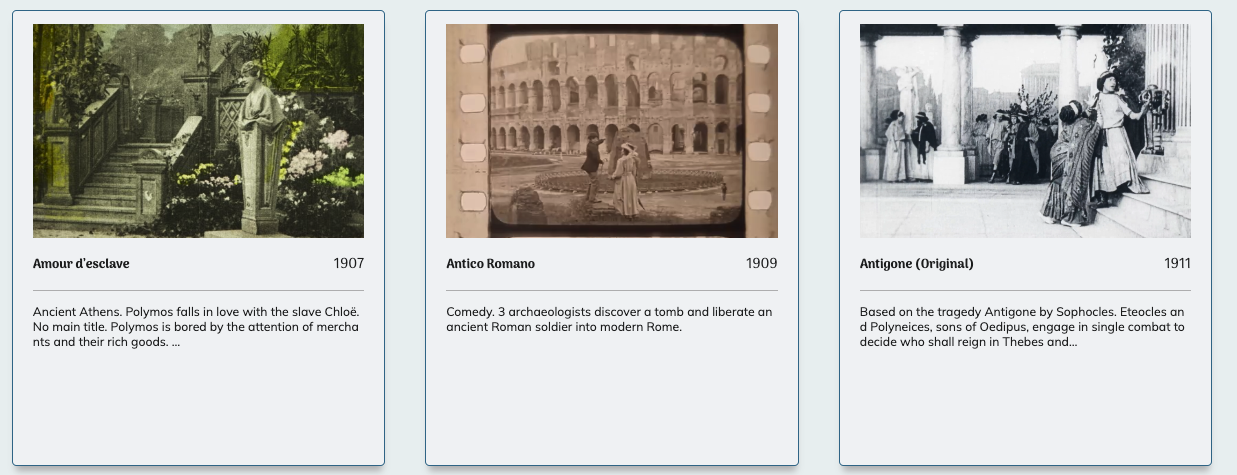
Figure 1. Some of the clickable film cards.
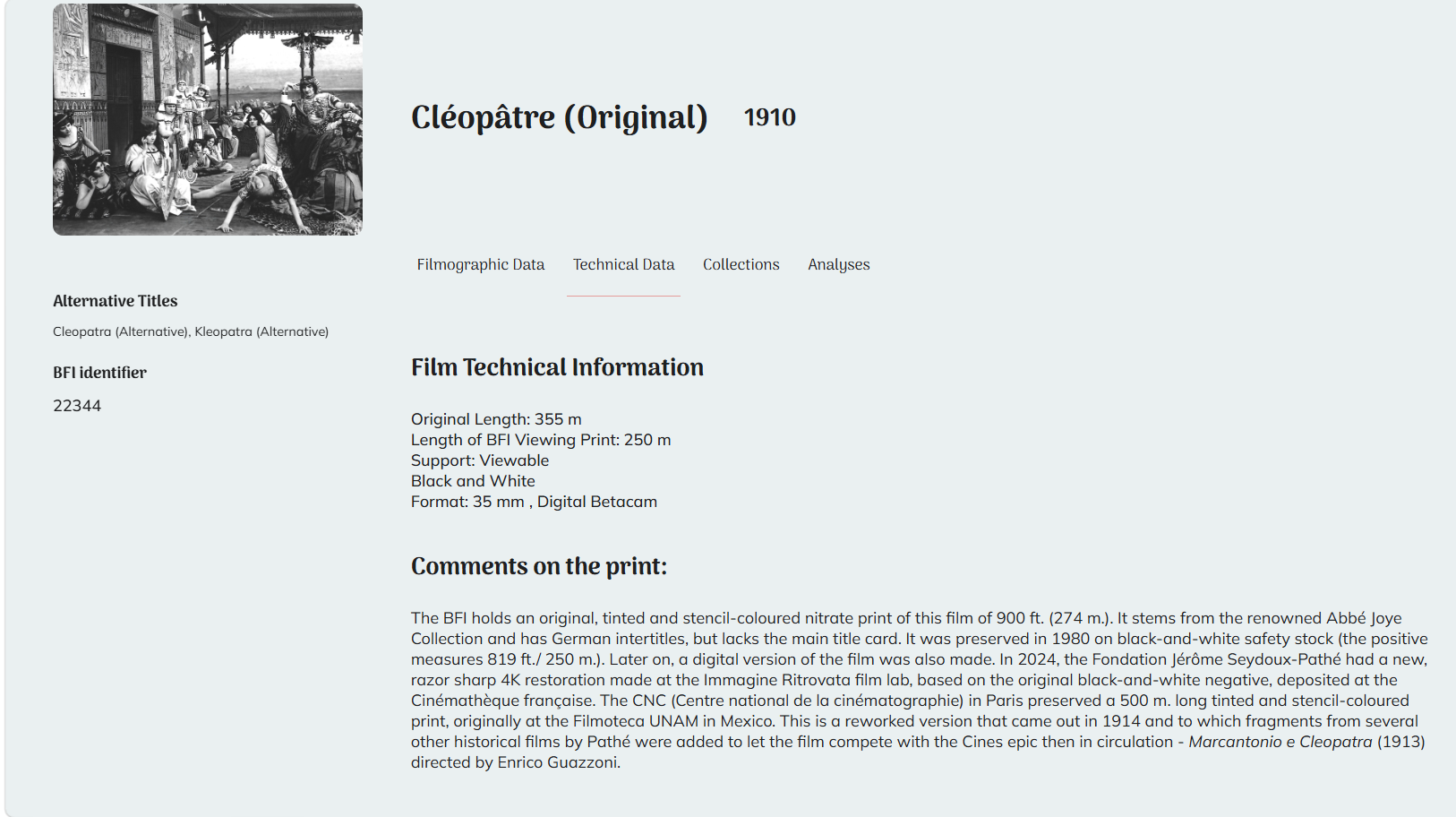
Figure 2. Example of technical information on the BFI prints.
Within the cards on individual films, the final section ‘analyses’ (if listed) will lead you to any essay we have uploaded that discusses the film, whether on its own or as part of a theme. On the left of the page, you will also find details of any titles in other languages that the film was known to have had and its BFI identifier (useful if you wish to explore in more detail the various materials the BFI might have for any one film, such as positive and negative masters, accessible prints, videos and digital materials, printed and visual resources).
You can also navigate to the Analyses from the website’s landing page. Currently, we have uploaded twenty-four essays - including this one - that concern twenty-eight films (totalling more than 148,700 words) written mainly by members of the MoD team but also by scholars and archivists who participated in our preliminary project workshops in London and Amsterdam. More analyses will follow. They draw on the resources of the BFI and its sister archives, adopt an interdisciplinary approach that sustains a twin focus on films as texts and cinema-going as a modern social practice, and utilize methods from diverse disciplines (including film history and theory, historiography, literary criticism, art history, religious studies, gender studies, archaeology, architecture, media, memory and archive studies), and studies of the reception of antiquity that recognise its associations with nationalism, colonialism, socialism, fascism and imperialism, movements such as neo-classicism and modernism, and intellectual disciplines such as psychoanalysis. Navigating to Bibliography from the landing page, you will find a full list of all the bibliographic items cited across this website (figure 3) and reference to which analyses cite them. For convenience, we have also included some works that have not been specifically cited, but were very useful in formulating our approach.
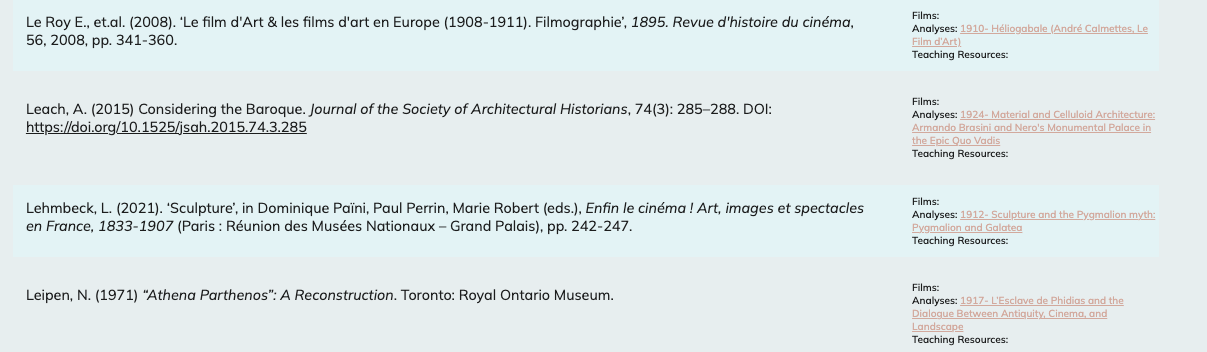
Figure 3. The website’s main bibliography
The analyses are grouped so that this introductory essay comes first, followed by essays on individual films ordered according to their date of production, and finishing with thematic essays about clusters of films. Each analysis can be accessed via its abstract. When readers access the ‘content’ of an analysis, they will find that it is richly illustrated including, in some cases, with short film sequences (figures 4-6). You can hover over a superscript to see the associated note and, if you click on an in-text citation, you can quickly see its full bibliographic reference. From ‘films’, you can also reach the individual cards for any film to which an analysis refers. From ‘bibliography’, you can see the works that particular analysis has cited. Once we have created ‘teaching resources’, in the final year of the project, you will also be able to access those related to a particular film from here.
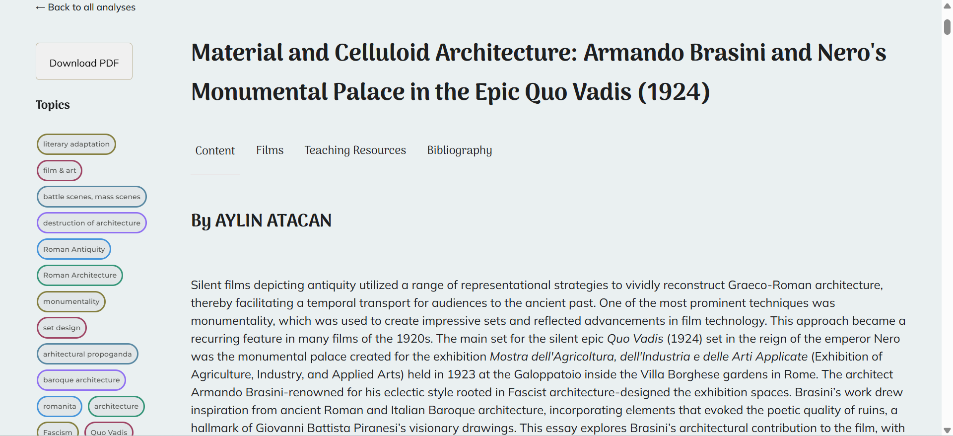
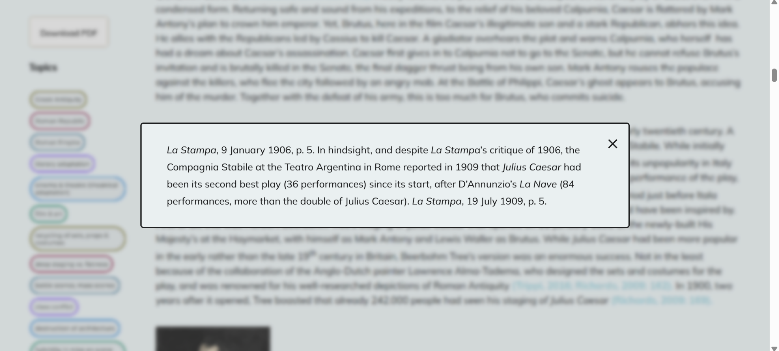
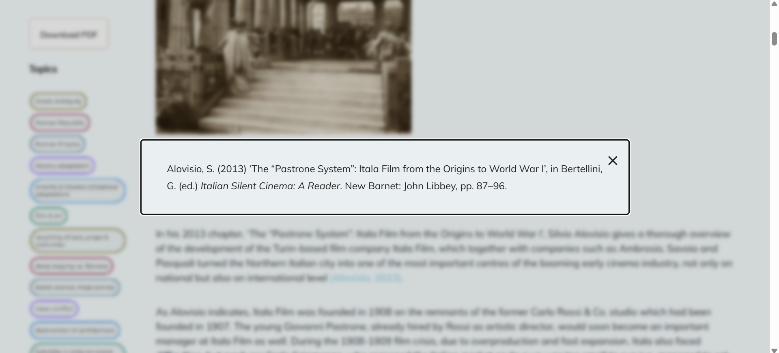
Figures 4-6. Screenshots of features of a film analysis.
All our analyses are downloadable as PDFs for convenient reference, but the PDFs include text only and not images for reasons of copyright.
To help users in their own research, the pages of individual analyses also contain a list of ‘keywords’ we have tagged, such as the Roman Republic, adaptation, exhibition, dance, divine intervention, location shooting, painting, racism. The full list is available also from the website’s landing page. Clicking on any one keyword takes you to a list of all the other analyses that engage with that issue. If you click on Tags on the landing page, it will take you to the tagcloud we are developing. Here you can see a list of all the keywords we have currently tagged as important search terms for comparative study across the BFI films and clicking on a keyword from here will take you to all the analyses in which the keyword figures.
Clicking on the Events section on the landing page will lead you to a calendar where we are placing any upcoming screenings, workshops or conference papers. Here we will also announce when a new analysis has been uploaded or if some other feature of the website has been significantly developed.
In the later stages of the project (from November 2026 to December 2027), we will also be adding to the landing page a section on Resources. Within it we will provide Teaching resources for schools and universities that we are currently developing in consultation with the UK Classical Association and film archives that are expert in providing teaching materials on silent cinema, such as our partner the Eye Filmmuseum. Here we will also provide a record of our Exhibition (for which see below) as its details may be of use in the future in a range of different educational contexts.
Below we lay out the four key pathways we use to approach the dynamic relationship between silent cinema and the classical world and survey our findings to date. These sections will be nuanced and expanded as we investigate more of the BFI films.
The film in the archive
The Museum of Dreamworlds project is closely concerned with 'the film in the archive'. Silent films about classical antiquity are relatively inaccessible. Their nitrate prints survive in a fragile state in film archives across the world (figure 7). They are difficult to conserve and often require restoration prior to exhibition, so that their aesthetic richness can be better understood and appreciated. Investigating antiquity films within the archives that house them and in partnership with their curators is therefore vital.
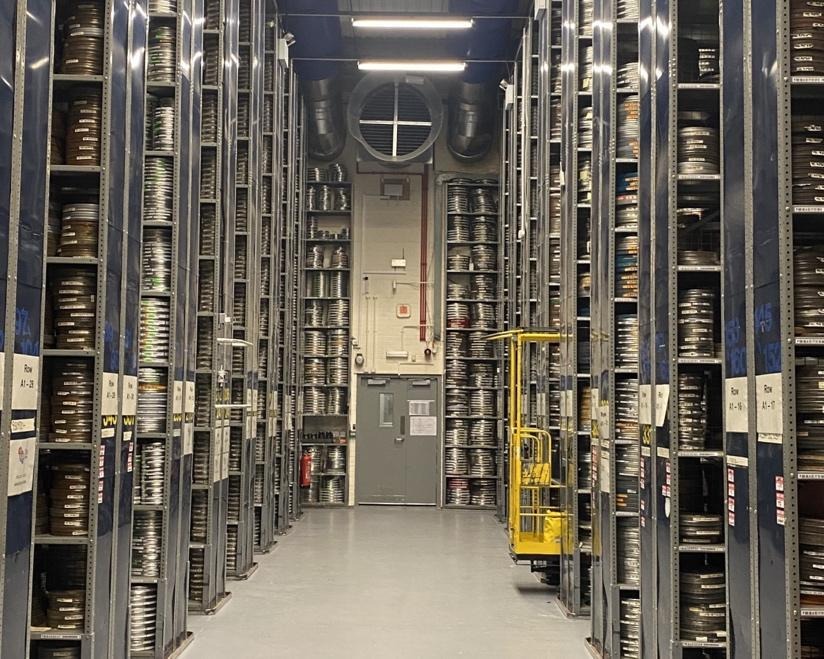
Figure 7. The BFI National Archive, Berkhamsted.
Copyright Aylin Atacan.
Hundreds of antiquity titles survive from the silent era. Between them, the BFI National Archive and the Eye Filmmuseum have the most. Hence Bryony Dixon, Curator of Silent Films at the BFI is an investigator on our project, and the Eye Filmmuseum is one of our partners. One important question is why do the BFI and the Eye Filmmuseum between them have so large a number of classical antiquity films, when most in the silent era were made in France or Italy, and almost none in Britain or the Netherlands? A partial answer is that some of the antiquity films in the Eye Filmmuseum come from the collection of the Dutch film distributor Jean Desmet, and some of the BFI antiquity films come from the collection of a Swiss Jesuit, Abbé Joseph Joye. For more detail on the archival history of the BFI antiquity films, see the essay on this website by the Curator of the BFI’s silent films Bryony Dixon. A number of essays are pending for the website that concern the distinctive collection and conservation history of antiquity films for a variety of other relevant archives, as well as the features of their individual collections of prints and their associated paratextual materials, including on the Eye Filmmuseum and a variety of other archives in France and Italy.
As silent film prints are fragile and often damaged, we are investigating and reporting on the condition of the BFI antiquity films relative to other prints in sister archives, both in our website ‘analyses’ and our ‘comments on prints’. Thus, thanks to Stéphanie Salmon at the Fondation Jérôme Seydoux-Pathé (FJSP), we can compare the Joye print of La Vestale (1908) in the BFI archive with a different print that survives in Paris. The film is an adaptation to screen of a popular French opera of the nineteenth century in which a woman becomes a Vestal because she thinks her beloved has died in battle. The year before the film was made in 1908, the opera had been revived in a spectacular performance. Below, on the left (figure 8), you can see a screenshot from the tinted and coloured-in version of La Vestale in Paris. The black-and-white restored version of the film now at the FJSP is longer than that belonging to the BFI on the right (figure 9), almost half of which is missing, such as the rescue of the vestal from her tomb. The BFI print also has problems of solarisation (or overexposure). Curiously, the British and French prints are mirror images of each other.
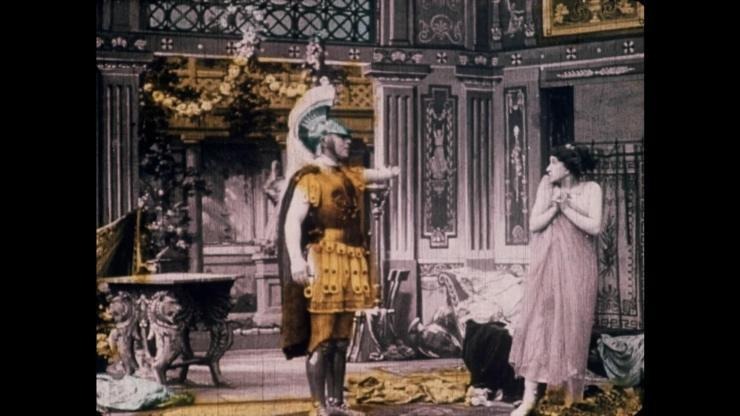
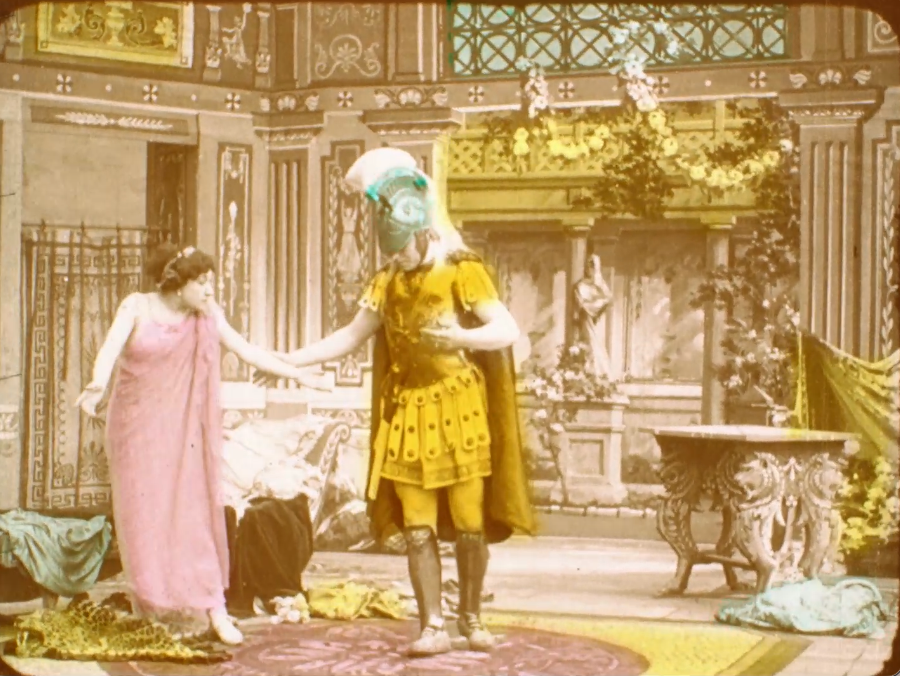
Figure 8. Screenshot from a preserved distribution print at CNC.
Figure 9. Screenshot from the print of La Vestale (1908) in the BFI National Archive.
Video clip 1. Pygmalion’s sculpture comes alive, Pygmalion and Galatea (1912).
We are also closely analyzing, and drawing international attention to, prints of antiquity films that are unique to the BFI National Archive, such as a beautifully shot film concerning a slave bought by the Athenian sculptor Phidias to use as a model. She falls in love with him and he gradually falls in love with her thanks to the beauty of her lyre playing and singing as well as her eye for the beauty of flowers. The mistress Phidias has scorned ensures that the couple are punished with exile. This French film was directed by Léonce Perret for the Gaumont studio in 1917. Its exteriors were shot in the South of France at a neoclassical villa identified by our team member Aylin Atacan as Villa Maryland, built in 1904. The film was greatly admired at the time for its use of a special score and the aesthetic beauty of its natural landscapes and real sets which were frequently reflected in pools of water or evocatively backlit for romantic effect. Its lyrical story of injustice, exile and loss was likely to have resonated with European audiences during the war. Antiquity is reactivated imaginatively here and projected through early-twentieth century artistic and political sensibilities (video clip 2, see the two analyses on this website by Atacan and Blom).
Video clip 2. Phidias’ model suffers anguish when she sees him strolling through his villa with his mistress, L’Esclave de Phidias (1917).
In parallel to, and supported by our investigations, our team member Bryony Dixon is currently engaged in the restoration of two antiquity films unique to the BFI National Archive. Bruto is a film by Enrico Guazzoni who went on to make many feature-length antiquity films for the Italian studio Cines (figure 10). The restoration is part of a project on Early Colour funded by the Film Foundation. It is a damaged film, but its underlining quality is good and it is beautifully tinted. Boadicea is, unusually, a British feature film from 1927 (figure 11), and is being investigated for potential future restoration. One of the first cinematic representations of Roman Britain, it operates in the context of amateur Roman reenactments and the British practice of pageantry. It was marketed to British schools as educational in a shortened version called Roman Britain.
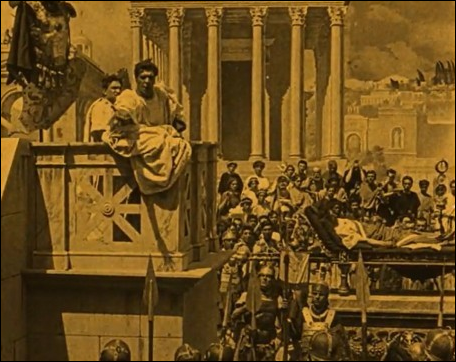
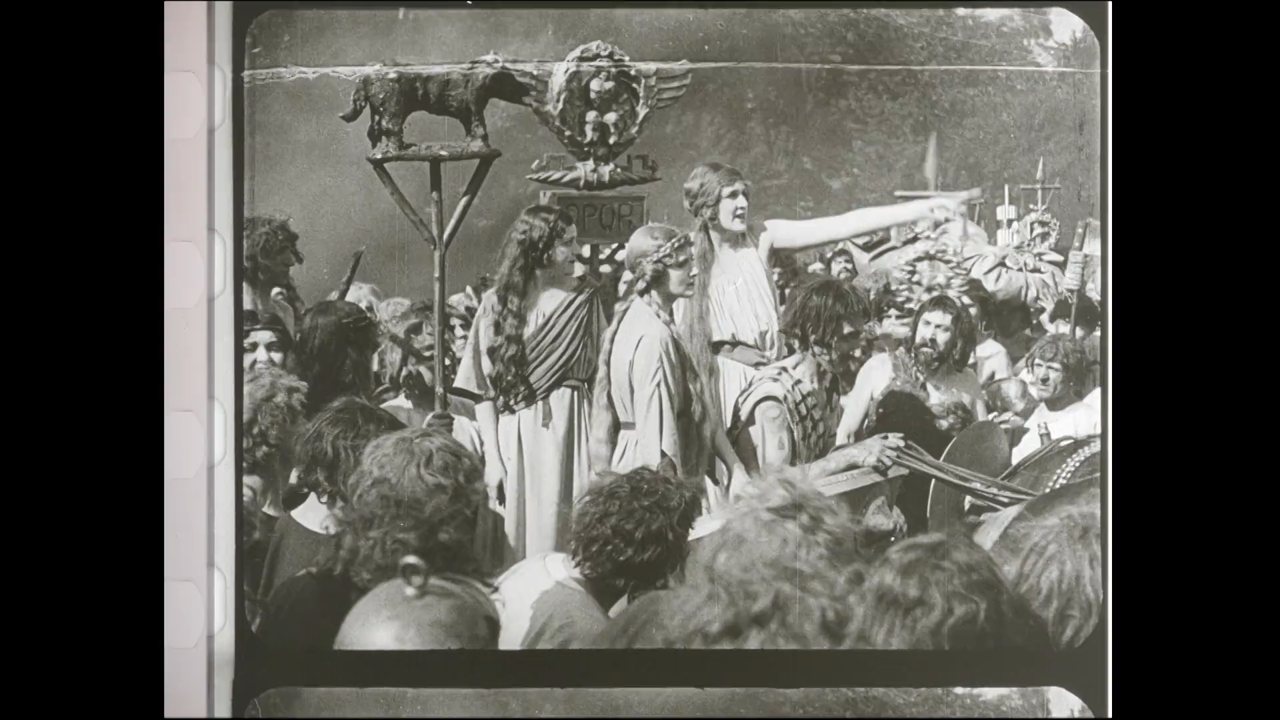
Figure 10 & 11. Screenshots of Bruto (1911) and Boadicea (1927) respectively.
Courtesy of the BFI National Archive.
So to conclude this aspect of our project’s approach, which we call ‘the film in the archive’, we are analysing the materiality of the BFI prints, bringing them to the attention of archivists and programmers internationally, and putting the BFI more securely on the global map of antiquity films that have survived from more than one hundred years ago.
The archive in the film
Antiquity films construct their own distinctive archive through the fragmentary images embedded within them that bear the imprint of earlier representations of the classical world. Investigating this archive of fragments within antiquity films (which we call deconstructing ‘the archive in the film’) is an approach familiar from classical reception studies which investigates how a classical text, idea, practice or object is received and transformed across time, place, cultural community and medium in a chain of sometimes overlapping receptions.[4] The project investigates the transformations that have occurred between the sources from which the films draw to evoke the classical world and the fragments in those filmic dreamworlds that bear the marks of those external sources.
As an example of how we deconstruct the archive in the film, the timeline in figure 12 (designed by Aylin Atacan) illustrates visually the rich seam of influence on reconstructions of the last days of Pompeii in silent cinema. In a broad display, it shows how the Italian films made in the 1910s and 1920s (screenshots of which can be glimpsed on the far right) drew on and adapted to screen a whole host of prior representations of the ancient Roman city.[5] When analysing one particular feature film, Gli ultimi giorni di Pompei (The Last Days of Pompeii, 1926), she explores how it built its detailed and imaginative architectural reconstructions of the city’s public and private dwellings as well as its plotline out of the building blocks of a Russian painting, an Italian opera and its set designs, a British historical novel and its illustrations, a spectacular pyrodrama and – intramedially – earlier Italian films about the lives of Pompeians prior to the eruption of Vesuvius.
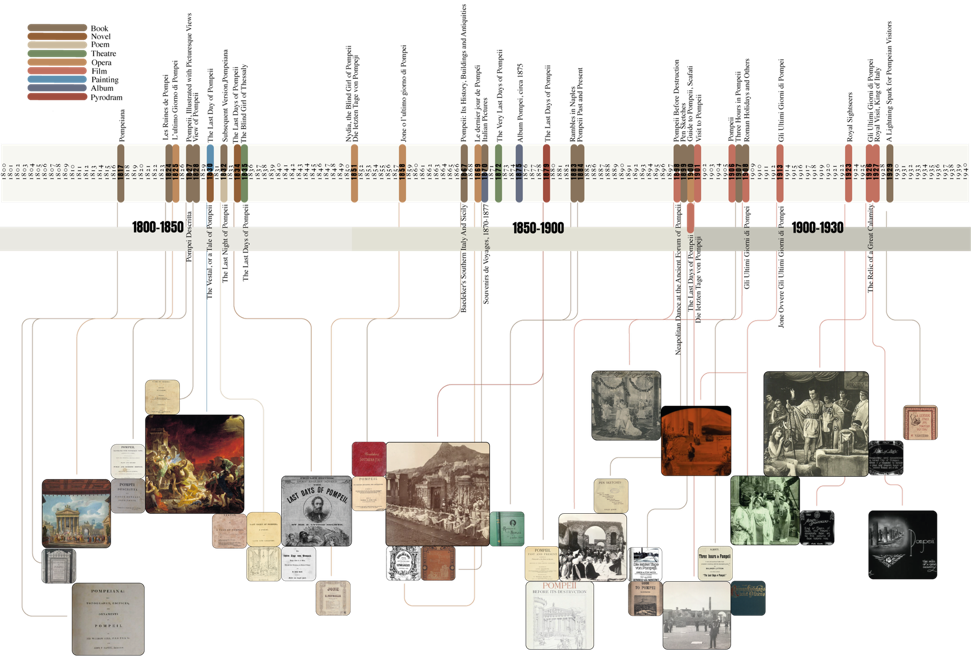
Figure 12. A timeline demonstrating the host of influences on reconstructions of Pompeii’s last days (copyright Aylin Atacan).
Taking a closer look, we can see how the film’s reconstruction of the façade of the Temple of Jupiter is based on archaeological drawings and sketches that had reconstructed the temple’s original condition prior to the eruption (figure 13a and b). And looking even more closely, we can observe how a particular material object (in this case a cartibulum or oblong table found in the atrium of Roman houses) was reconstituted in two Italian films about Pompeii made in 1913. In their design of private dwellings, they borrow from the strategies of antiquarian paintings such as those by Lawrence Alma-Tadema (Figure 14 a to d).[6]
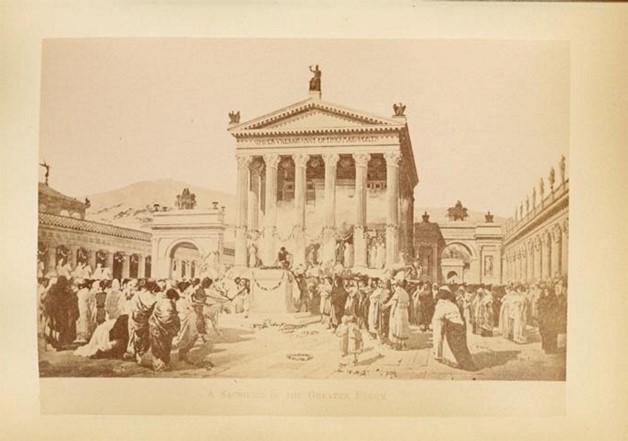
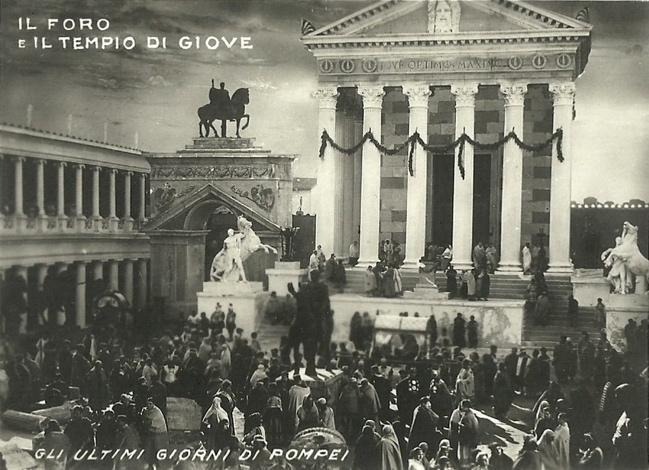
Figure 13a & b. Reconstruction of the Forum, Pompeii Past and Present, Luigi Fischetti, 1884. Décor of the Forum, Gli Ultimi Giorni di Pompei (1926).
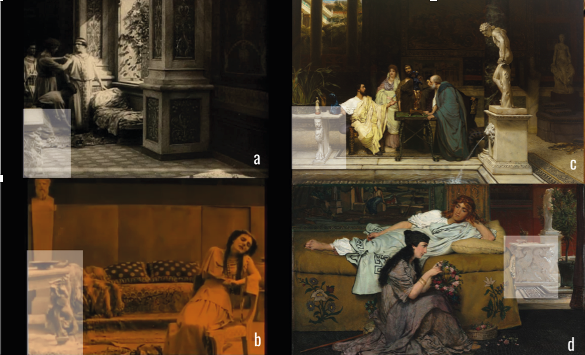
Figure 14a to d. (a) Screenshot of Gli ultimi giorni di Pompei (Ambrosio, 1913). (b) Screenshot of Gli ultimi giorni di Pompei (Pasquali, 1913). (c) A Roman Art Lover (1868), Lawrence Alma-Tadema.https://commons.wikimedia.org/wiki/File:Lawrence_Alma-Tadema_A_Roman_Art_Lover_1.jpg (d) Glaucus and Nydia (1867), Lawrence Alma-Tadema, https://www.clevelandart.org/art/1977.128

If the mise-en-scène and plotlines of silent cinema’s classical worlds are considered also in terms of their nation or time of production, we can also observe intriguing differences in the way those worlds are constructed out of earlier source materials. French films around 1910, for example, regularly turn for inspiration to canonical receptions of antiquity in their own national culture, whether stage performances, novels or paintings dating back to the seventeenth century.[7] Both French and Italian films from across the period 1909 to 1911 develop a repeatable repertory of sets, costumes and props partly based on objects familiar from heritage sites, museum collections or paintings, but gradually add exteriors shot on location to their tableaux of interiors with painted backdrops that provide the illusion of depth.[8] In the case of Italian films, the distant past is authenticated by means of Roman ruins or their neo-classical reconstructions, such as those to be found along the Via Appia or in the Borghese Gardens.[9] Thus, the time and space of ancient Rome is merged with those of modern Italy. While ancient Greece and Rome are often visualised loosely in this period in terms of nineteenth-century painterly and theatrical traditions, a shift to a greater concern for the historical and archaeological record as well as the expansion of classical spaces into large-scale spectacle is discernible from around 1913 after the emergence of the feature film.
The film in its time
As our observation of national differences and changes across time in silent cinema’s use of source materials suggests, Museum of Dreamworlds not only investigates ‘the film in the archive’ and ‘the archive in the film’ but also approaches its analyses of antiquity films in terms of ‘the film in its time’. In the project, we ask how and why did the representation of antiquity change across the modern societies in which the films were made, that is from the 1890s to the 1920s? A painting of spectators in Paris heading at night into the brightly lit Gaumont Palace cinema around 1911 offers a graphic example of the social context in which these films were first seen (figure 15).
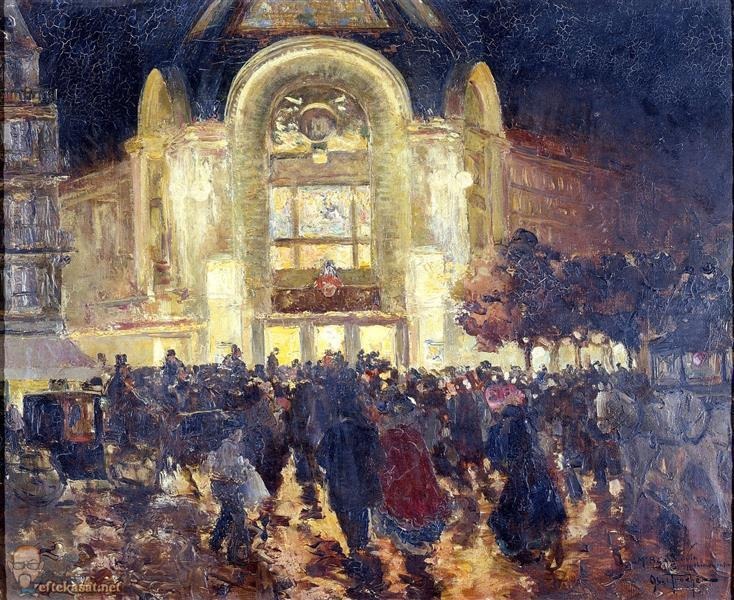
Figure 15. Le Gaumont Palace illuminé dans la nuit (1911), Louis Abel-Truchet. https://www.wikiart.org/en/louis-abel-truchet/the-gaumont-palace-enlightened-in-the-night-1911
One reason for change across the time in which silent antiquity films were made is technological. Cinema’s ancient dreamworlds change shape in line with or at the forefront of changes in film technology. Greek mythology was utilized within an early trick film directed by and starring the magician Georges Méliès, Le parapluie fantastique (Ten Ladies in One Umbrella, 1903). He celebrates the new medium’s capacity to animate the inanimate, to transform and to move even though, in this early phase, film is fairly indistinguishable from theatre. Before a theatre façade named Galatea, the magician transforms himself into Pygmalion and proceeds to conjure ten women out of an umbrella (figure 16a and b). The women are momentarily seen in classical costume playing ancient instruments before they suddenly reappear in modern dress and scuttle off, after which the director, transformed back into a stage magician, takes a bow. The name Galathea recalls the statue brought to life for Pygmalion. Here the ancient world is comically evoked to suggest an elevated mythic dimension to cinema – one which animates more women that Pygmalion ever did and in which cinema has become the tenth muse.[10]
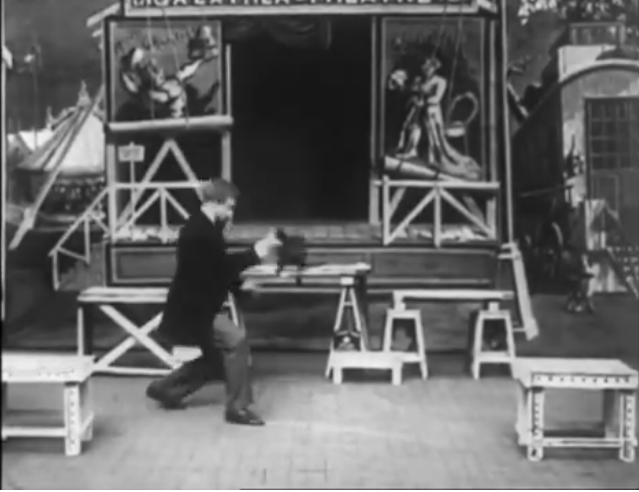
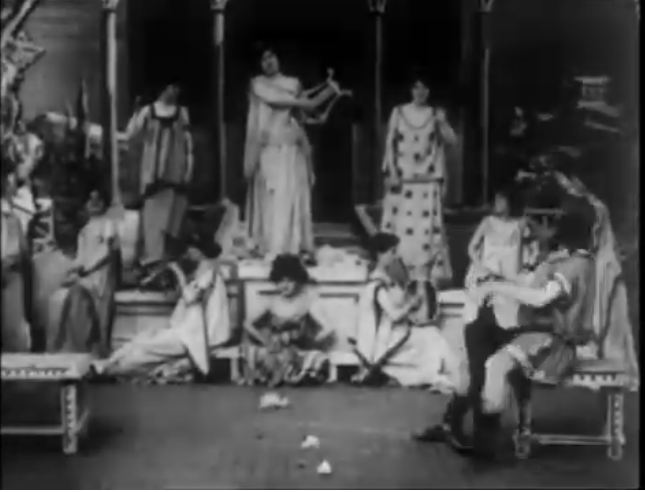
Figure 16a and b. The magician and director Méliès conjures ten women out of an umbrella, in Le parapluie fantastique (Ten Ladies in One Umbrella, 1903).
Four years later, we can observe that French cinema had now developed a more complex way of presenting the ancient world, one that foreshadows the close relationship the Pathé company would soon establish with the French stage in order to attract theatre goers to the cinema. The short tragic drama Amour d’esclave from 1907, for example, concerns illicit love - played out in ancient Athens between a master and his slave. It is staged in several scenes against elaborately painted backdrops blending Greek, Roman and Egyptian decorative elements as well as displaying a number of supposedly authenticating props (such as a bench, a brazier and a couch, figure 17a and b). Ancient Greece is loosely evoked rather than carefully reconstructed here to paint a melodramatic story in grand and extreme terms about sexual desire that is constrained by social conventions.[11] Similarly, in the Italian film Nerone of 1909, the emperor’s life is synthesized into around fifteen minutes and made intelligible and exciting to a broad audience through a focus predominantly on his private life. Nevertheless, in self-contained tableaux of painted sets whose rich detail appears strikingly meticulous, it experiments with a narrative that attempts to provide causal links between the acts of individuals and the events of history.[12]
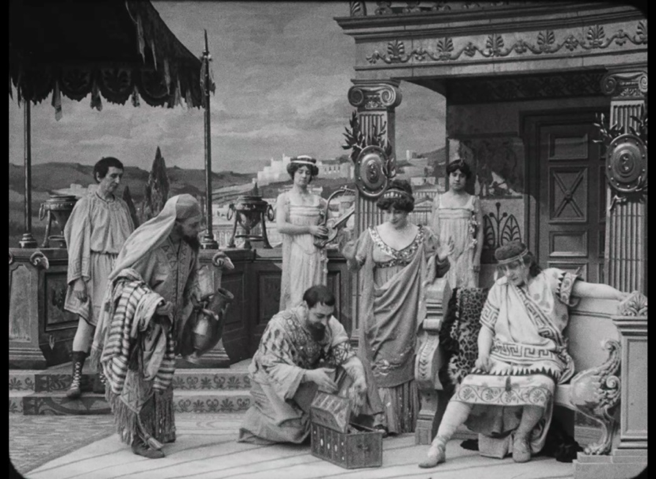
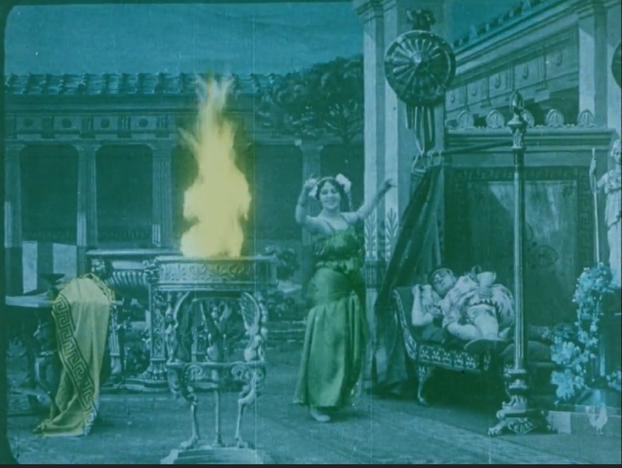
Figure 17a and b. Screenshots from Amour d’esclave (1907) demonstrating its loose evocation of ancient Greece. Courtesy of Eye Filmmuseum.
By 1913, the feature film had emerged, characterized by narrative complexity, heavy investment in spectacle and lavish exhibition. The Italian epic Quo vadis? was publicized by its Roman studio Cines as an extended adaptation to screen of a very successful nineteenth-century Polish novel concerning the reign of Nero, his burning of the city and his persecution of the Christians (see the essay on this website about Neronian films by Maria Wyke). Nonetheless, at a time when cinemagoing had become fully embedded in society, the film was promoted and exhibited as a cultural artefact that could speak to and for the Italian nation in its elaborate reconstruction of the country’s shared cultural heritage across a run time of almost two hours. The premieres of Quo vadis? at home and abroad were thus confected with a sense of grand occasion. In Rome, it opened at higher-than-normal prices in one of Italy’s most famous opera houses. In London, it was shown at the Royal Albert Hall for four weeks and the visit to see it of the King and Queen was widely reported.
The solidity and depth of the sets in Quo vadis?, the careful antiquarianism of its costumes and props, are all flaunted even as its actors and extras are made to live a narrative that originates in the nineteenth century. The film presents itself as a work of art comparable with or even superior to theatre and the visual arts. In comparison to theatre, the camera often shortens or extends the distance between actors and their audience. Quo vadis? also adds motion, as well as temporal and spatial expansion, to the nineteenth-century paintings it often evokes. In the vast open-air auditorium constructed for the arena sequence, for example, the camera alternates long, medium and point-of-view shots to engage its offscreen spectators with pictorial spectacles of chariot racing, gladiatorial combat and Christian martyrdom.
From the early use of the myth of Pygmalion and his animated statue, silent cinema incorporated into its classical worlds sequences that could operate also as metaphors for the moving image medium and its representational powers. When in Amour d’esclave (1907) the master dreams of a sensuous and colourful dance by a corps of women, the sequence works as a metonym for a world of feminine sensuality that the film is offering to the modern male gaze. In moral contrast, when the emperor in Nerone (1909) recoils in terror at scenes of martyrdom projected on his bedroom wall, their animation of a famous painting celebrates the visual power of the medium as pictures that have an ethical and religious momentum. In The Way of the Cross (1909), which focuses on the tale of a Roman soldier at Nero’s court transformed by divine intervention, the revelation to him of the Cross becomes a stand-in for the spiritual power of cinema, and the converted protagonist a stand-in for a reverential version of offscreen spectatorship that the American film industry was eager to claim as its objective.[13] Quo vadis? (1913) uses location shooting on the Via Appia itself and the special effect of superimposition to make its modern spectators witness to a founding legend of the Catholic Church that Christ appeared miraculously to Peter and turned the fleeing apostle back to Rome. As a film studio funded by the Vatican’s bank, Cines had also been organizing its filmmaking activities in political and social terms - as a way of extending Catholic influence in Italian society. The titular scene (video clip 3) exploits fully the devices available to cinema in the 1910s to find sanction in antiquity for the authority of the Vatican in contemporary, secular Italy.[14]
Video clip 3. St Peter sees a vision of Christ on the Via Appia, in Quo vadis? (1913).
Twelve years later the American epic Ben-Hur, like the Italian Quo vadis?, was sold as a quality adaptation of a popular religious novel – though one that was non-doctrinal. Viewers were directed to appreciate the religiosity of the Nativity at the beginning and the Passion at the end through a return in those scenes to early cinema’s static, tableaux-vivant framing and through the use of bi-chrome Technicolor. But in its handling of the action in the chariot race, the film was astonishingly innovative. Publicity and reviews remarked on the colossal scale of the set enhanced by miniatures, the thousands of extras, the use of forty-two concealed cameras to capture from alongside, beneath and above the violence and pace of the race and the insertion of multiple cut-ins to heighten its drama and close in on the facial expressions of the stars. The musical accompaniment (just as much as embedded views of the crowds) would have worked to draw spectators into this immersive and democratic vision of antiquity.
Like moving statues, dreams and visions, spectacle also ruptures the temporality of an antiquity film - by drawing attention to the film’s manufacture. On a meta-cinematic level, the chariot race completed a number of triumphs for the studio MGM: of film over novel and stage play, of Hollywood over European cinema, and of MGM over its competitor studios. Toward the end of the silent era, Hollywood took from a nineteenth-century novel's reception of antiquity its familiarity, prestige and devout appreciation and made them into a sensational success for cinema.
Emerging from this discussion of changes to the representation of classical antiquity across the silent era, is the second overlapping question our project is posing about ‘the film in its time’: how were silent antiquity films situated in relation to the periods and the societies of their production and how did they speak to contemporary concerns (of, for example, national identity, gender and sexuality, class, religion or ethnicity)? We have already seen advocacy for contemporary Italian Catholicism emerge from the Neronian Rome of Quo vadis? (1913). Another Italian film released the following year engages through the Roman past with modern issues of empire and colonialism to a startling degree. Its analysis also demonstrates the importance of mapping the movement of silent films beyond their country of production across the other nations where they were exhibited and consumed.
Cabiria is set around the time of the second Punic War between Rome and Carthage (218 to 201 BCE) and explores how the fictional child Cabiria is snatched by pirates from her beautiful Roman home after the eruption of Mt Etna and sold in Carthage to the High Priest of Moloch for sacrifice to his savage god (figure 18). The first attempt to rescue her fails, but success comes after she has grown up and once Rome is victorious in combat. Scholars recognise that the film projects forward from Roman antiquity into the modern world Italian fantasies of nationhood achieved through a return to conquest in North Africa.
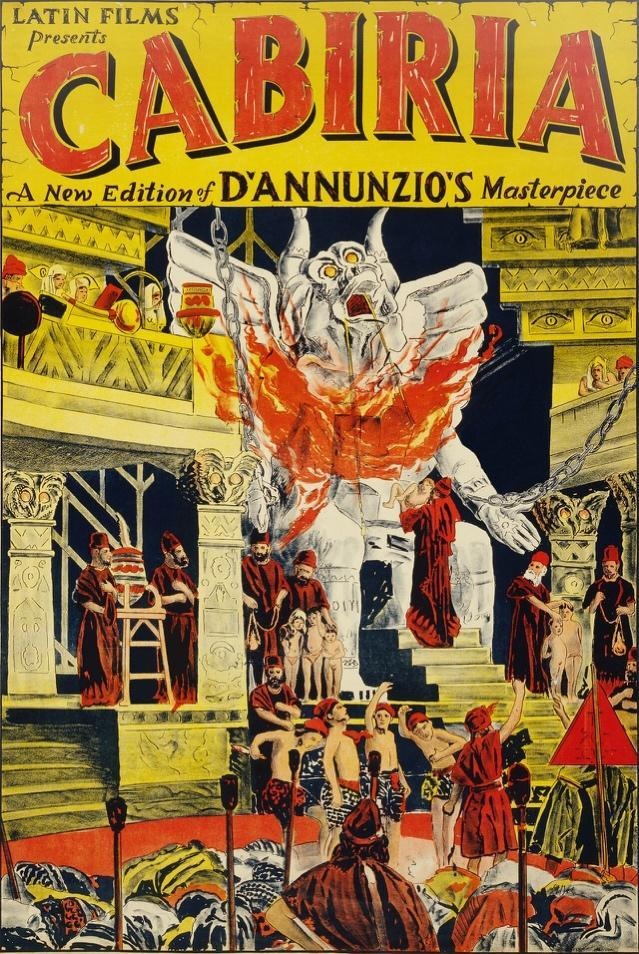
Figure 18. Poster for Cabiria (1914) illustrating the moment of her attempted sacrifice to the god Moloch. https://en.wikipedia.org/wiki/File:Cabiria_1914_poster_restored.jpg#/media/File:Cabiria_1914_poster_restored.jpg

Yet the film took on quite a different meaning when distributed in Great Britain a year later, as our investigation of the British theatre programmes surviving in the BFI’s special collections indicate (figure 19) as well as issues of British newspapers after May 1915 when Italy declared war against Austria-Hungary.[15] A special screening of Cabiria took place at the opulent West End cinema in London’s theatreland on 7 October 1915 as an urgent, charitable event, designed on Italy’s Flag Day to raise money for the Italian military. Here British audiences were being invited to experience Cabiria as offering wartime uplift – as a demonstration of Italy’s commitment not to an empire of its own but to Britain and the Allies in the world war.
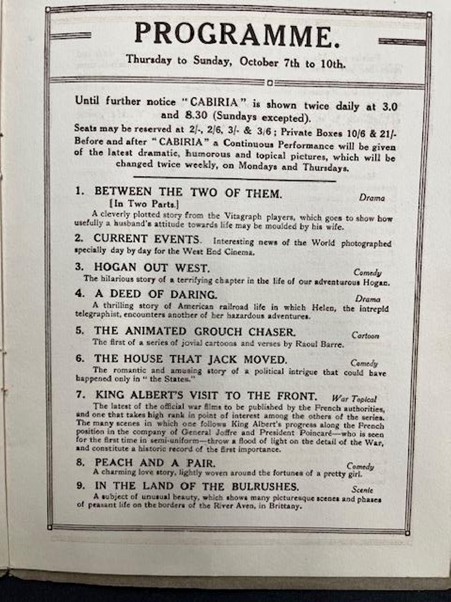
Figure 19. A page from the programme for the West End Cinema, London for 7 to 10 October 1915 (from the BFI Special Collections, Ephemera: ITM-2731).
The film in our time
Our project considers debates, as they occurred in the silent era, about the value of films like Cabiria. Some critics at the time saw films with such cultural ambition as likely to render their audience illiterate while others, for example in Italy, saw cinema as an important vehicle for educating Italy’s illiterate in its cultural heritage and its national values. But we are also asking what is the value of these films now? What can they tell us about the distant past, modern media and the relationship between them, and how might present-day audiences respond to them? To do this, we are finding various ways to bring the BFI films out of the archive and to the attention of diverse communities.
We have been organizing, and continue to organize, talks and workshops with leading scholars in their fields and with university students to exchange ideas about what use these antiquity films may have in our contemporary world. We are bringing the BFI and sister antiquity prints to the attention of archivists, film historians, classicists and the general public through screenings of the films with live accompaniment (figure 20).
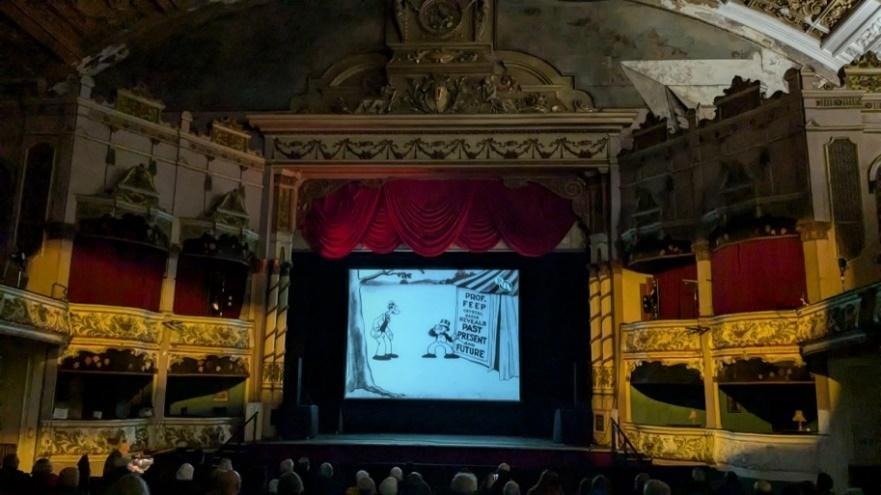
Figure 20. Photograph of a screening at Morecambe Winter Gardens, 2024.
The project researcher Aylin Atacan is creating an exhibition that will open in November 2026 at University College London entitled Celluloid Dreams, Silentscapes. It will bring together film clips, archival materials, and responses to them by university students from different disciplines. The elements of the exhibition will be interconnected through their shared focus on the architectural representation of ancient Greece and Rome, especially Pompeii (figure 21a and b). The exhibition will offer a virtual travel experience in three dimensions: in the first dimension, we will screen selected film sequences, in the second we will project light and movement back onto the source materials that inspired the films, and in the third we will feature contemporary responses of UCL students to silent cinema’s classical dreamworlds.
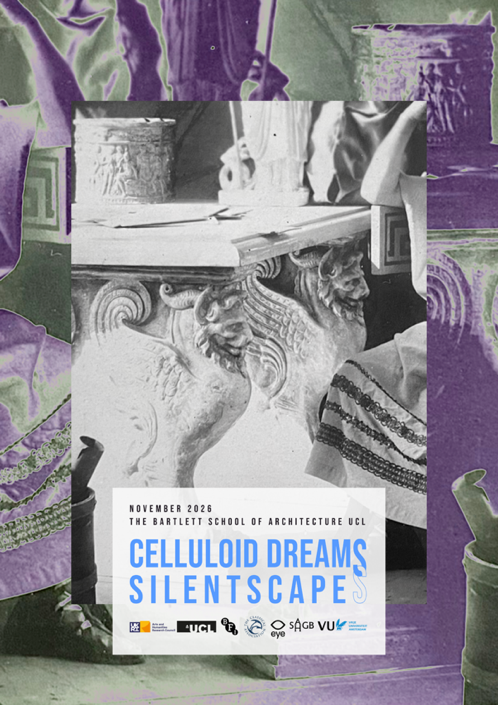
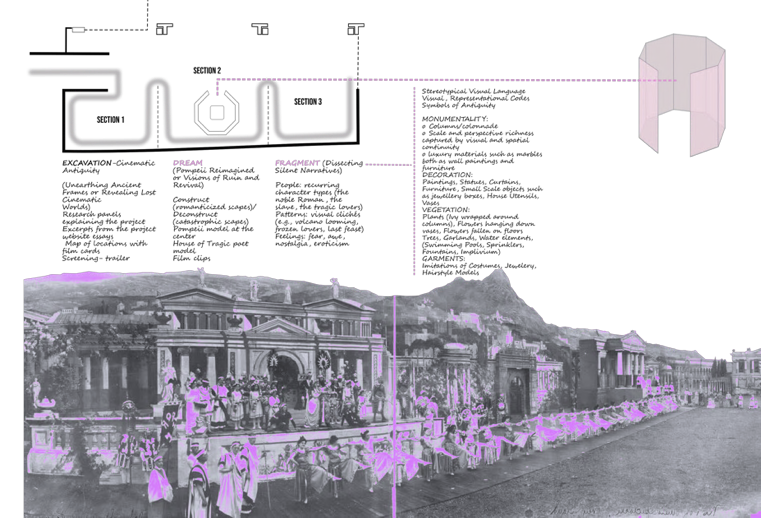
Figure 21 a and b. The proposal for the Museum of Dreamworld’s exhibition designed by Aylin Atacan.
As part of the exhibition process, we have collaborated with the Design for Performance and Interaction MArch programme at UCL Bartlett, developing project briefs that invite students to engage with archival materials and reimagine them through contemporary design practices. In addition, we have organised workshops (Figure 22 a and b), including one at Sir John Soane’s Museum, where students were encouraged to produce creative and critical responses to the BFI films and some of their source materials. These workshops bring together participants from a range of disciplines, including archaeology, fine arts, classics, and management, creating a genuinely interdisciplinary learning environment that fosters dialogue across fields. All responses from these workshops, as well as the final outputs of the DFPI MA students, will be displayed in the exhibition.
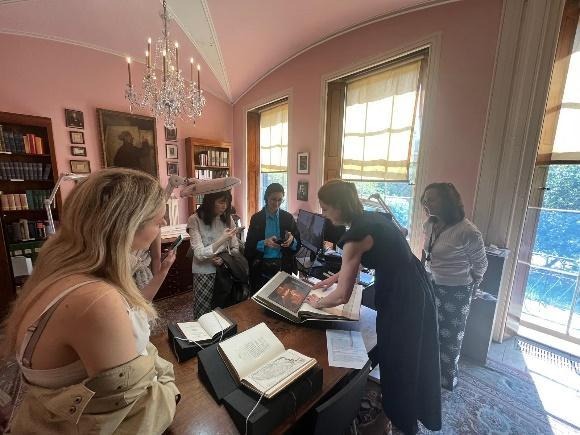
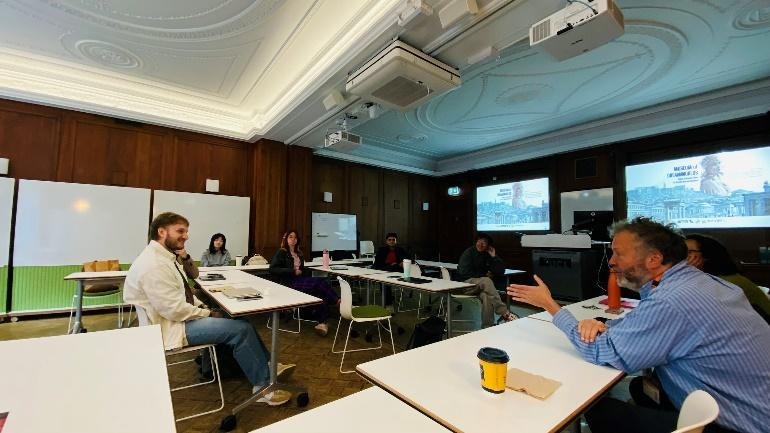
Figure 22a and 22b. Photographs of the workshops held at Sir John Soane’s Museum and UCL.
The Museum of Dreamworlds project, by investigating the film in the archive, the archive in the film, the film in its time and the film in our time, recognizes how silent cinema shaped an enduring popular grammar for antiquity: from monumental temples to domestic spaces, from stylized costumes to ritual gestures, and - in its relation to the time of its production - a rhetoric of symbolism or of allegory. At the same time, the BFI antiquity films reveal the constant modern impulse to appropriate the classical world and to anchor modern identity and modern media within the authority of the classical past.
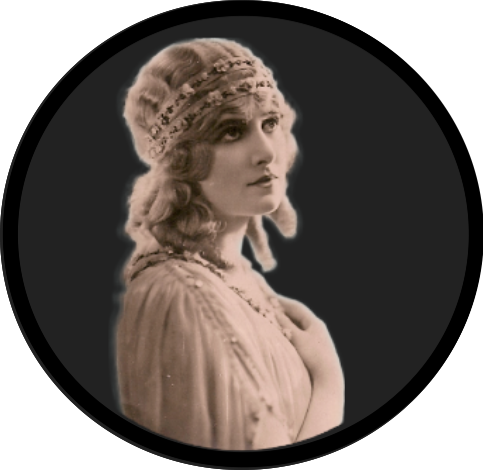
In conclusion, we’d like to turn to the project trailer which you can see on our website’s landing page (figure 22). The trailer itself constitutes a response by Dason Zhu, a professional producer of video commercials, to our project research, and we are extremely grateful to him for capturing so imaginatively what we are trying to achieve (and doing so in his free time). Inspired by Pygmalion and his importance as a founding myth for cinema, the trailer revisits the still image of Lygia, a character from the 1924 film Quo vadis? and the figure who appears in our project’s logo. In this short film, Lygia awakes and emerges from her museum archive, steps into motion through the streets of silent cinema, sees the sources that lie behind the Neronian world she has been made to inhabit, and experiences fear at the firing of Rome and the combustion of nitrate film. Finally, she is able to situate herself more comfortably within a cinema as a living woman watching her screen image.[16]
As we mentioned at the start of this essay, we would be delighted to hear from you about our website or our project more broadly. Details of our broader activities can be found at: https://www.ucl.ac.uk/arts-humanities/classics/research/research-projects/museum-dream-worlds
And you can write to us at: museumofdreamworlducl@gmail.com
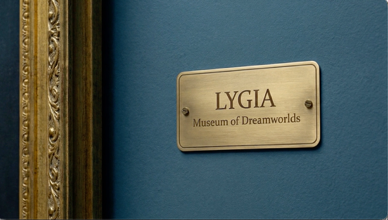
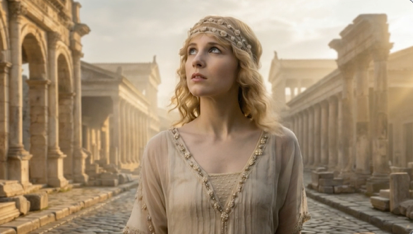
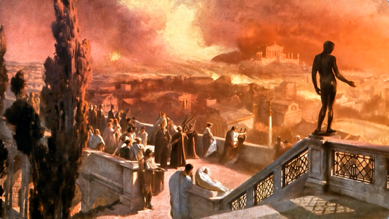
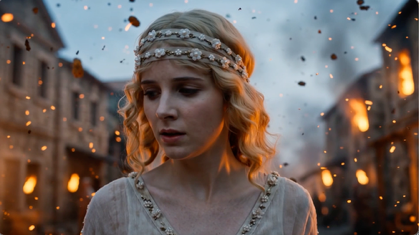
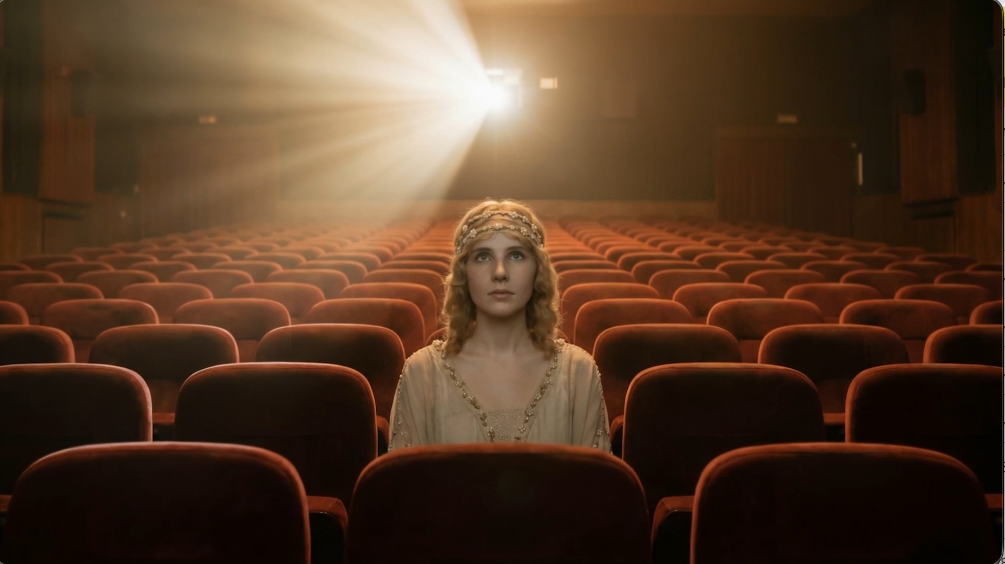
Figure 22. Screenshots from the Museum of Dreamworld’s trailer. Copyright Dason Zhu.
Footnotes
- ^ The Italian film, Patrizia e schiava (1909), was catalogued under its English title Afra, BFI identifier 58215. For its analysis, see Blom and Wyke on this website.
- ^ We are also preparing a collection of essays for publication in 2028, Museum of Dreamworlds: Silent Cinema, Classical Antiquity & the Archive, that ranges beyond the BFI corpus.
- ^ The majority of the postcards are from the private collection of Ivo Blom.
- ^ The ‘film in the archive’ and the ‘archive in the film’ were both introduced as useful approaches to antiquity films by Aylin Atacan in her presentations ‘Deconstructing the filmic archive’ during our initial workshops and focus group meetings starting in 2024. They now form essential components of our project.
- ^ We are very grateful to the Middle East Technical University in Ankara for permission to use this image, first created by Aylin Atacan in 2020 to illustrate her PhD Between Image and Moving Image: Representations of Pompeii in Illustrated Books and Silent Films of 19th and Early 20th Century.
- ^ For this type of deconstruction of the sets for antiquity films, see for example Atacan’s essays on a 1913 and a 1926 version of Pompeii’s last days on this website.
- ^ See, for example, Ivo Blom’s essays on Bélisaire, Cléopâtre and Héliogabale all released in 1910.
- ^ In an essay on this website concerning a number of films produced by a Turinese studio in the period 1909 to 1911, Ivo Blom considers the Italian development of a repertory of sets.
- ^ Maria Assunta Pimpinelli, in an essay on this website concerning the Italian film San Paolo (1910), explores the use of on-location settings around Rome as a means for claiming visual and cultural authenticity for the film’s reconstruction of the Apostle’s life.
- ^ An essay on a number of the BFI prints concerning ancient Greece, including this one, is pending from Pantelis Michelakis.
- ^ As the archivist of Pathé films, Stéphanie Salmon argues, in an essay on the film for our website.
- ^ See the essay on Nerone by Stella Dagna and Andrea Meneghelli on this website.
- ^ See Jon Solomon’s essay on this website for the nondenominational piety claimed for and by the film.
- ^ Compare the strategies of the earlier film biography San Paolo (1910), discussed by Maria Assunta Pimpinelli on this site.
- ^ See the essay by Maria Wyke on Cabiria on this website.
- ^ Credits for the trailer comprise: Dazon Zhu, Director and Editor; Aylin Atacan, Concept, Script and research; Ivo Blom and Maria Wyke, Advisors.
No bibliographies are avaliable for this content at the moment.